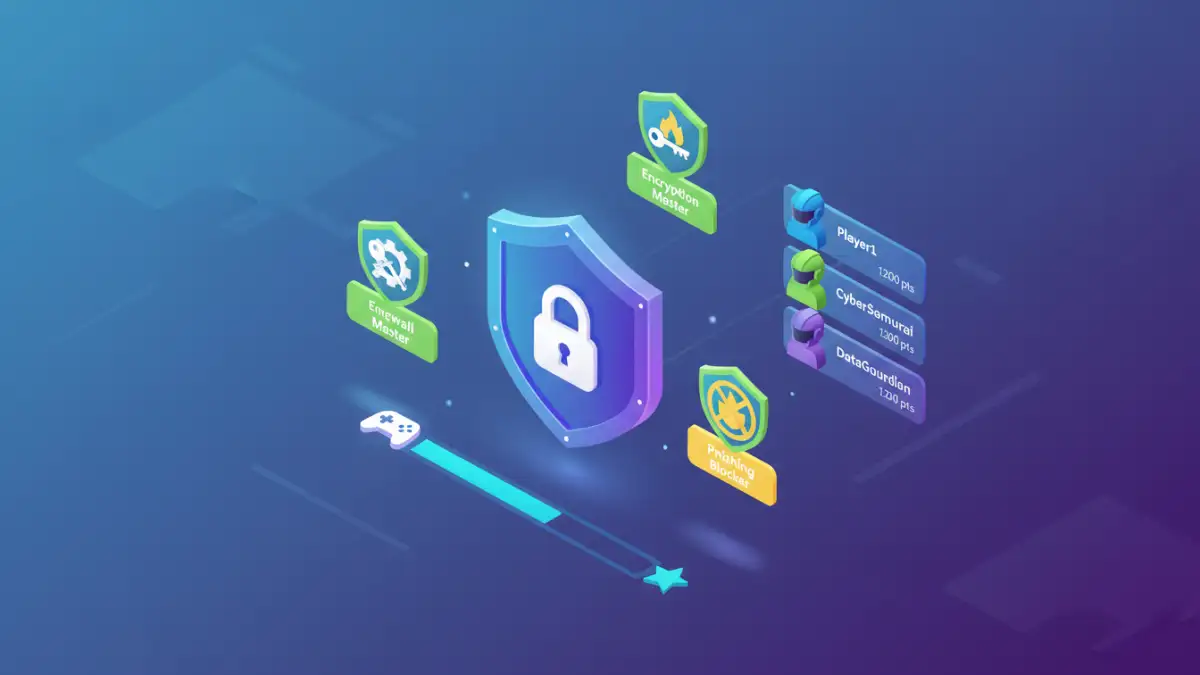
I've seen it countless times: a mandatory security training email lands in everyone's inbox, and you can almost hear the collective groan. Employees click through slides as fast as possible, retain very little, and go back to their old habits. When it comes to protecting sensitive documents like PDFs, this "check-the-box" approach is not just ineffective; it's a significant risk.
We can't expect people to care about encrypting a file or spotting a malicious PDF attachment if the training is a chore. The real challenge isn't just teaching the 'how' but inspiring the 'why.' This is where we need a different approach, one that makes learning active, rewarding, and even a little bit fun.
Table of Contents
The Problem with Traditional Security Training
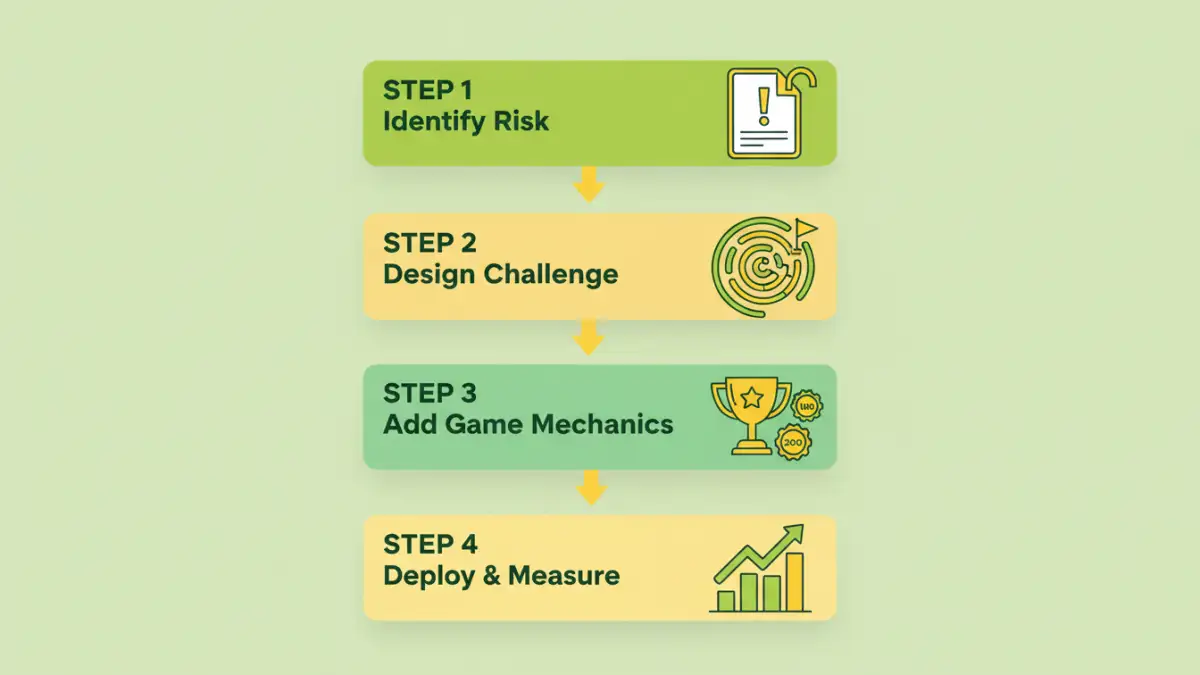
The standard security awareness model is broken. It often consists of a yearly presentation or a series of static web pages that employees are required to complete. The focus is on compliance, not comprehension. The result is low employee engagement security, where team members see security as an obstacle rather than a shared responsibility.
This passive learning style leads to poor knowledge retention. An employee might learn how to set a password on a PDF during the training, but without practical application or reinforcement, that knowledge fades quickly. When a real threat appears, they are no more prepared than they were before.
Why Employees Tune Out
Let's be honest, most security training is dry. It's filled with technical jargon and abstract threats that don't feel relevant to an employee's daily tasks. There's no story, no challenge, and no reward. It’s a lecture, not an experience. Without active participation, the brain simply doesn't form the strong neural pathways needed for long-term memory.
What is Gamification in Security Awareness?

Gamification isn't about turning your office into an arcade. It's the strategic use of game-design elements and principles in non-game contexts to drive engagement and change behavior. Think about fitness apps that award badges for hitting a step goal or language apps that use points and streaks to encourage daily practice. The same principles can create some genuinely fun security education.
By introducing elements like points, leaderboards, and challenges, we can transform a passive learning module into an active, motivating experience. This shift changes the user's role from a passive recipient of information to an active participant in a challenge, which is far more effective for learning and retention.
Core Gamification Elements
Several key components make gamification work. Points and badges provide immediate feedback and a sense of accomplishment. Leaderboards introduce friendly competition, motivating individuals and teams to improve. Progress bars and levels give users a clear sense of advancement, showing them how far they've come. Finally, weaving these elements into a compelling narrative or story can make the entire experience more memorable and meaningful.
Designing Interactive Training Modules for PDF Security
Applying gamification to a specific area like PDF security is where it truly shines. Instead of a slide that says, "Always encrypt sensitive PDFs," we can create interactive training modules that let employees practice these skills in a safe, simulated environment. The goal is to build muscle memory around secure behaviors.
For instance, a module could start with a scenario: "You need to send the quarterly financial report to the board. The report is a PDF containing highly sensitive data. What do you do?" From there, the module guides the user through the steps of applying strong encryption and a secure password, awarding points for each correct action.
A well-designed pdf security training program uses these techniques to make the lessons stick. It’s about creating scenarios that mirror the real-world challenges employees face. When they encounter a similar situation in their job, the correct, secure response feels instinctive because they've successfully navigated it before in the training environment.
Example Scenarios
Here are a few ideas for gamified modules:
- The Phishing Gauntlet: Users are presented with a series of emails, some legitimate and some phishing attempts with malicious PDF attachments. They earn points for correctly identifying and reporting the phishing emails and lose points for clicking on dangerous links.
- The Encryption Quest: A multi-stage challenge where an employee must correctly secure different types of documents. They might start with a simple password on a PDF and level up to using digital certificates and setting granular user permissions.
- Escape the Data Breach: A virtual escape room where the team has to work together to find and secure all the unprotected sensitive documents (including PDFs) on a simulated network drive before a timer runs out.
Measuring Success and Driving Improvement
The beauty of gamified security awareness is that it generates a wealth of data. We can move beyond simple completion rates and look at more meaningful metrics. How quickly are users identifying threats? Are the scores on encryption challenges improving over time? Are we seeing a measurable reduction in real-world security incidents, like employees reporting phishing attempts instead of falling for them?
This data allows us to identify knowledge gaps and areas where the training needs to be refined. If many users are struggling with a particular module, we know to provide more resources or redesign the challenge. It creates a feedback loop for continuous improvement, ensuring the training remains relevant and effective over the long term.
Gamification Element Comparison
| Element | Description | Impact on Security Behavior |
|---|---|---|
| Points / Experience (XP) | Awarded for completing tasks or answering correctly. | Encourages consistent participation and module completion. |
| Badges / Achievements | Digital awards for mastering a skill (e.g., 'Encryption Expert'). | Provides recognition and validates specific competencies. |
| Leaderboards | Ranks participants based on points or achievements. | Fosters friendly competition and motivates higher performance. |
| Storylines / Narratives | Frames the training within a compelling story. | Increases emotional investment and makes lessons more memorable. |
| Levels / Progression | Unlocks new challenges as the user's skill grows. | Creates a structured learning path and a sense of advancement. |
| Immediate Feedback | Instantly informs the user if their action was correct or incorrect. | Reinforces correct behaviors and corrects mistakes in real-time. |