
With data regulations like GDPR and CCPA becoming more stringent, companies are under immense pressure to get their document handling right. A single misstep can lead to massive fines and reputational damage. It's no longer just about locking down a server; it's about controlling every document, everywhere. I've seen firsthand how teams struggle to balance accessibility with the ironclad security that compliance demands.
A recent industry survey highlights a significant gap between what regulations require and what organizations are actually doing. The findings reveal common pain points and persistent vulnerabilities that many businesses, regardless of size, are currently grappling with. Understanding these issues is the first step toward building a more resilient and compliant security posture.
Table of Contents
The Complex Regulatory Landscape
Navigating the world of data compliance feels like trying to read a map that's constantly being redrawn. Regulations such as the EU's General Data Protection Regulation (GDPR), the California Consumer Privacy Act (CCPA), and HIPAA for healthcare are not static. They evolve, and keeping up requires constant vigilance. Each has specific mandates for how personal and sensitive data within documents must be collected, stored, processed, and shared.
The core principle behind these laws is data subject rights—giving individuals control over their personal information. For businesses, this translates into a need for meticulous GDPR document handling, from data processing agreements to records of consent. Failure to demonstrate control over this data lifecycle is where many organizations find themselves exposed to significant data regulation risks.
Key Findings from the Compliance Survey
The latest compliance survey results paint a clear picture of the struggles organizations face. When asked about their biggest hurdles, IT and compliance leaders consistently pointed to a few key areas. These aren't just technical problems; they are deeply rooted in organizational processes and human behavior, making them particularly difficult to solve.
Challenge 1: The Proliferation of Unstructured Data
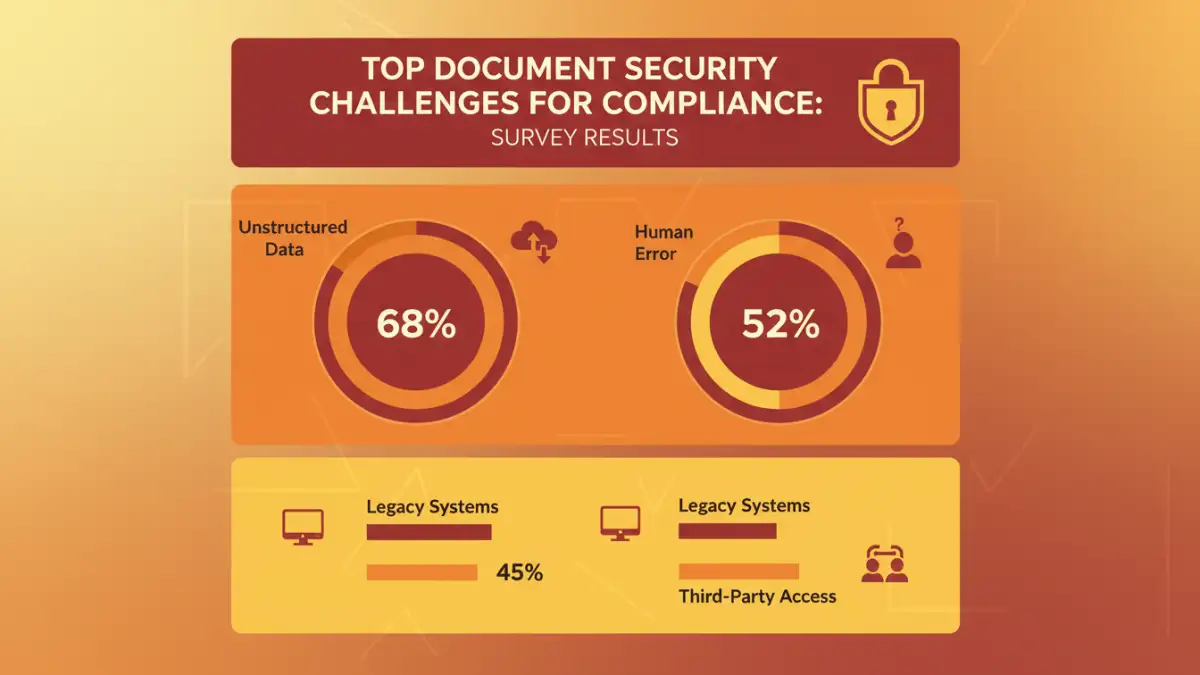
The survey revealed that 68% of organizations identify unstructured data as their top security risk. Think about it: countless contracts, reports, spreadsheets, and presentations are saved across local drives, cloud storage, and email attachments. This 'data sprawl' makes it nearly impossible to enforce consistent security policies. Without a centralized system, you can't effectively track who has access to what, when a document was last modified, or if it contains sensitive information that falls under GDPR.
Challenge 2: Human Error and Insider Risk
Technology can only do so much. A staggering 52% of reported data breaches in the survey were attributed to human error. This includes everything from employees sharing sensitive files via unsecure personal email to falling for phishing attacks that compromise their credentials. It highlights a critical gap in security awareness training. Employees are often the weakest link, not out of malice, but due to a lack of understanding of secure file compliance protocols.
Technology's Role in Secure File Compliance
While people and processes are part of the problem, technology is a crucial part of the solution. Modern document management and security platforms are designed to address these specific challenges. For instance, Data Loss Prevention (DLP) tools can automatically scan outgoing emails and files for sensitive keywords like credit card numbers or social security numbers, blocking them before they leave the network.
Furthermore, rights management solutions allow for granular control over documents even after they've been shared. I've implemented systems where you can set a document to be read-only, prevent printing or copying, and even revoke access remotely after a certain period. This level of control is essential for ensuring that sensitive information doesn't end up in the wrong hands, directly supporting compliance requirements for data control and accountability.
Actionable Strategies for Better Security
Addressing these document security challenges requires a multi-faceted approach. It's not about finding a single magic bullet but about building layers of defense. A great starting point is conducting a comprehensive data audit to identify where all your sensitive unstructured data lives. Once you know what you have, you can start classifying it based on sensitivity and applying appropriate security controls.
Investing in robust, ongoing employee training is equally critical. This shouldn't be a one-time event but a continuous program that educates staff on recognizing phishing attempts, understanding data handling policies, and using company-approved tools for sharing files. When employees understand the 'why' behind the security rules, they are far more likely to become a strong line of defense rather than a liability.
Top Document Security Challenges & Mitigation
| Challenge | Survey Finding (% of Respondents) | Recommended Mitigation Strategy |
|---|---|---|
| Unstructured Data Sprawl | 68% | Implement a centralized Document Management System (DMS) with data classification. |
| Human Error / Lack of Training | 52% | Conduct continuous, role-based security awareness training and phishing simulations. |
| Managing Access Controls | 45% | Enforce the Principle of Least Privilege (PoLP) and use Identity and Access Management (IAM) tools. |
| Insecure File Sharing Practices | 39% | Deploy secure file sharing solutions with encryption and granular permissions. |
| Tracking Document Lifecycles | 31% | Utilize tools with automated audit trails and document retention/disposal policies. |