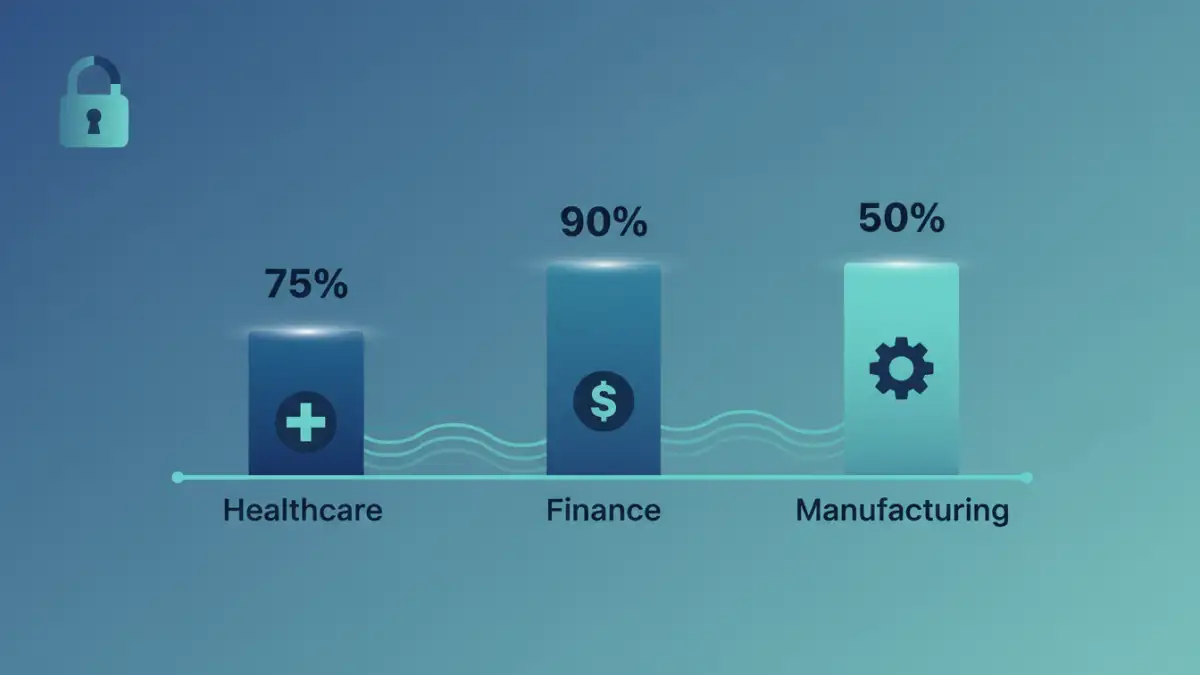
With data breaches becoming a near-daily headline, you would assume that basic document security is a solved problem. Yet, a recent document encryption survey paints a different picture, revealing a surprising and concerning gap in how different industries handle sensitive information. It seems that while some sectors are locking down their data tightly, others are leaving the digital door wide open.
This isn't just an academic observation; it has real-world consequences. I once worked on a project integrating systems for a manufacturing client where sensitive blueprints were being shared as unprotected PDFs. The potential for industrial espionage was massive, yet the practice was deeply ingrained in their workflow. This survey helps explain the 'why' behind these risky behaviors.
Table of Contents
The Surprising Findings: A Snapshot of the Survey
The core finding from the recent document encryption survey is stark: adoption of even basic PDF encryption is inconsistent across the board. The data shows a clear divide, with highly regulated industries like finance and healthcare demonstrating high adoption rates, while sectors like manufacturing, retail, and construction lag significantly behind. This disparity highlights that compliance, rather than proactive security posture, is often the primary driver for data protection.
What's particularly interesting in the adopting encryption statistics is the gap between awareness and action. A majority of respondents in lagging industries acknowledged the risks of unsecured document sharing. However, this awareness didn't translate into consistent policy or tool implementation. This suggests the barriers are more practical than philosophical; people know they should do it, but something is stopping them.
Key Barriers to Adopting Encryption

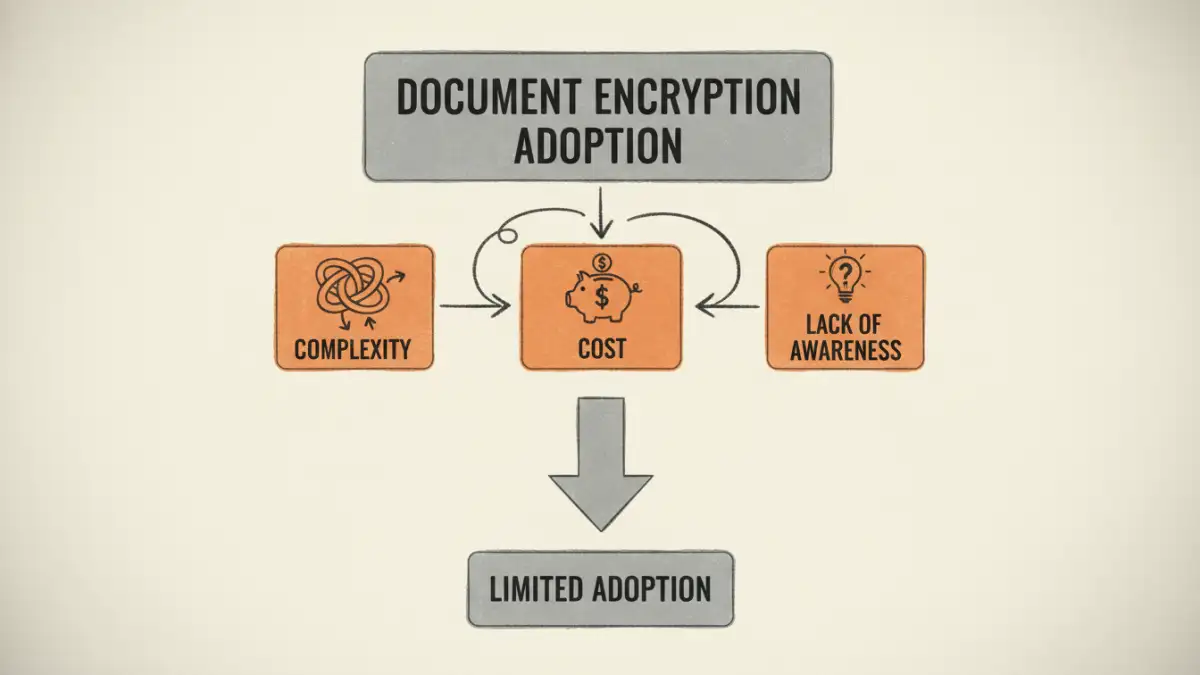
The survey data points to several recurring obstacles that prevent wider PDF encryption use. These aren't just technical issues but are deeply rooted in organizational culture, workflow, and resource allocation. Understanding these barriers is the first step toward overcoming them.
Perceived Complexity and Workflow Disruption
One of the most cited reasons for not using encryption was the belief that it's complicated and slows down work. Employees are often resistant to new steps in their daily processes, especially if it involves managing passwords or using unfamiliar software. If securing a document adds even a minute to a task repeated dozens of times a day, the collective pushback can be enough to derail a security initiative before it starts. The fear of employees forgetting passwords and getting locked out of crucial documents is a major deterrent for management.
Cost and Resource Allocation
Another significant barrier is the perceived cost. While many tools offer free or low-cost encryption, implementing an enterprise-wide solution is often seen as a significant IT expense. In industries with tight margins, a security measure that doesn't show a direct, immediate return on investment can be a tough sell. This is especially true for small to medium-sized businesses that lack dedicated IT security staff to evaluate, deploy, and manage encryption tools.
Industries Leading and Lagging in Data Protection
The industry compliance data from the survey clearly illustrates where the biggest risks lie. Finance and healthcare, subject to strict regulations like GDPR, HIPAA, and PCI DSS, have robust data protection trends. For them, encryption isn't optional; it's a legal and financial necessity. The penalties for non-compliance are severe, making the investment in security an easy decision.
Conversely, industries like construction and manufacturing often handle highly sensitive intellectual property—schematics, trade secrets, and client data—but lack the same regulatory pressure. Their security practices are often more fragmented. In my experience, these sectors prioritize operational speed, and security measures are sometimes viewed as an impediment. This creates a dangerous environment where valuable data is exchanged with minimal protection, relying more on trust than on technical controls.
Bridging the Gap: Practical Steps for Better Security
Closing the security gap doesn't require a complete operational overhaul. It starts with education and the implementation of user-friendly tools. Organizations should focus on demonstrating how encryption protects not just the company but also the individual employees from costly mistakes. Training should focus on simple, repeatable workflows.
Automating the encryption process wherever possible can also make a huge difference. For example, document management systems can be configured to automatically encrypt certain file types or documents containing sensitive keywords upon export. By removing the manual step, you remove the friction and ensure compliance without relying on every employee to remember. The goal is to make security the path of least resistance, not an obstacle to be overcome.
Industry Encryption Adoption Rates: A Comparative Look
| Industry | Encryption Adoption Rate | Key Driver | Main Barrier |
|---|---|---|---|
| Finance | High (85%) | Regulatory Compliance (PCI DSS, GDPR) | Integration with legacy systems |
| Healthcare | High (80%) | Patient Data Privacy (HIPAA) | Interoperability between providers |
| Legal | Moderate (65%) | Client Confidentiality | Ease of use for non-technical staff |
| Manufacturing | Low (35%) | Protecting Intellectual Property | Workflow disruption and speed |
| Retail | Low (30%) | Customer Payment Data (PCI DSS) | Cost for multi-location deployment |
| Construction | Very Low (20%) | Contract and Bid Confidentiality | Lack of awareness and perceived need |