Sending a critical business proposal via email feels routine, but for many leaders, it's a moment of anxiety. What happens to that file once it leaves your outbox? This isn't just paranoia; it's a reflection of deep-seated business security concerns that show up consistently in research on digital collaboration. The core issue is a loss of control over sensitive intellectual property.
Understanding these fears is the first step toward building a truly secure environment. It’s not about locking everything down so tightly that work grinds to a halt. It’s about finding a balance where security enables productivity, rather than hindering it. Let's break down what the data shows businesses are most worried about.
Table of Contents
The Core Anxiety: Data Breaches and Unauthorized Access
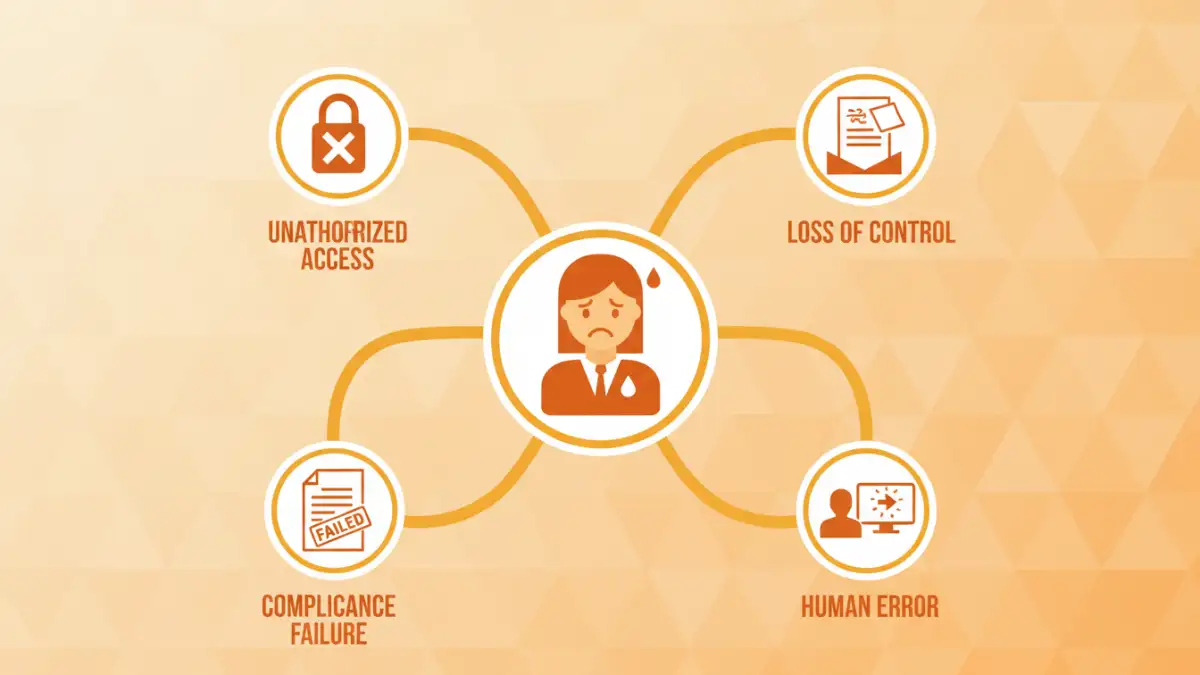
Unsurprisingly, the number one fear for any organization is a data breach. The potential fallout is massive, ranging from devastating financial losses and regulatory fines to irreparable damage to a company's reputation. When we talk about file sharing, this fear is amplified because every shared file represents a potential new vulnerability.
The threat isn't one-dimensional. It comes from sophisticated external attackers trying to exploit system weaknesses and from internal sources. A comprehensive secure file sharing survey often highlights that businesses are just as concerned about an accidental leak by a well-meaning employee as they are about a malicious hacker. The end result is the same: sensitive data in the wrong hands.
Insider Threats vs. External Attacks
From a technical standpoint, defending against external attacks often involves firewalls, intrusion detection, and endpoint security. However, protecting against insider threats—whether malicious or accidental—requires a different approach. This is where granular access controls, activity logging, and user permissions become critical. You need to ensure that employees can only access and share the files explicitly required for their roles.
The Black Hole: Loss of Control and Visibility
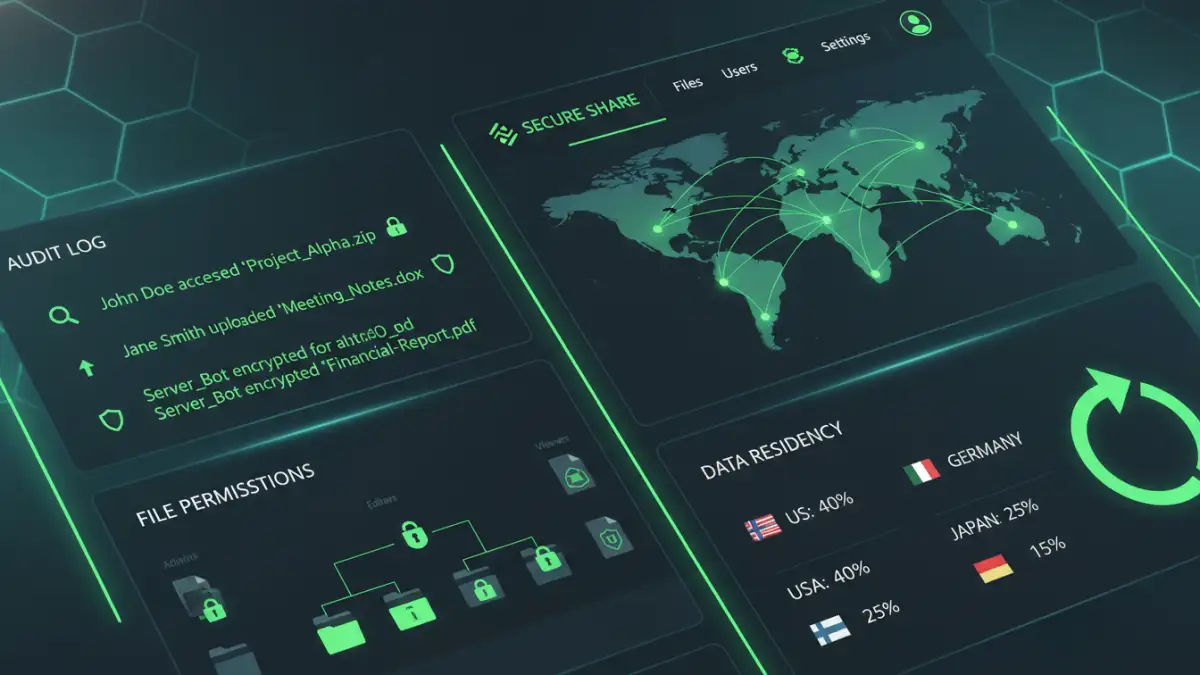
Another major concern is the 'send and forget' nature of traditional file sharing methods like email attachments. Once a document is sent, you effectively lose all control. You can't see who has accessed it, if it's been forwarded, or if it has been downloaded to an unsecured personal device. This lack of visibility is a significant source of anxiety for IT and security teams.
This problem is compounded by 'Shadow IT'—the use of unauthorized, consumer-grade file sharing apps by employees. While seemingly harmless, these platforms lack the enterprise-grade security, auditing, and control features that businesses need, creating blind spots where sensitive data can be exposed.
The Challenge of Revoking Access
Imagine discovering that a confidential financial report was accidentally sent to the wrong distribution list. With email, your only recourse is a recall request, which is notoriously unreliable. Modern secure file sharing platforms address this directly by allowing administrators to revoke access to a file or link instantly, even after it has been sent. This ability to 'pull back' a document is a powerful tool for mitigating document sharing risks.
The Compliance Burden: Navigating Regulations and Audits
For businesses in regulated industries like healthcare (HIPAA), finance (SOX, FINRA), or any company handling personal data (GDPR, CCPA), compliance is non-negotiable. A significant fear is that their file sharing practices will lead to a compliance violation. The penalties are not just financial; they can include operational sanctions and a loss of customer trust.
A key aspect of compliance is the ability to produce a clear audit trail. Regulators want to see exactly who accessed what data, when they accessed it, and what they did with it. If your file transfer security solution can't provide these detailed logs, you are essentially flying blind during an audit, which is a terrifying position for any compliance officer to be in.
The Human Element: Employee Negligence and Usability Gaps
Ultimately, technology is only as effective as the people using it. Many data leaks aren't the result of a sophisticated cyberattack but simple human error. This includes falling for phishing scams, using weak or reused passwords, or accidentally sharing a sensitive link in a public forum. Businesses are acutely aware that their employees are often the weakest link in the security chain.
This is where usability becomes a security feature. If a secure system is overly complex or cumbersome, employees will inevitably find workarounds that compromise security. The best solutions are those that integrate seamlessly into existing workflows, making the secure path the easiest path. I've seen many projects succeed or fail based on this principle alone; a tool that people refuse to use is worthless, no matter how secure it is on paper.
Top Business Security Concerns in File Sharing
| Business Fear | Potential Business Impact | Key Mitigation Strategy |
|---|---|---|
| Data Breach / Unauthorized Access | Financial loss, reputation damage, legal penalties | End-to-end encryption, multi-factor authentication (MFA), granular access controls |
| Loss of Control and Visibility | Data leaks, Shadow IT proliferation, inability to track assets | Centralized platform with detailed audit logs and activity tracking |
| Compliance and Regulatory Failure | Hefty fines, operational sanctions, loss of certifications | Solutions with built-in compliance reporting and data residency controls |
| Human Error and Negligence | Accidental data exposure, vulnerability to phishing | Intuitive user interface, regular security awareness training |
| Insecure Third-Party Collaboration | Supply chain vulnerabilities, data exposure via partners | Secure data rooms with guest user policies and expiring links |