
A few months back, a junior developer on my team accidentally shared a document containing sensitive API keys in a public channel. We caught it within minutes, but the incident was a stark reminder that even the most advanced firewalls and encryption tools are useless if the human element is overlooked. Technical safeguards are crucial, but they can't prevent every mistake.
That event highlighted a critical gap: a lack of consistent, practical training on day-to-day security practices. It's not enough to just have a policy written down somewhere; you need a living, breathing culture of security. This is where a well-structured training program becomes essential, turning your team from a potential liability into your strongest defense.
Table of Contents
Why a Document Security Program is Non-Negotiable
Many organizations invest heavily in security hardware and software, yet they neglect the most unpredictable variable: their people. A single employee clicking a phishing link, using a weak password, or mishandling a sensitive file can bypass millions of dollars in security infrastructure. The goal isn't to blame individuals but to empower them with knowledge.
Beyond preventing accidental data leaks, a formal program helps meet compliance requirements for regulations like GDPR, HIPAA, and CCPA, which mandate employee training on data handling. It fosters a proactive security culture where team members feel responsible for protecting company and client information, moving from a reactive to a preventative mindset.
Core Components of an Effective Training Program

A successful program isn't just a one-off presentation. It's an ongoing effort built on several key pillars that reinforce each other. These components form the foundation of your corporate security awareness efforts.
Defining Your Data Protection Policy
Before you can train anyone, you need clear rules. Your data protection policy is the source of truth for how information should be handled. It should be easy to understand and access, clearly defining what constitutes sensitive data (e.g., PII, financial records, intellectual property), data classification levels (e.g., Public, Internal, Confidential), and the approved tools for storing and sharing each type.
Practical Training on Secure File Handling
This is where theory meets practice. Your employee security training must focus on real-world scenarios. Cover essential topics like strong password creation and management (using password managers), recognizing phishing attempts, the importance of multi-factor authentication (MFA), and secure methods for sharing files. For instance, train your team to use a secure file-sharing service instead of emailing sensitive attachments.
A Step-by-Step Implementation Guide
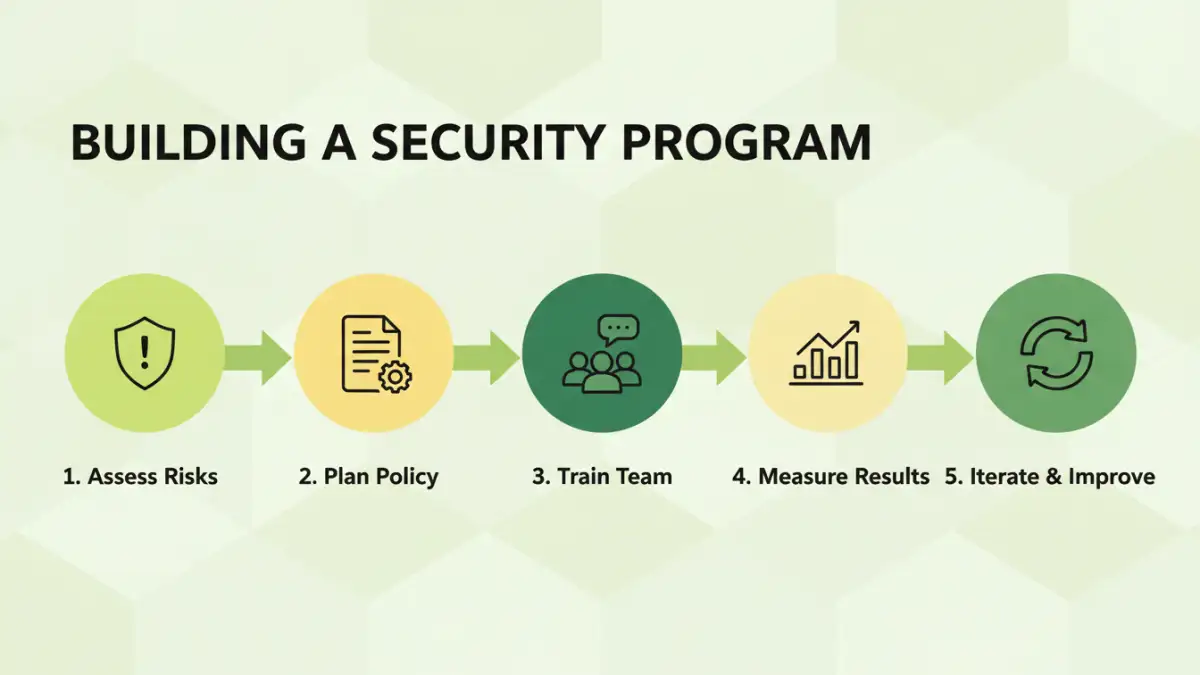
Launching a document security awareness program can feel daunting, but breaking it down into manageable steps makes the process straightforward. A phased approach ensures you build a solid foundation and gain momentum.
- Get Leadership Buy-In: Security is a business-level concern. Present the risks and benefits to leadership to secure the necessary resources and mandate participation.
- Assess Your Current Risks: Identify where your biggest vulnerabilities are. Are employees using personal cloud storage? Is there a common pattern of weak passwords? Use this information to tailor your training content.
- Develop Engaging Content: Avoid dry, text-heavy slides. Use a mix of formats like short videos, interactive quizzes, and live Q&A sessions. Tailor examples to different departments—what's relevant for sales is different from engineering.
- Schedule and Launch: Roll out the training in phases. Start with a mandatory initial session for all employees, followed by regular refreshers. Integrate security awareness into the onboarding process for new hires.
Measuring Success and Continuous Improvement
How do you know if your program is working? You need to track key metrics to measure its effectiveness and identify areas for improvement. This data is crucial for demonstrating ROI to leadership and refining your strategy over time.
Start by tracking simple metrics like training completion rates and quiz scores. More advanced methods include running controlled phishing simulations to see how many employees click malicious links before and after training. You can also monitor the number of user-reported security incidents. A rise in reported incidents can actually be a good sign—it means your team is more vigilant and knows how to flag potential threats.
Training Method Comparison
| Training Method | Pros | Cons | Best For |
|---|---|---|---|
| Live Workshops | Highly interactive, allows for Q&A, tailored to audience. | Difficult to scale, scheduling challenges, higher cost. | Onboarding new teams, deep dives on critical topics. |
| E-Learning Modules | Scalable, self-paced, consistent messaging, trackable. | Can be less engaging, lacks real-time interaction. | Annual compliance training, foundational knowledge. |
| Phishing Simulations | Provides practical, real-world experience in a safe environment. | Can cause employee anxiety if not handled properly. | Testing and reinforcing phishing awareness. |
| Security Bulletins/Newsletters | Keeps security top-of-mind, provides timely updates on new threats. | Easily ignored, passive learning method. | Ongoing reinforcement and communication. |