
You've just spent weeks curating the perfect collection of documents for a potential client—case studies, design mockups, and strategic plans. The final step is to send it, but attaching a 50 MB zip file to an email feels both clumsy and insecure. How can you ensure your hard work is presented professionally and, more importantly, remains confidential?
This is a common challenge. Simply sending files as attachments gives you zero control once you hit 'send'. You don't know if or when they've been opened, who they've been forwarded to, or if they're sitting unprotected on someone's server. We need a better approach.
Table of Contents
Why Standard Sharing Methods Are Risky
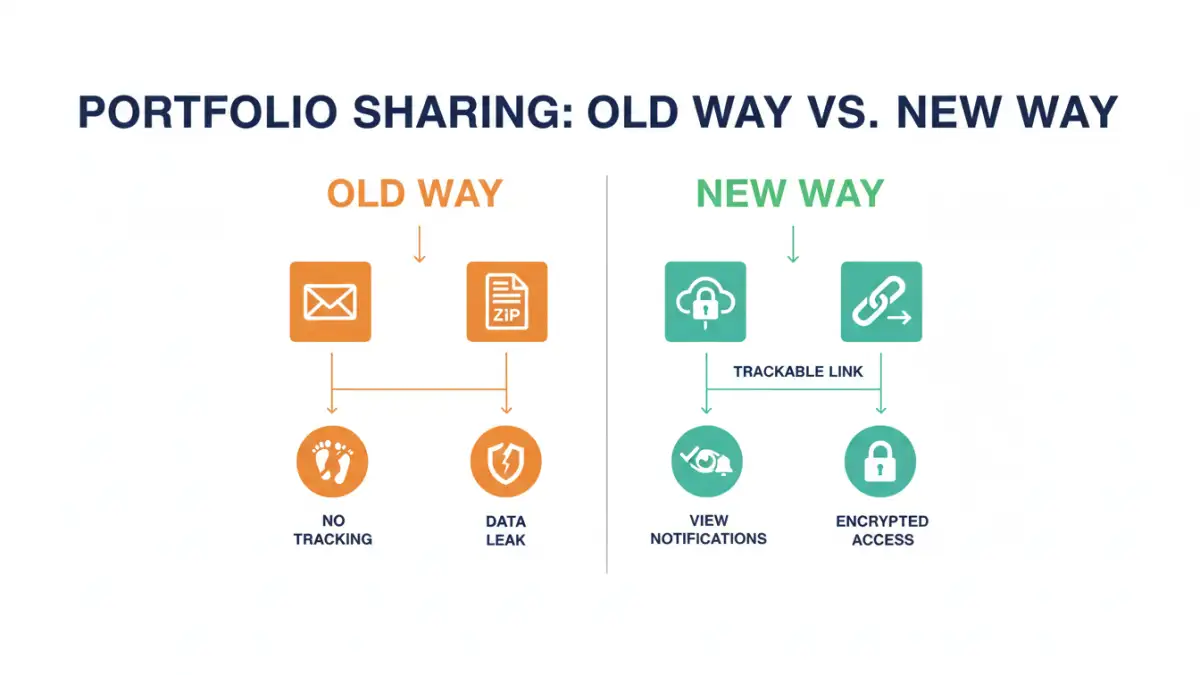
For years, the default method to send multiple documents safely was to compress them into a ZIP folder and attach it to an email. While straightforward, this method is riddled with security and practical issues that can undermine your professionalism and compromise your intellectual property.
First, there's a complete lack of access control. Once that email is sent, the recipient can download, save, and forward your portfolio to anyone without your knowledge. There are no mechanisms for revoking access if a deal falls through or if you send it to the wrong person by mistake. Furthermore, email servers often have strict attachment size limits, forcing you to use clunky, ad-supported file transfer services that may not be secure.
Key Criteria for Evaluating Secure Sharing Solutions

When looking for a better way to share a document portfolio, we need to think beyond just file delivery. A robust solution should provide control, insight, and a seamless experience for your client. I always evaluate potential tools based on a few core principles.
Security and Access Control
This is non-negotiable. The solution must offer strong security features. This includes encrypted folder sharing, where the data is protected both in transit and at rest. Look for features like password protection, link expiration dates, and the ability to disable downloading. The goal is to grant viewing access without giving up ownership of the files themselves.
Tracking and Analytics
Imagine knowing exactly when a potential client opened your portfolio, which documents they spent the most time on, and if they shared it with others on their team. This is invaluable business intelligence. Good portfolio sharing software provides detailed analytics, giving you insights to tailor your follow-up and gauge client interest effectively. It turns a simple file share into a strategic tool.
A Breakdown of Portfolio Sharing Options
Several types of tools can handle secure file collection sharing, each with its own set of advantages and disadvantages. The right choice depends on your specific needs for security, branding, and analytics.
1. Standard Cloud Storage (Google Drive, Dropbox, OneDrive)
These services are ubiquitous and easy to use. You can create a folder, upload your documents, and share a link. While they offer basic password protection and permissions, they fall short for professional use. The presentation is often generic, and the analytics are either non-existent or very basic. They're fine for casual collaboration but lack the polish and control needed for high-stakes client presentations.
2. Public Portfolio Platforms (Behance, Dribbble)
Tailored for creatives, these platforms are excellent for showcasing public work and building a community presence. However, they are fundamentally public-facing. They are not designed for sharing confidential proposals, sensitive case studies, or tailored collections of documents intended for a single client's eyes only.
3. Dedicated Secure Document Sharing Platforms (DocSend, PandaDoc, DealRoom)
This category represents the gold standard for securely sharing important business documents. These platforms are built from the ground up with security and analytics in mind. They allow you to package multiple documents into a single, professionally branded microsite or 'data room' accessible via a secure link. You get granular control over who can access the content, for how long, and whether they can download it. The real power lies in the page-by-page analytics, which tell you exactly how your content is being consumed.
Implementing a Secure Sharing Workflow
Adopting a secure platform transforms how you send multiple documents safely. Instead of a one-off email attachment, you create a controlled, trackable experience. I recently helped a marketing agency transition to this model, and their client engagement improved significantly.
The typical workflow is simple yet powerful:
- Create a Space: You start by creating a dedicated, branded 'Space' or 'Room' for your portfolio.
- Upload Content: Add all relevant files—PDFs, slide decks, images, spreadsheets, and even videos. The platform organizes them into a clean, navigable presentation.
- Configure Security Settings: Set a password, require an email address for access, set a link expiration date, and disable downloads. This ensures only your intended recipient can view the content.
- Share the Link: Generate a unique, trackable link for your client. You can even create multiple links for the same portfolio to track engagement from different stakeholders.
- Monitor and Follow Up: As soon as the client opens the link, you receive a notification. You can then log in to see which documents they've viewed, giving you the perfect context for a timely and relevant follow-up call.
This process not only protects your intellectual property but also demonstrates a high level of professionalism and technological savvy to your clients.
Comparison of Document Portfolio Sharing Methods
| Method | Security Level | Analytics & Tracking | Best For |
|---|---|---|---|
| Email with ZIP Attachment | Low | None | Informal, non-sensitive file sharing. |
| Cloud Storage (Google Drive, Dropbox) | Medium | Basic (e.g., view counts) | Internal collaboration or sharing with trusted partners. |
| Public Portfolio Platforms (Behance) | Low (Public) | Public engagement metrics | Showcasing public work to a broad audience. |
| Secure Document Sharing Platforms | High | Advanced (page-by-page tracking) | Client proposals, fundraising, and confidential portfolio sharing. |