I once consulted for a mid-sized law firm that narrowly avoided a major incident. A paralegal, rushing to meet a deadline, accidentally emailed a sensitive case file to a personal email address. It was an honest mistake, but it exposed a critical vulnerability: their security protocols were just a checklist, not a culture. The most advanced firewall in the world can't stop a well-intentioned employee from making a simple error. This is why targeted staff training is the most crucial, yet often overlooked, layer of defense.
For legal practices, the stakes are incredibly high. It's not just about protecting business data; it's about upholding attorney-client privilege and maintaining client trust. Generic IT security PowerPoints won't cut it. Your team needs training that speaks their language and addresses their specific daily workflows.
Table of Contents
Why Generic IT Training Fails in a Legal Setting
A law firm's data is fundamentally different from a typical company's. The information you handle is protected by strict ethical and legal duties. A breach isn't just a financial problem; it's a professional ethics crisis waiting to happen. Effective training must acknowledge these unique pressures.
The High Stakes of Client Confidentiality
The foundation of the legal profession is trust. Proper client confidentiality training isn't just about compliance; it's about reinforcing the ethical duties every staff member has. Your team must understand that mishandling a document could potentially waive attorney-client privilege, damage a case, and result in severe reputational and financial consequences for the firm.
Common Human-Centric Vulnerabilities
From my experience, breaches often stem from simple, preventable mistakes. These include attorneys using personal devices for work without proper security, paralegals falling for sophisticated phishing scams disguised as court notifications, or administrative staff sharing documents through insecure public Wi-Fi. The goal of training is to build a 'human firewall' that can spot these risks instinctively.
Core Pillars of Effective Security Training

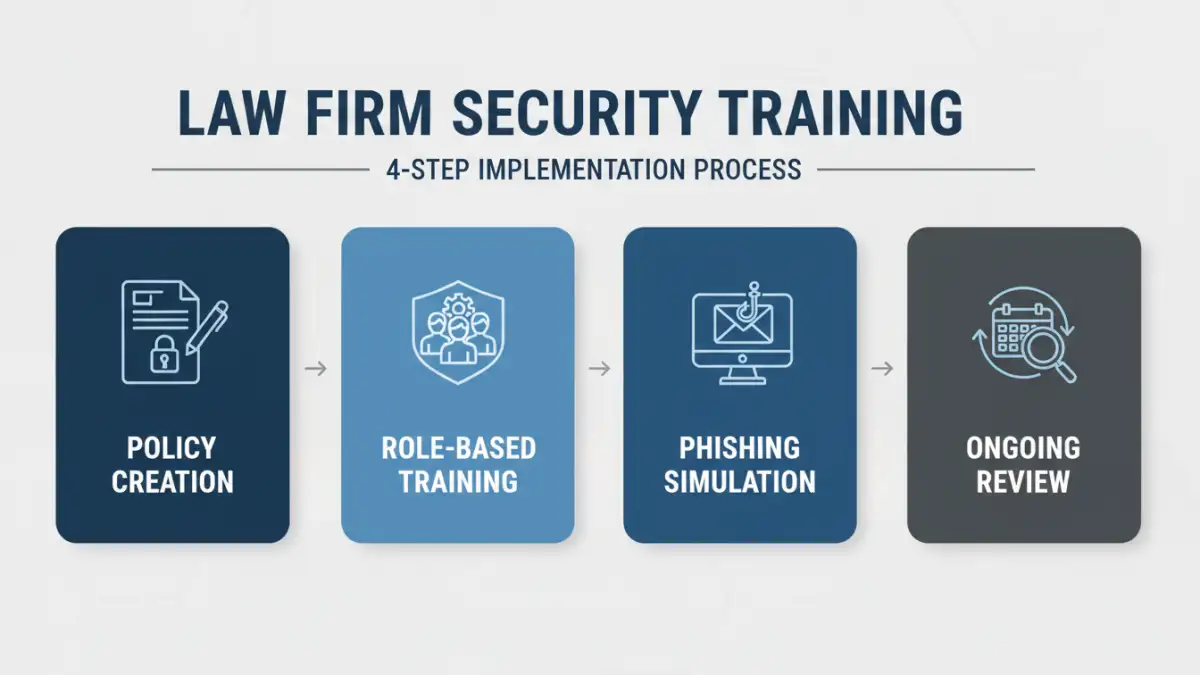
A successful program moves beyond theory and focuses on practical, role-specific skills. It should be an ongoing conversation, not a one-time event. Building a strong culture of law firm document security requires a multi-faceted approach that addresses the most common threats head-on.
Phishing and Social Engineering Awareness
Attackers frequently target law firms with highly convincing emails, known as spear phishing. Training should include real-world examples of phishing attempts tailored to the legal industry. Conduct regular, unannounced phishing simulations to test your staff's awareness and provide immediate feedback to those who click a malicious link. This hands-on practice is far more effective than a passive lecture.
Secure Document Handling and Transmission
Every employee needs to know the firm's approved methods for storing, sharing, and disposing of sensitive documents. This module should cover:
- Encryption: When and how to encrypt emails and documents, especially when sending them outside the firm.
- Secure File Sharing: Using a client portal or an approved secure file-sharing service instead of standard email attachments for large or highly sensitive files.
- Physical Document Security: Protocols for printing, storing, and shredding sensitive paper documents.
Developing a Practical Data Handling Policy
Training is only effective when it's built on a clear, accessible policy. A formal data handling policy for lawyers and all staff members serves as the rulebook. It removes ambiguity and provides a clear reference for how to manage client information correctly.
Data Classification and Labeling
Not all data is created equal. A simple classification system helps staff understand the sensitivity of the information they are handling. For example:
- Public: Marketing materials, public court filings.
- Internal: Firm memos, non-sensitive operational data.
- Confidential: Client communications, case notes, draft agreements.
- Restricted: PII (Personally Identifiable Information), financial data, sealed court records.
Access Control and Least Privilege
The Principle of Least Privilege is simple: employees should only have access to the data and systems they absolutely need to perform their jobs. A paralegal working on a corporate merger doesn't need access to files from the family law division. Implementing role-based access controls within your document management system is a technical measure that enforces this policy and minimizes the potential impact of a compromised account.
Reinforcing Training with Technology and Practice
Technology should support and enforce the behaviors taught in training. The right tools can make it easy for your staff to do the right thing and hard to do the wrong thing. This approach is key to preventing data breaches over the long term.
Utilizing a Document Management System (DMS)
A modern, legal-specific DMS is a cornerstone of security. Look for features like audit trails (who accessed what, when), granular permissions, and built-in encryption. Training staff to use the DMS exclusively, rather than saving files to local desktops, centralizes data and gives the firm control over its most valuable asset.
Mandating Multi-Factor Authentication (MFA)
Passwords can be stolen, but MFA adds a critical layer of protection. Mandating its use for email, the DMS, and any remote access system is one of the single most effective technical controls you can implement. It ensures that even if a password is compromised, an attacker cannot easily gain access to your firm's systems.
Training Module Focus Areas
| Training Module | Primary Objective | Target Audience | Key Learning Outcome |
|---|---|---|---|
| Phishing Simulation | Improve detection of malicious emails and links. | All Staff (Attorneys, Paralegals, Admin) | Reduced click-through rates on simulated phishing tests. |
| Data Handling & Classification | Ensure proper handling of sensitive information. | All Staff | Correctly applying security labels and using approved sharing methods. |
| Secure Communication | Protect attorney-client privilege in digital comms. | Attorneys, Paralegals | Consistent use of email encryption and secure client portals. |
| Password & Access Management | Strengthen credentials and prevent unauthorized access. | All Staff | Adoption of strong, unique passwords and universal MFA enrollment. |
| Incident Response | Prepare staff to react quickly and correctly to a suspected breach. | All Staff (with specific roles for IT/Partners) | Knowing who to contact and what initial steps to take during a security event. |