With the constant increase in cyber threats, the simple password is starting to feel like a flimsy screen door on a bank vault. We've seen fingerprints and facial scans become commonplace on our phones, but a new frontier is emerging in data protection: your voice. This isn't science fiction; it's a practical evolution in how we can secure our most sensitive files, from contracts to personal records.
Instead of fumbling for a complex password you can't remember, imagine simply speaking a phrase to unlock a critical report. This approach leverages the unique characteristics of your voice, creating a key that is incredibly difficult to forge. It's an area I've been following closely, as it blends sophisticated software engineering with fundamental human traits.
Table of Contents
The Shift from Passwords to Voice Biometrics
For decades, passwords have been the default gatekeepers of our digital lives. Yet, they are fundamentally flawed. They can be forgotten, stolen in data breaches, or cracked through brute-force attacks. This weakness has driven the adoption of biometrics—security measures based on unique human characteristics.
Voice biometrics stands out because it's both secure and user-friendly. Unlike a fingerprint, you don't need a special scanner, just a microphone, which is already built into nearly every device we own. It authenticates a user based on their unique vocal patterns, turning a simple spoken phrase into a complex, secure key.
What Makes a Voice Unique?
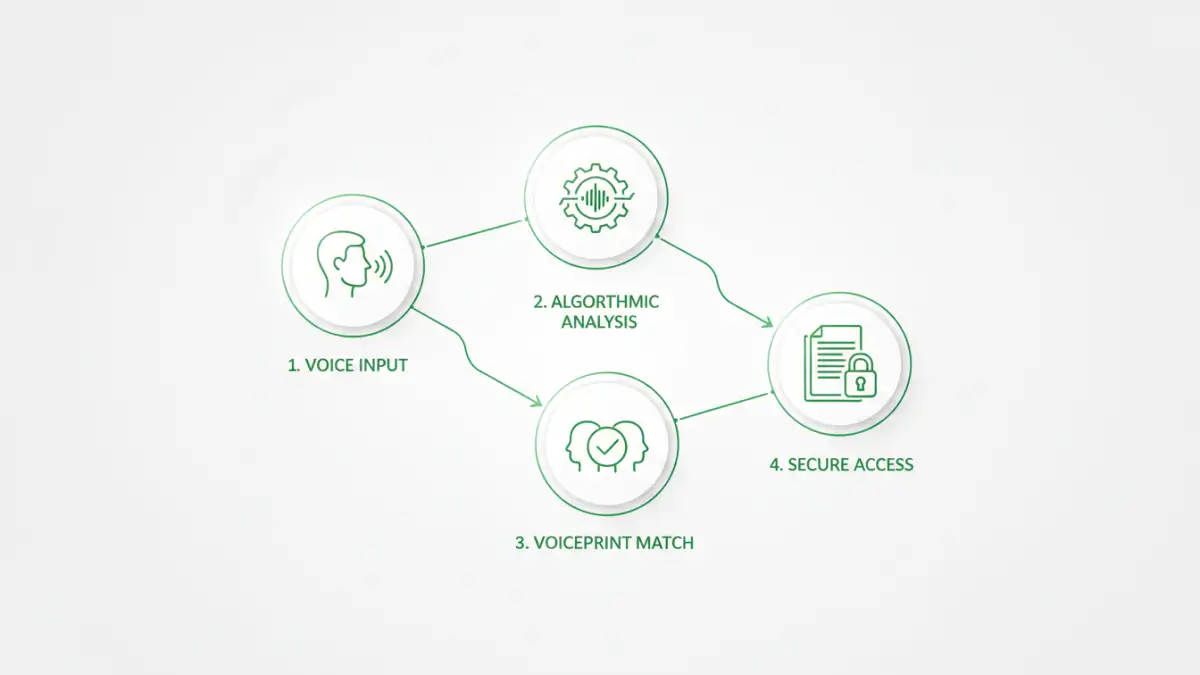
Your voice is more than just the words you say. It's a complex combination of physical and behavioral traits. When you speak, software analyzes over 100 different characteristics, such as pitch, cadence, frequency, and the subtle tones produced by the shape of your vocal tract. This creates a unique "voiceprint" that is statistically unique to you.
Think of it like a vocal fingerprint. Even if someone tries to impersonate you or use a recording, advanced systems can often detect the subtle differences. This makes voice a surprisingly robust method for verifying identity.
How Voice Recognition Document Security Works
Implementing voice-based access isn't as complicated as it sounds. The process generally involves two main phases: enrollment and verification. From a development standpoint, the real magic happens in the algorithms that can parse and match these complex audio signatures in milliseconds.
First, during enrollment, the user records a specific passphrase a few times. The system analyzes these recordings to create and store a secure, mathematical representation of their voiceprint. This template is the baseline for all future authentication attempts. It's not storing the audio itself, but rather the data that defines the voice.
The Verification Process
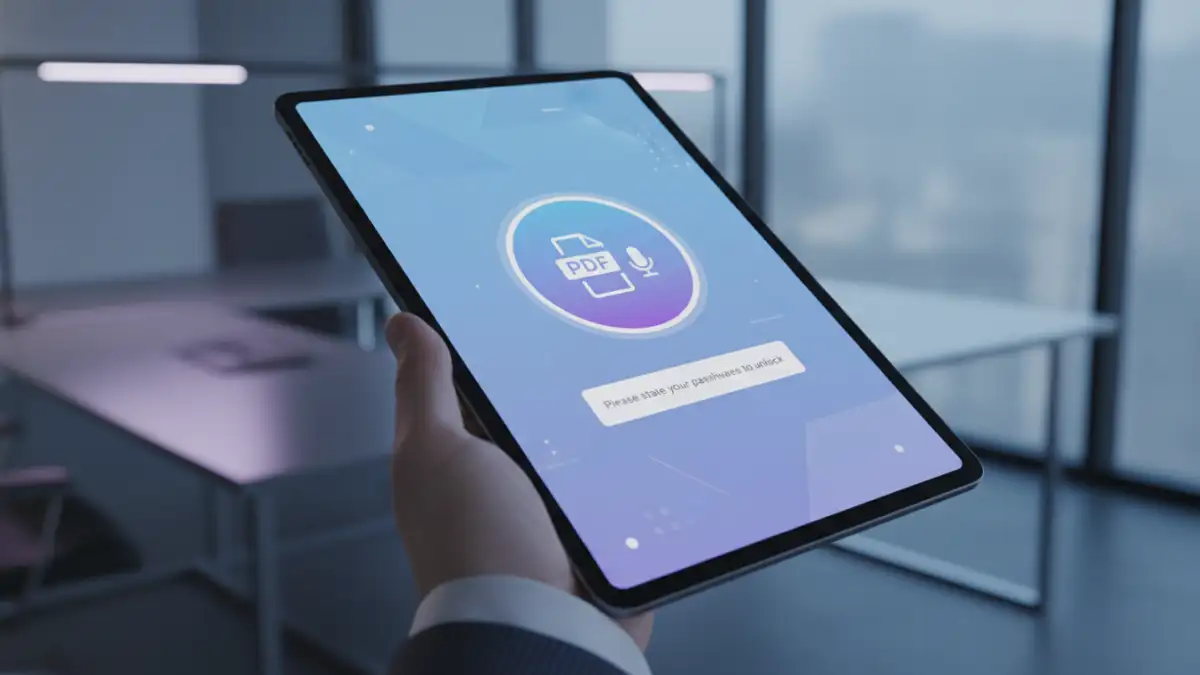
When you need to access a protected document, you simply speak the same passphrase into your device's microphone. The system captures your voice and compares its characteristics to the stored voiceprint. If the patterns match within an acceptable margin of error, the system grants access and decrypts the file. If they don't, access is denied. Modern systems also include "liveness detection" to ensure it's a live person speaking, not a recording, by looking for subtle cues inherent in human speech.
Practical Applications and Use Cases
The potential for voice-based document security is vast and spans across multiple industries. It offers a powerful combination of security and convenience that is hard to match with other methods.
- Corporate Environments: Executives could access confidential financial reports or M&A documents on their tablets simply by speaking. This eliminates the risk of passwords being written down or shared.
- Healthcare: Doctors and nurses could securely access patient records (EHRs) hands-free in a sterile environment, enhancing both workflow efficiency and HIPAA compliance.
- Legal and Financial Services: Lawyers could protect sensitive case files, and financial advisors could secure client portfolios with a spoken phrase, adding a strong layer of client data protection.
- Personal Use: Imagine securing your personal financial documents, digital journals, or family photos with your voice. It's an intuitive way to protect what matters most without adding password friction.
Challenges and the Road Ahead
Of course, no technology is perfect. Voice recognition has its own set of challenges that engineers are actively working to solve. Background noise can interfere with the verification process, and temporary changes to your voice due to a cold or illness could potentially cause a false rejection.
The biggest concern is security against sophisticated spoofing attacks, such as deepfake audio. This is where the future of document access is heading toward multi-factor authentication (MFA). Voice could be one powerful factor, combined with another like a PIN, a device-specific key, or even a location check. This layered approach creates a formidable barrier against unauthorized access.
As the underlying AI and machine learning models become more sophisticated, their ability to distinguish real voices from fakes and filter out background noise will only improve. The trend is clear: frictionless, biometric-based security is the way forward, and voice is poised to play a major role.
Comparison of Biometric Security Methods
| Biometric Type | Pros | Cons | Ideal Use Case |
|---|---|---|---|
| Voice Recognition | Contactless, requires common hardware (mic), difficult to replicate voiceprint. | Affected by background noise, illness; potential for high-quality recording spoofing. | Hands-free access, remote verification, securing individual documents. |
| Fingerprint Scan | Highly accurate, fast, widely adopted in mobile devices. | Requires physical contact, scanner can be dirty or fail with wet/damaged fingers. | Device unlocking, payment authorizations, physical access control. |
| Facial Recognition | Convenient, contactless, passive (no user action needed). | Can be fooled by high-res photos/masks (without liveness detection), privacy concerns. | Device unlocking, surveillance, seamless user authentication. |
| Iris Scan | Extremely high accuracy, stable over a person's lifetime. | Requires specialized hardware, can be intrusive for users, slower than other methods. | High-security government and corporate facilities, border control. |