
With teams now spread across the globe, the old model of keeping sensitive files locked away on a local server is becoming obsolete. This massive shift to distributed work has thrown a spotlight on a critical challenge: how do we protect our documents when they live outside the traditional corporate firewall? It's this very problem that is fueling an incredible expansion in the market for specialized security services.
Table of Contents
What's Driving the Market Growth?
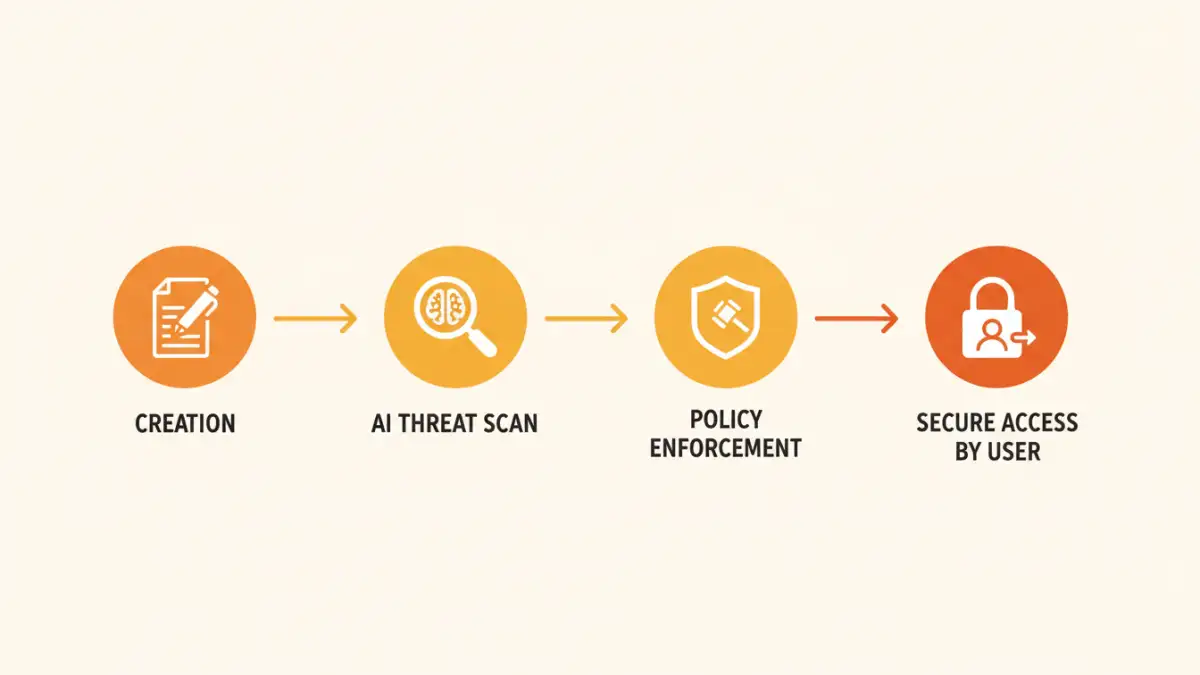
The demand for robust document protection isn't just a fleeting trend; it's a fundamental shift driven by several powerful forces. The most obvious driver is the widespread adoption of remote and hybrid work models. When employees access company data from various networks and devices, the potential attack surface grows exponentially. A simple, unsecured PDF sent over a home Wi-Fi network can become a significant liability.
Secondly, the regulatory landscape has become a minefield. Regulations like GDPR in Europe and CCPA in California impose severe penalties for data breaches. This compliance pressure forces organizations to prove they are taking proactive steps to secure personal and sensitive information, making auditable security controls a necessity, not a luxury. My own work has involved integrating systems that can log every access attempt, a feature regulators love to see.
Key Cloud File Protection Trends to Watch

As the market matures, we're seeing some fascinating technological trends emerge. These aren't just incremental improvements; they represent a new way of thinking about data protection in a decentralized world. The focus is shifting from building walls to creating intelligent, adaptive security that travels with the data itself.
The Rise of Zero Trust Architecture
The old "trust but verify" model is dead. Zero Trust operates on the principle of "never trust, always verify." In this model, every request to access a document is treated as a potential threat, regardless of where it originates. Access is granted on a per-session basis, authenticated through multiple factors, and limited to the absolute minimum permissions required. Implementing this for document workflows means integrating identity management, device health checks, and granular permissions directly into the file access layer.
AI and Machine Learning in Security
Artificial intelligence is the new frontline defender. Modern SaaS document security platforms use machine learning algorithms to analyze user behavior and detect anomalies. For instance, if an employee suddenly starts downloading hundreds of sensitive files at 3 AM from an unusual location, the AI can flag this activity as suspicious and automatically revoke access or trigger an alert. This proactive threat detection is something static, rule-based systems simply cannot match.
Market Share Analysis and the Competitive Landscape
The market for cloud document security is dynamic and diverse. It's not just one type of company dominating the space. We see a mix of players, each tackling the problem from a different angle. The major cloud providers like Microsoft, Google, and Amazon offer robust, integrated security features within their ecosystems (e.g., Microsoft Purview, Google Workspace security controls).
Alongside these giants, a vibrant ecosystem of specialized vendors is thriving. These companies often provide more focused solutions like advanced Digital Rights Management (DRM), data loss prevention (DLP), and Cloud Access Security Brokers (CASB). Startups are innovating rapidly, particularly in the areas of AI-driven analytics and user-friendly encryption tools. This competition is great for consumers, as it drives innovation and provides a wide range of options to fit different needs and budgets.
How to Choose Secure Cloud Storage Solutions
When evaluating a solution, it's easy to get lost in feature lists. From my perspective as an engineer, it's crucial to look beyond the marketing and focus on the core architecture. Does the service offer end-to-end encryption, where only you hold the keys? Can you set granular, policy-based permissions for different users and groups? How well does it integrate with your existing identity provider, like Okta or Azure AD?
Don't overlook the importance of audit trails and reporting. A good system should provide detailed logs of who accessed what, when, and from where. This is not only essential for security investigations but also for demonstrating compliance. Finally, consider the user experience. If a security tool is too complex or cumbersome, employees will find ways to bypass it, defeating the entire purpose.
Comparison of SaaS Document Security Approaches
| Security Approach | Primary Function | Best For | Example Providers |
|---|---|---|---|
| Integrated Cloud Suites | General-purpose security within a larger ecosystem. | Organizations heavily invested in one provider's ecosystem. | Microsoft 365, Google Workspace |
| Digital Rights Management (DRM) | Controls file usage (e.g., prevent printing, copying, forwarding). | Protecting high-value intellectual property. | Vera, Seclore |
| Data Loss Prevention (DLP) | Scans documents for sensitive data and blocks unauthorized sharing. | Preventing accidental or malicious data exfiltration. | Proofpoint, Forcepoint |
| Cloud Access Security Broker (CASB) | Acts as a gatekeeper between users and cloud services. | Gaining visibility and control over multiple cloud apps. | Netskope, Palo Alto Networks |