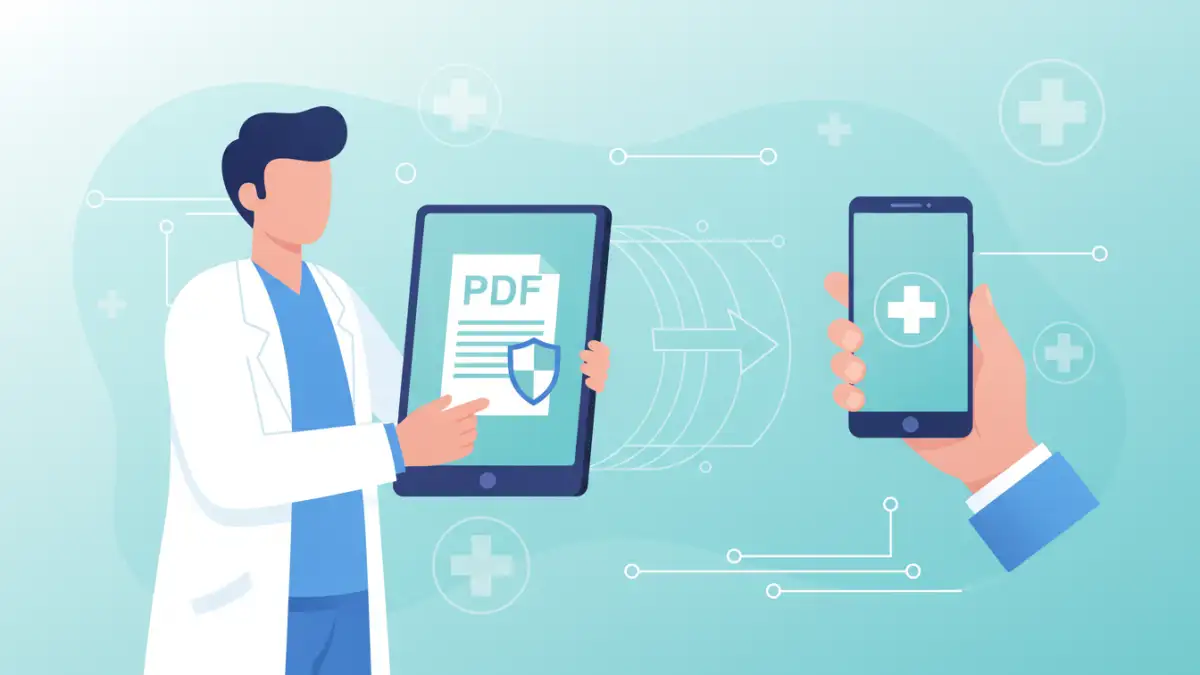
A mid-sized specialty clinic recently approached my team with a critical challenge that many in the healthcare space face: how to share sensitive patient records with external specialists and patients themselves without creating a compliance nightmare. Their existing process involved a clunky, inconsistent mix of encrypted emails and a general-purpose cloud drive, which was inefficient and kept their compliance officer up at night. They needed a better way.
This case study walks through their journey from a state of high risk and inefficiency to achieving streamlined, robust patient record security. It’s a practical look at the problems, the potential solutions, and the strategy that ultimately worked.
Table of Contents
The Challenge: Balancing Accessibility and Patient Record Security
The clinic’s primary issue was the friction between clinical needs and security protocols. Doctors needed to send patient charts, lab results, and imaging reports to consulting physicians at other hospitals quickly. Patients also increasingly requested digital copies of their records. Each transfer of a protected health information (PHI) document was a potential data breach.
Their 'solution' was a patchwork of methods. Sometimes a staff member would password protect medical pdf files and email them, sending the password in a separate text message—a process that was both cumbersome and not truly secure. Other times, they used a generic cloud storage link, which lacked the necessary audit trails and access controls required for HIPAA compliance.
Evaluating Solutions for HIPAA Compliant Document Sharing
We started by outlining the core requirements for any new system: it had to be simple for non-technical staff to use, enforce strong medical file encryption, provide detailed access logs, and, most importantly, be fully HIPAA compliant. We explored several avenues before settling on a final strategy.
Standard Email Encryption
While seemingly straightforward, relying solely on email add-ins for encryption proved problematic. It placed too much responsibility on the end-user to remember to encrypt every single attachment. Furthermore, it offered no control over the document once it left their outbox. There was no way to revoke access or track if the recipient had forwarded the file to an unauthorized party.
Consumer-Grade Cloud Storage
Platforms like Google Drive or Dropbox, while convenient for personal use, were quickly ruled out. Their standard business plans often lack the specific Business Associate Agreement (BAA) and granular controls needed for handling PHI. The risk of accidental public sharing or misconfigured permissions was simply too high for sensitive patient record security.
The Implemented Strategy: A Multi-Layered Approach
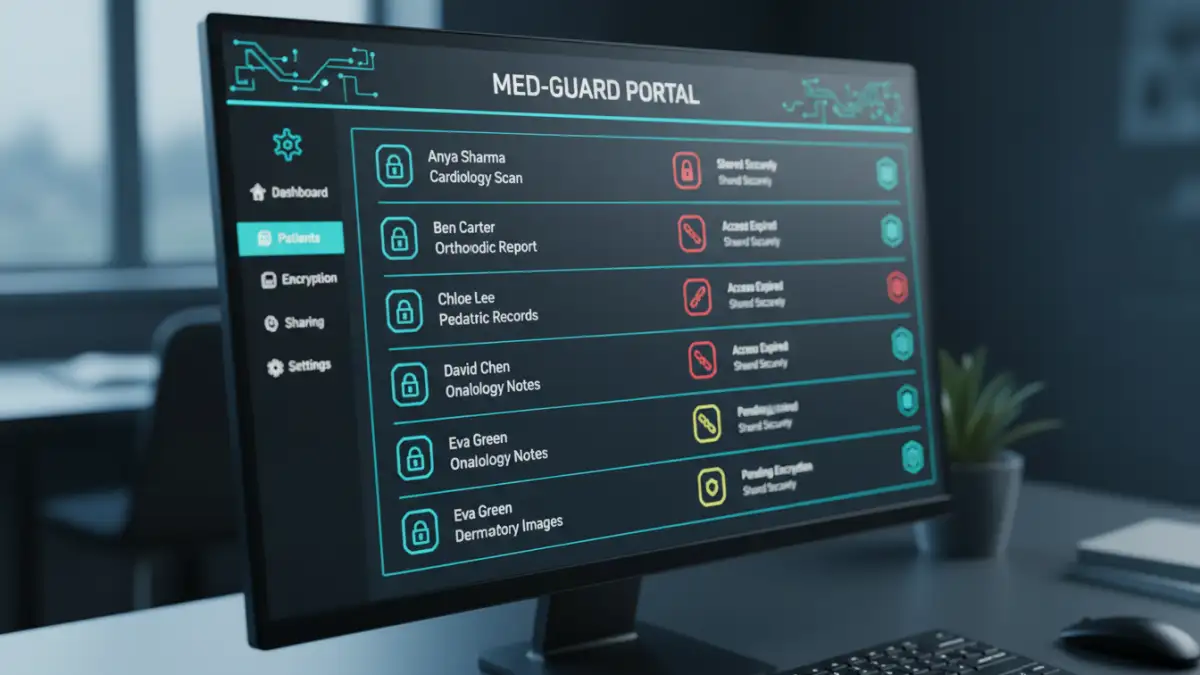
The chosen solution wasn't a single product but a cohesive strategy built around a dedicated, secure portal. This platform was designed specifically for industries with high compliance needs and offered the multi-layered security the clinic required. The process for sharing a file was transformed completely.
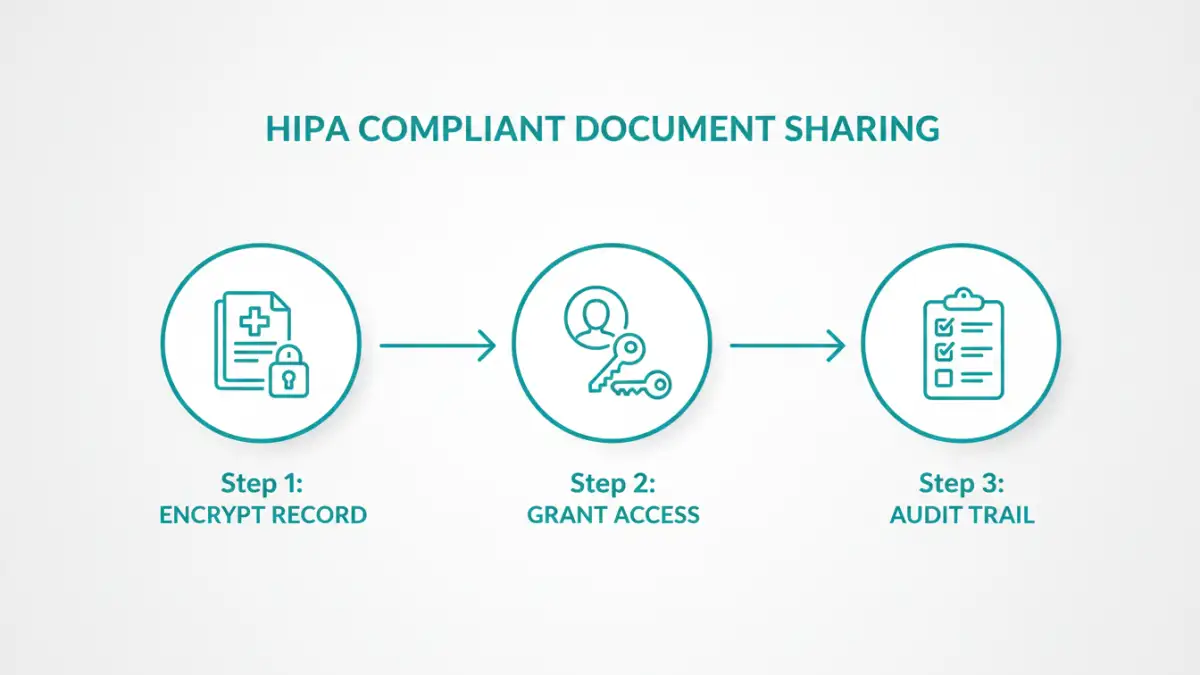
Instead of attaching a file to an email, the staff now uploads the document to the secure portal. The system automatically handles the medical file encryption both in transit and at rest. The staff then generates a unique, time-sensitive link for the intended recipient. This link requires the recipient to verify their identity via a two-factor authentication code sent to their phone or email before they can view or download the document.
This system provided the granular control they were missing. Staff could set expiration dates for links, disable downloading capabilities for view-only access, and receive notifications when a document was accessed. Most importantly for compliance, every single action—upload, link generation, and access—was logged in an immutable audit trail.
The Outcome: Streamlined Workflows and Enhanced Security
Within a few months, the transformation was clear. The new system for secure pdf sharing eliminated the guesswork and manual effort previously involved. The administrative staff could share records with confidence in just a few clicks, saving valuable time.
Consultations with external specialists became faster because there were no more delays from lost passwords or blocked email attachments. The compliance officer could easily pull audit reports to demonstrate due diligence, providing immense peace of mind. Patients appreciated the professional and secure method of receiving their records, which enhanced their trust in the clinic. Ultimately, the clinic didn't just fix a security flaw; they improved their operational efficiency and patient experience.
Comparison of Document Sharing Methods for Healthcare
| Sharing Method | Security Level | HIPAA Compliance | Ease of Use |
|---|---|---|---|
| Standard Email Attachment | Low | Non-compliant | Easy |
| Email with Manual PDF Password | Low-Medium | Questionable | Complex/Clumsy |
| Consumer Cloud Storage | Medium | Non-compliant (without BAA) | Easy |
| HIPAA-Compliant Secure Portal | High | Fully Compliant | Moderate |