The challenge of maintaining the integrity and security of digital documents is a constant concern. As our reliance on digital records grows, so does the need for robust solutions that can prevent tampering, unauthorized access, and loss of data. Traditional methods often fall short, leaving sensitive information vulnerable to various threats. This is where innovative technologies like blockchain are stepping in to offer a new paradigm for document management.
I've seen firsthand how organizations struggle with siloed data, complex access controls, and the sheer difficulty of verifying document authenticity. The promise of a decentralized, immutable ledger system to address these issues is incredibly compelling, and it's rapidly moving from theoretical concept to practical application in the realm of document security.
Table of Contents
Understanding Blockchain for Document Management
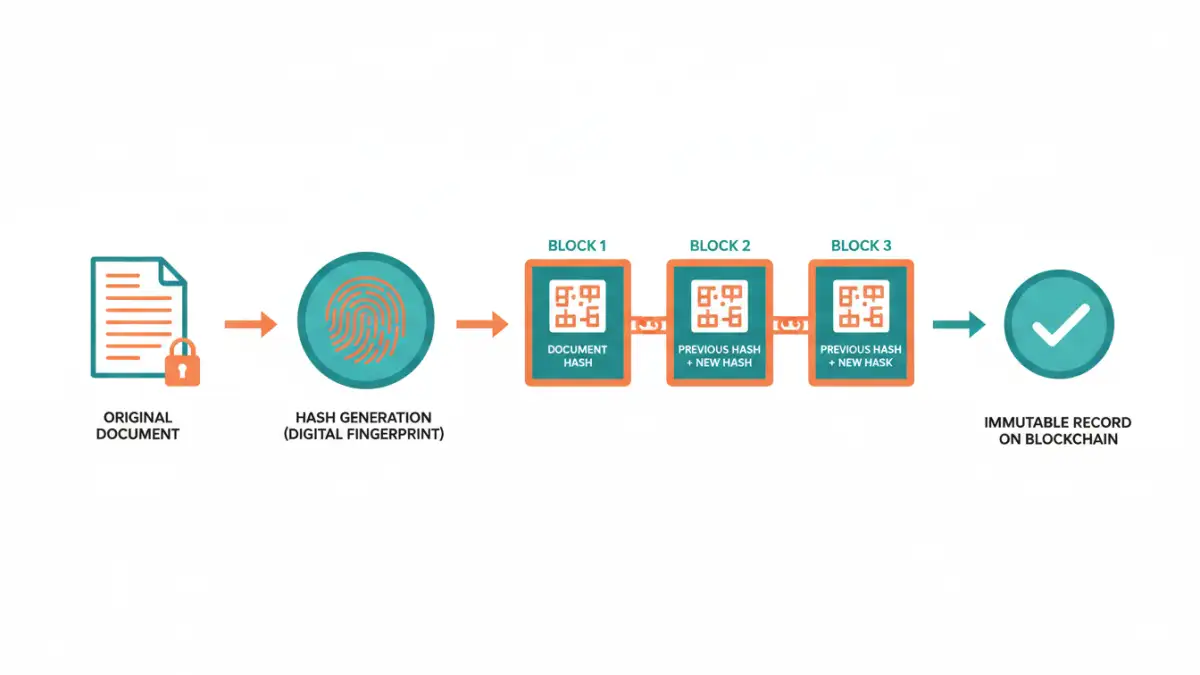
At its core, blockchain technology is a distributed, immutable ledger that records transactions across many computers. Each block in the chain contains a number of transactions, and once a block is added, it cannot be altered. This inherent immutability is what makes it so powerful for document management, providing a verifiable audit trail for every document and transaction associated with it.
When applied to documents, blockchain doesn't necessarily store the document itself on the chain. Instead, it typically stores a unique cryptographic hash of the document. This hash acts as a digital fingerprint. If even a single character of the document is changed, its hash will change completely, making any alteration immediately detectable.
How it Works for Documents
Imagine you have an important contract. Instead of just storing it on a server, you generate a hash of that contract and record it on a blockchain. This record is timestamped and permanently linked to your digital identity or the document's origin. Anyone can later verify the document's authenticity by generating its hash and comparing it to the one stored on the blockchain. If they match, the document is original and has not been tampered with.
Key Benefits of Blockchain in Document Security

The advantages of integrating blockchain into document workflows are significant. The most prominent is enhanced security. The decentralized nature means there's no single point of failure, making it highly resistant to hacking and data breaches compared to centralized systems.
Transparency and auditability are also major draws. Every action related to a document – creation, modification (or rather, recording of a new version), sharing, and access – can be recorded on the blockchain, creating an undeniable and easily accessible history. This level of transparency is crucial for compliance and regulatory requirements.
Immutability and Trust
The unchangeable nature of blockchain records builds trust. Once a document's hash is on the chain, it's there forever. This eliminates disputes over document versions and ensures that all parties are working with the same, verifiable information. This is a significant step towards more reliable digital document solutions.
Real-World Use Cases
The applications are diverse and growing. In legal sectors, smart contracts built on blockchain can automatically execute terms once predefined conditions are met, with the contract itself being immutably recorded. This reduces reliance on intermediaries and speeds up processes.
Healthcare is another area poised for transformation. Patient records, clinical trial data, and supply chain information for pharmaceuticals can all be secured and managed with greater integrity. This ensures patient privacy and data accuracy, critical for effective treatment and research. The potential for blockchain adoption in regulated industries is immense.
Supply Chain and Intellectual Property
Beyond legal and health, supply chain management can benefit from tracking goods and verifying authenticity. For intellectual property, blockchain can provide irrefutable proof of creation and ownership, helping creators protect their work from infringement.
Challenges and Considerations
Despite its potential, blockchain document management isn't without hurdles. Scalability can be an issue for some blockchain networks, meaning transaction speeds might be slow for high-volume document processing. The initial implementation costs can also be substantial, requiring investment in new infrastructure and expertise.
Furthermore, the technology is still evolving, and regulatory frameworks are catching up. Understanding the legal implications and ensuring compliance with data privacy laws like GDPR when using a distributed ledger is crucial. Educating users and stakeholders about how the system works is also key to successful blockchain adoption.
The Future of Digital Document Solutions
The trajectory for blockchain in document management is clear: increasing integration into enterprise solutions. We'll likely see more platforms offering blockchain-backed security as a standard feature, enhancing future document security. Expect to see more sophisticated smart contracts automating complex workflows and greater interoperability between different blockchain solutions.
As the technology matures and becomes more accessible, its adoption will accelerate. This shift promises a future where digital documents are inherently more secure, transparent, and trustworthy than ever before, fundamentally changing how we handle sensitive information.
Comparison Table: Blockchain vs. Traditional Document Management
| Feature | Traditional Systems | Blockchain Systems | Pros of Blockchain |
|---|---|---|---|
| Data Integrity | Vulnerable to unauthorized changes | Tamper-proof, immutable records | High, ensures document authenticity |
| Security | Centralized, single point of failure | Decentralized, distributed ledger | Enhanced, resilient to attacks |
| Transparency | Limited, often opaque | High, all transactions auditable | Improved audit trails and accountability |
| Trust | Relies on intermediaries/central authority | Trustless, based on cryptographic proof | Increased trust among participants |
| Cost of Implementation | Lower initial, higher ongoing maintenance | Higher initial, potentially lower long-term | Scalability and efficiency gains can reduce long-term costs |
| Complexity | Varies, can be complex to integrate | Requires specialized knowledge, evolving standards | Can simplify verification processes once implemented |