When dealing with sensitive legal documents like real estate deeds, ensuring their security is paramount. These documents represent significant financial and personal investments, and unauthorized access could lead to serious complications. Fortunately, modern technology offers robust ways to safeguard these files, especially when they are in digital PDF format.
Working with password-protected documents can be frustrating if you don't know the password, but the flip side is that strong encryption is a crucial tool for protecting your valuable information. I've seen firsthand how easily digital files can be compromised if not properly secured, which is why I always emphasize best practices for document protection.
Table of Contents
Understanding PDF Security for Deeds
PDFs have become the standard for sharing documents because they maintain formatting across different devices and operating systems. However, this ease of use also means they can be easily shared, making robust security measures essential for sensitive files like land record protection. Password protection is a fundamental layer of security that restricts access to authorized individuals.
Why Secure Your Deeds?
Real estate deeds contain critical personal information, including names, addresses, property details, and transaction histories. Protecting this data prevents identity theft, fraud, and unauthorized disclosure. Ensuring your secure real estate deeds pdf is vital for maintaining privacy and compliance with legal standards.
Methods for Protecting Your Deeds

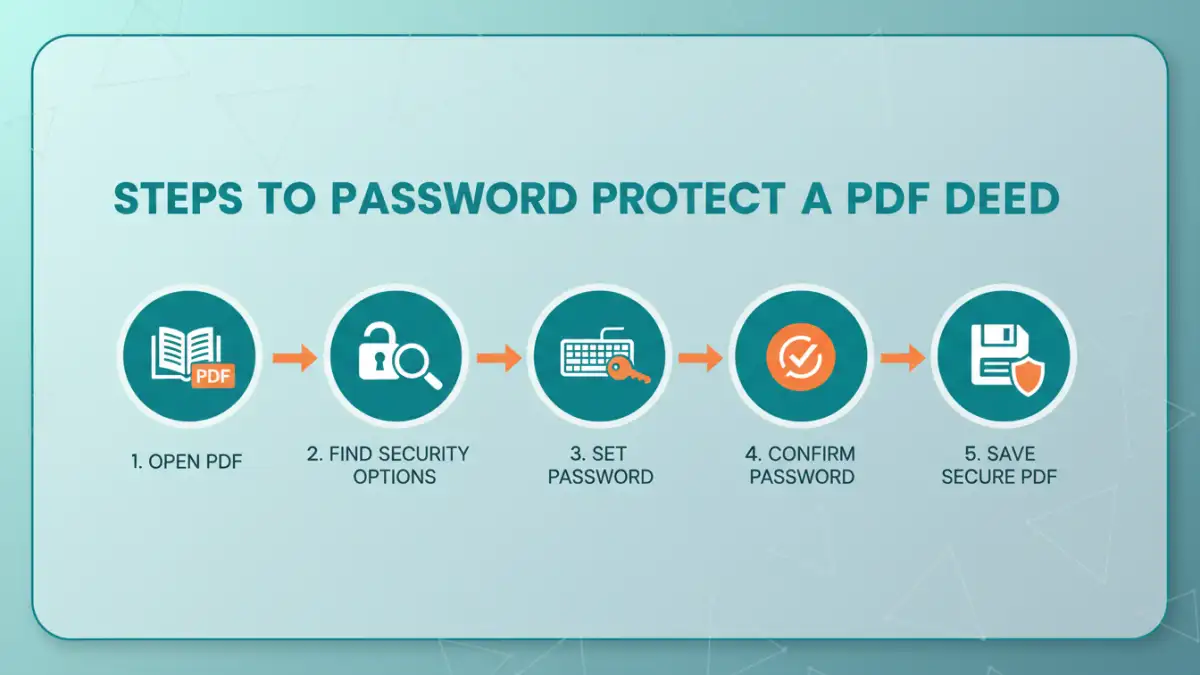
There are several ways to add password protection to PDF documents, ranging from simple built-in tools to more advanced software. Understanding these options will help you choose the most suitable method for your needs.
Using Built-in PDF Readers
Many popular PDF readers, like Adobe Acrobat Reader DC (for creating protected PDFs, not just viewing) and Foxit Reader, offer basic password protection features. These typically involve setting an 'owner password' to restrict printing or editing, and a 'user password' to open and view the document. Setting a strong user password is key for property file password security.
Leveraging Online PDF Tools
Numerous websites offer free online tools to encrypt PDFs. While convenient for quick tasks, it's crucial to be cautious about uploading sensitive documents to third-party servers. Always use reputable services that have clear privacy policies and robust security measures. These tools often provide a straightforward interface for setting a password.
Utilizing Desktop Software
Dedicated PDF editing software, such as Adobe Acrobat Pro or Nitro PDF Pro, offers more advanced security options. These programs allow for granular control over permissions, including restricting printing, copying text, or modifying the document. They generally provide stronger encryption algorithms than free online tools, enhancing deed document security.
Choosing the Right Method
The best method for securing your real estate deeds depends on your technical comfort level, the sensitivity of the document, and whether you need to share it with others who also need access. For maximum security and control, desktop software is usually the preferred option.
If you're sharing the deed with a trusted party who needs to view it, setting a user password via a PDF reader or a reputable online tool can be sufficient. However, always ensure the password itself is strong and unique. For simple, one-off protection, a quick online tool might suffice, but always weigh the convenience against potential privacy risks.
Best Practices for Deed Document Security
Beyond just adding a password, several best practices can enhance the overall security of your digital real estate deeds. These practices ensure that your sensitive information remains protected throughout its lifecycle.
Create Strong, Unique Passwords
A weak password is as good as no password. Use a combination of uppercase and lowercase letters, numbers, and symbols. Avoid using easily guessable information like names, birthdays, or common words. Consider using a password manager to generate and store complex passwords securely.
Educate Recipients
If you need to share a password-protected deed, clearly communicate the password to the recipient through a separate, secure channel (e.g., a phone call or a different messaging app). Never send the password in the same email or message as the document itself.
Regularly Review Security
Periodically review the security settings of your important documents. If you've shared a deed with someone who no longer needs access, or if you've changed your security requirements, update the password or re-encrypt the document as necessary. This ensures ongoing land record protection.
Consider Encryption Strength
Different PDF protection methods offer varying levels of encryption (e.g., 128-bit vs. 256-bit AES). For highly sensitive documents, opt for stronger encryption standards whenever possible. This is often a feature of professional desktop software.
Comparison Table: PDF Protection Methods
| Method | Ease of Use | Security Level | Cost | Best For |
|---|---|---|---|---|
| Built-in PDF Reader Features | Moderate | Basic to Moderate | Free (for viewing/basic protection) | Simple password protection for viewing |
| Reputable Online PDF Tools | High | Moderate | Free to Paid (for advanced features) | Quick, occasional protection of non-critical documents |
| Desktop PDF Software (e.g., Adobe Acrobat Pro) | Moderate to High | High (supports strong encryption) | Paid (subscription or one-time purchase) | Comprehensive security, advanced permissions, frequent use |