
A few weeks ago, a junior developer on my team was in a panic. An archived project specification, encrypted years ago by an employee who had since left the company, was completely inaccessible. The project was being revived, and this document was the only source of critical requirements. This scenario isn't uncommon; we lock documents to protect them, but sometimes that very protection becomes a barrier to legitimate access.
This is where PDF password recovery tools enter the picture. As a developer, I see them as powerful utilities, much like a master key. In the right hands, they can solve frustrating lockouts and ensure business continuity. In the wrong hands, however, they become instruments for unauthorized access and data theft. The difference isn't in the code, but in the intent and authorization of the user.
Table of Contents
The Dual Nature of Password Recovery Tools
Password recovery software operates by using various algorithms to decipher or bypass the security protecting a file. These methods can range from brute-force attacks, which try every possible character combination, to dictionary attacks that use lists of common words. More sophisticated tools might exploit known vulnerabilities in older versions of PDF encryption.
From a technical standpoint, the tool is neutral. It simply executes a set of instructions. The ethical dimension comes entirely from the context of its use. Are you using a file password unlocker to regain access to your own financial records after forgetting a password? That's a legitimate act of data recovery. Are you using the same tool to open a colleague's confidential performance review without their permission? That's a serious breach of privacy and trust.
Legitimate Recovery vs. Unauthorized Access
The core distinction is authorization. Legitimate data recovery involves accessing information that you have a legal and rightful claim to. This includes personal documents, corporate files you are authorized to view as part of your job, or data for which you are the designated custodian. It's about restoring access, not gaining it for the first time.
Unauthorized access, on the other hand, involves circumventing security measures to view information you have no right to see. This is where the use of these tools crosses into the realm of unethical, and often illegal, activity. The technology is identical in both scenarios; the user's intent and authority are what define the act.
Defining the Ethical Boundaries

Navigating the use of these tools requires a clear understanding of where the ethical lines are drawn. It's not always a black-and-white issue, especially in a corporate environment where data ownership can be complex. However, a few guiding principles can provide clarity.
The most fundamental principle is ownership. You should only ever attempt to recover a password for a file that you either own or have been explicitly granted permission to access by the owner. If you didn't create the file and don't have documented consent, you should not proceed. This simple rule prevents the vast majority of ethical missteps.
The Principle of Verifying Authorization
In a professional setting, authorization is key. If a team needs access to a locked file from a former employee, the request should go through proper channels, like an IT department or a manager with the authority to grant access. This creates a paper trail and ensures the decision is made by someone accountable for the data's security and integrity. Acting unilaterally, even with good intentions, can put you and the company at risk.
This is a critical component of what I consider sound pdf password recovery ethics. It's not just about what you can do, but what you are permitted to do. Documented permission is your safeguard, proving your actions were sanctioned and legitimate.
A Framework for Responsible Tool Use
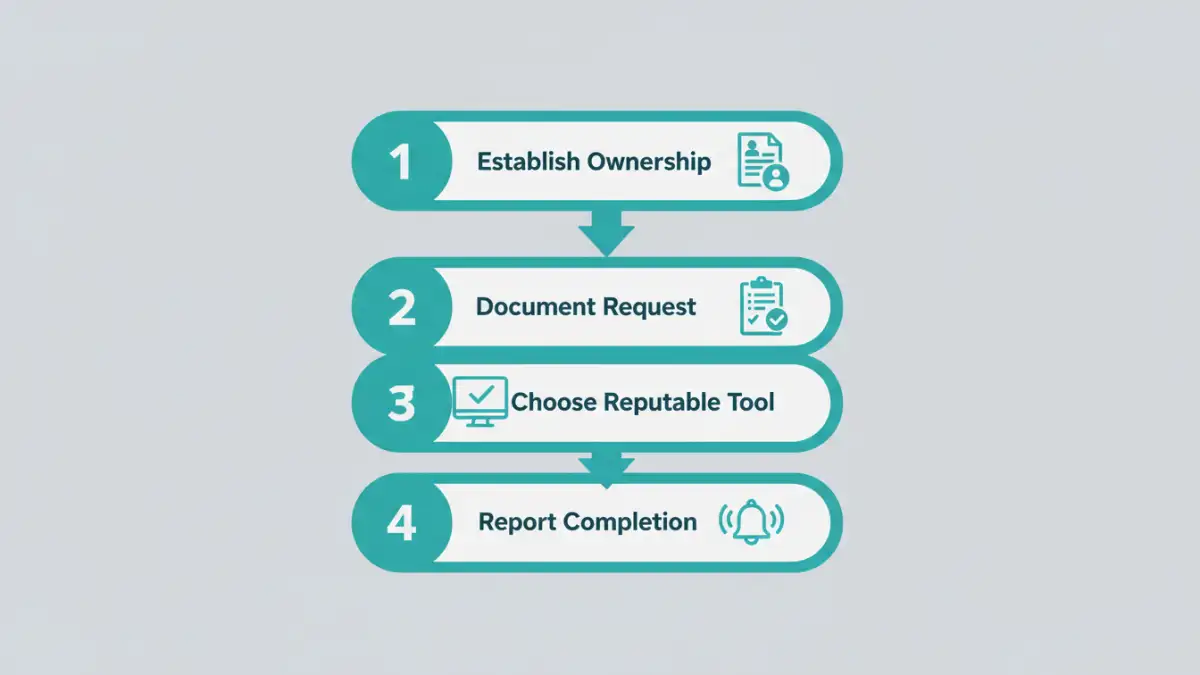
To ensure you're always on the right side of the line, it helps to have a structured approach. I advise my teams to follow a simple checklist before even considering the use of a password recovery tool. This framework promotes responsible tool use and protects everyone involved.
- Establish Ownership and Right-to-Access: Can you prove you own the document or have explicit, written permission from the owner or an authorized party (e.g., your manager, HR, or IT security)? If the answer is no, stop here.
- Document the Situation: Write down why access is needed, who requested it, and who authorized it. Note the date, time, and the specific file in question. This documentation is invaluable if your actions are ever questioned.
- Choose Reputable Tools: Use well-known, trusted software. Many free online tools can pose security risks, potentially uploading your sensitive document to an unknown server. A trusted desktop application is often a safer choice for confidential data.
- Report the Action: Once access is restored, inform the authorizing party that the task is complete. If necessary, secure the document with a new, known password and document it according to your company's policy.
Legal Implications and Professional Consequences
Misusing password recovery tools can have severe consequences that go far beyond a workplace reprimand. Depending on your jurisdiction and the nature of the data, unauthorized access to computer systems or files can be a criminal offense under laws like the Computer Fraud and Abuse Act (CFAA) in the United States.
Professionally, the fallout can be just as damaging. Illegally accessing confidential company data, client information, or employee records is often grounds for immediate termination. It can also lead to civil lawsuits from the affected parties. Beyond that, it causes irreparable damage to your professional reputation. Trust is a cornerstone of a career in technology, and once broken, it's incredibly difficult to rebuild.
Ethical Use Case Comparison
| Scenario | Ethical Justification | Unethical Justification | Recommended Action |
|---|---|---|---|
| Forgotten password on personal tax documents | You are the owner of the data. | N/A | Proceed with a trusted recovery tool. |
| Accessing an old project file from a former colleague | Access is required for business continuity and authorized by management. | Accessing it out of curiosity without permission. | Get documented approval from a manager or IT before proceeding. |
| Opening a locked HR file labeled 'Confidential' | N/A | Bypassing security to view sensitive employee information. | Do not attempt access. This is a severe breach of privacy. |
| A client sent a password-protected file but forgot to send the password | You are the intended recipient and have a legitimate business need. | Attempting to crack it before asking for the password. | Contact the client first to request the password. Only use a tool as a last resort with their consent. |
| Helping a friend unlock a file they downloaded | Friend is the legitimate owner but forgot the password. | The file's origin and ownership are unknown; it could be stolen data. | Ensure your friend can prove ownership before offering assistance. |