
Ensuring that your organization's documents are managed in a way that meets all legal, regulatory, and internal policy requirements is a complex but crucial task. This isn't just about storing files; it's about establishing robust processes for creation, review, approval, distribution, and archiving. When done correctly, it safeguards sensitive information, minimizes risk, and builds trust with stakeholders.
In my work as a software engineer, I've seen firsthand how mismanaged documents can lead to significant headaches, from audit failures to data breaches. Establishing clear guidelines and implementing the right tools are paramount to avoid these pitfalls and maintain a high standard of document portfolio compliance.
Table of Contents
Understanding Document Portfolio Compliance
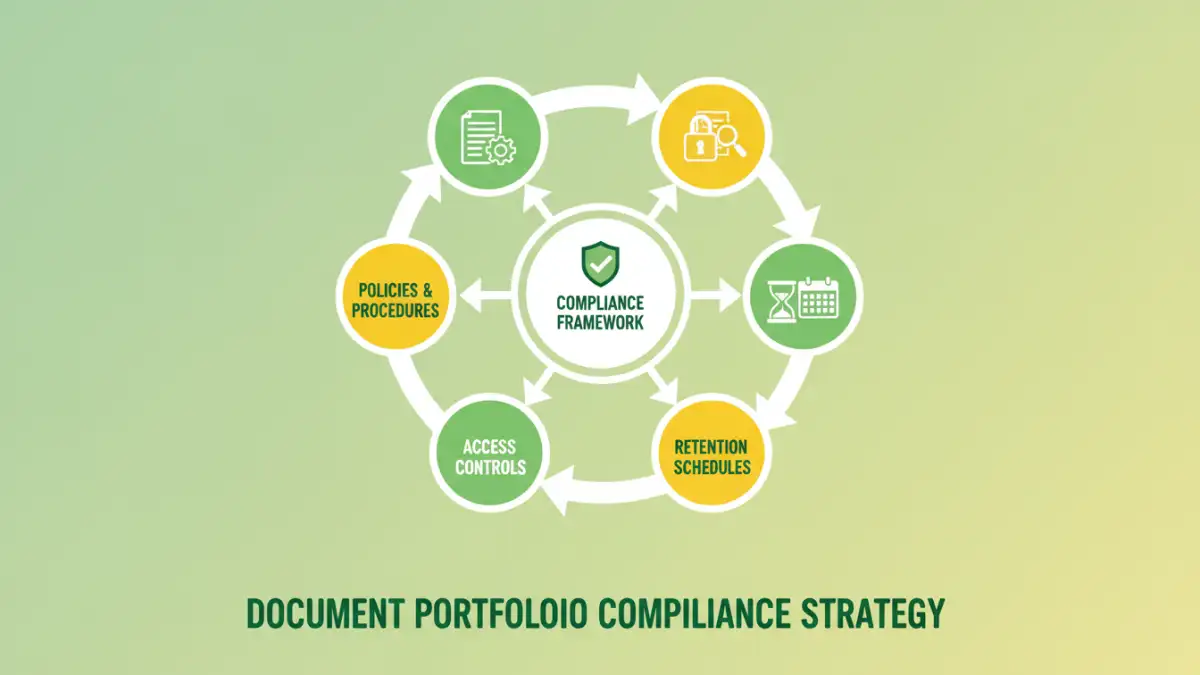
Document portfolio compliance refers to the adherence to all relevant laws, regulations, industry standards, and internal policies governing the management of an organization's entire collection of documents. This encompasses everything from financial records and employee contracts to intellectual property and customer data.
The goal is to ensure that documents are accurate, accessible, secure, and retained or disposed of according to defined schedules. This framework is essential for maintaining operational integrity and avoiding legal repercussions. It forms the backbone of responsible data stewardship.
Why It Matters
The importance of document portfolio compliance cannot be overstated. In today's data-driven world, organizations face stringent regulations like GDPR, HIPAA, and SOX, each with specific requirements for data handling and retention. Failing to comply can result in hefty fines, reputational damage, and loss of customer trust.
Moreover, well-managed documents streamline operations. When information is organized and accessible, employees can find what they need quickly, improving productivity and decision-making. It also simplifies audits and legal discovery processes.
Key Elements of a Compliance Strategy

A comprehensive compliance strategy involves several interconnected components. It's not a one-time fix but an ongoing commitment to best practices. Identifying and addressing these elements proactively is key to building a resilient system.
Policies and Procedures
Clear, documented policies are the foundation. These should outline how documents are created, stored, accessed, shared, and disposed of. Procedures should provide step-by-step guidance for employees to follow, ensuring consistency across the organization.
This includes defining retention schedules based on legal requirements and business needs, establishing access controls, and detailing the process for handling sensitive information. Regular review and updates to these policies are vital to stay current with changing regulations.
Implementing Compliance Measures
Putting a compliance strategy into action requires a systematic approach. It often involves a combination of technology, training, and process refinement. Taking a phased approach can make the transition smoother and more manageable for your team.
This is where I often advise clients to start with a document audit to understand their current state. Knowing what you have, where it is, and how it's being managed is the first step to identifying gaps and prioritizing improvements. Investing in the right tools can automate many of these processes.
Ongoing Management and Auditing
Compliance is not a set-it-and-forget-it task. Regular monitoring, auditing, and updating of systems and policies are essential. This ensures that your organization remains compliant as regulations evolve and business needs change.
Internal audits can help identify areas of non-compliance before external auditors do. These audits should assess adherence to policies, the effectiveness of security measures, and the accuracy of retention schedules. Feedback from these audits should drive continuous improvement efforts.
Common Challenges and Solutions
Organizations often face hurdles when implementing or maintaining document portfolio compliance. These can range from technological limitations to employee resistance. Understanding these common issues allows for proactive planning and effective mitigation strategies.
For instance, managing diverse document formats and legacy systems can be a significant challenge. Implementing a unified document management system (DMS) or utilizing robust conversion tools can help standardize document handling. Employee training is also critical; ensuring everyone understands their role in maintaining compliance fosters a culture of responsibility.
Comparison Table: Document Management Approaches
| Approach | Pros | Cons | Best For |
|---|---|---|---|
| Manual Filing | Low initial cost, simple for small volumes | Time-consuming, prone to error, poor scalability, difficult retrieval | Very small businesses with minimal documentation |
| Basic Cloud Storage (e.g., Google Drive, Dropbox) | Accessibility, collaboration features, cost-effective | Limited version control, potential privacy concerns, less robust security for sensitive data | Team collaboration, general file sharing |
| Dedicated Document Management System (DMS) | Centralized control, advanced security, versioning, audit trails, workflow automation | Higher initial cost, implementation complexity, requires training | Medium to large organizations, regulated industries, complex document lifecycles |
| Enterprise Content Management (ECM) | Comprehensive content lifecycle management, integrates with other business systems, advanced analytics | Highest cost, complex implementation and management | Large enterprises requiring end-to-end content governance |