Handling a large number of PDF documents can quickly become a tedious task, especially when you need to consolidate them into a single file. Imagine receiving multiple reports, invoices, or project documents throughout the week; having to manually open each one and stitch them together is a significant time drain. Fortunately, there are effective strategies and tools that allow you to merge multiple PDFs in a batch process, transforming a laborious chore into a quick operation.
This process isn't just about convenience; it's about enhancing efficiency in your daily workflow. Whether you're an individual managing personal documents or part of a team handling business-critical files, streamlining how you combine documents can lead to better organization and faster access to information. We'll explore various methods, from simple browser tricks to dedicated software solutions, to help you master this essential document management skill.
Table of Contents
Understanding Batch PDF Merging
Batch PDF merging refers to the process of combining several individual PDF files into one single document, often without requiring manual intervention for each file. This is particularly useful when dealing with a collection of related documents that need to be presented or stored as a unified whole. The primary goal is to automate and expedite the consolidation of these files, saving considerable time and effort compared to manual merging.
Key Benefits of Batch Processing
The advantages of batch processing for merging PDFs are numerous. Firstly, it dramatically increases efficiency, allowing you to merge dozens or even hundreds of files in minutes. Secondly, it ensures consistency; all merged documents will follow the same order and formatting. Finally, it reduces the risk of human error that can occur during repetitive manual tasks, leading to more accurate and reliable document consolidation.
Browser-Based Methods

For quick, occasional needs, your web browser can sometimes offer a surprisingly simple solution. While not a true batch process in the sense of handling hundreds of files at once, some browsers allow you to open multiple PDFs, select them, and then use the print function to 'Save as PDF'. This effectively creates a new PDF from the selected documents.
To do this, you would typically open your PDF files in separate browser tabs. Then, access the print dialog (Ctrl+P or Cmd+P), select 'Save as PDF' as your destination printer, and choose the option to print multiple pages or all pages. This method is best suited for merging a small number of files where you have control over the order they are opened in the browser. It's a free and accessible option for basic consolidation tasks.
Leveraging Online PDF Tools
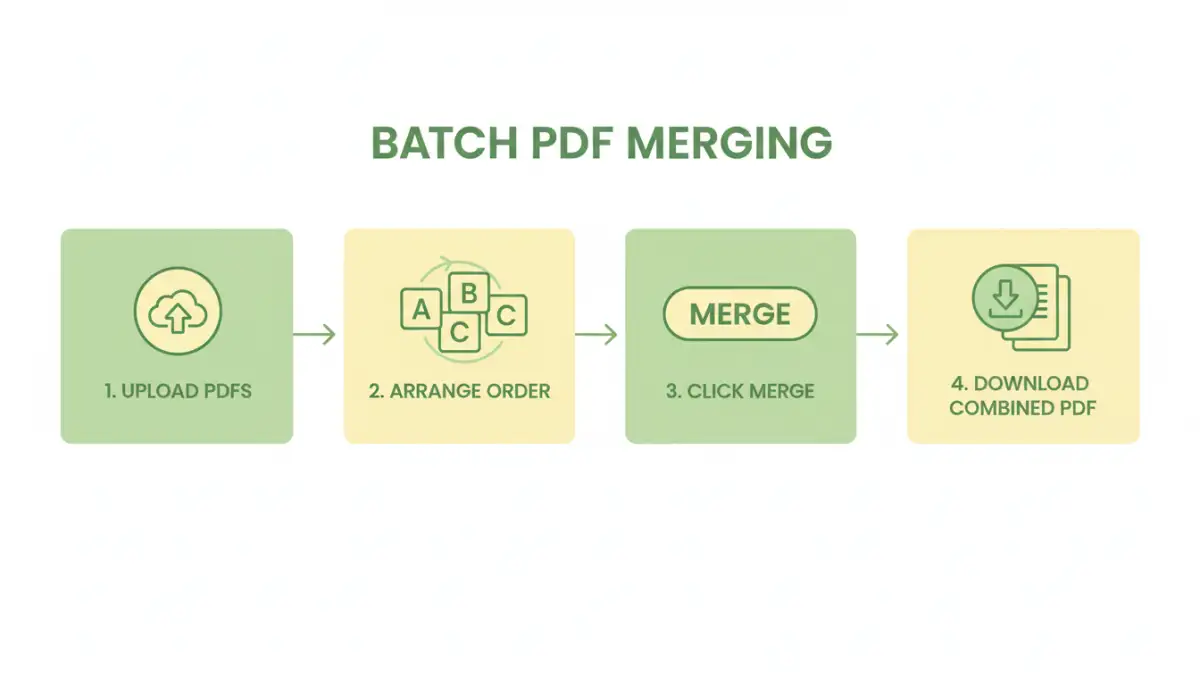
The internet is brimming with free and paid online tools designed specifically for PDF manipulation. Many of these platforms offer robust batch PDF merge functionalities. Websites like Smallpdf, iLovePDF, and Adobe Acrobat online allow you to upload multiple PDF files, arrange their order, and then merge them into a single document with just a few clicks.
These services are incredibly user-friendly. You typically drag and drop your files into an upload area, rearrange them using a visual interface, and hit the 'Merge' button. The processed file is then available for download. While convenient and often free for limited use, it's important to consider the privacy implications of uploading sensitive documents to third-party servers. Always review the privacy policy of any online tool you use.
Using Dedicated Desktop Software
For users who frequently need to merge multiple PDFs or handle sensitive documents that shouldn't be uploaded online, dedicated desktop software provides a more powerful and secure solution. Applications like Adobe Acrobat Pro, PDFsam (PDF Split and Merge), and Foxit PhantomPDF offer advanced PDF merging capabilities.
These programs often provide more control over the merging process. You can specify page ranges, add bookmarks, and even combine different file types into a PDF. The batch pdf merge features in professional software are typically highly optimized for speed and reliability. While many of these applications require a purchase or subscription, they offer a comprehensive suite of tools for all your PDF management needs, ensuring data remains on your local machine.
Best Practices for Batch PDF Merging
To ensure a smooth and efficient batch pdf merge process, a few best practices can make a significant difference. First, organize your files beforehand. Place all the PDFs you intend to merge into a single folder and name them logically, as the order of files in the folder might influence the final merged document's sequence, depending on the tool you use.
Secondly, understand the limitations of the tool you're using. Free online tools might have file size or quantity limits, while desktop software might require installation. Always preview the merged document before saving it permanently. This final check helps catch any unexpected formatting issues or incorrect page order, ensuring the consolidated document meets your expectations.
Comparison Table: PDF Merging Methods
| Method | Ease of Use | Features | Security | Cost | Best For |
|---|---|---|---|---|---|
| Browser Print to PDF | High | Basic merging, small batches | High (local processing) | Free | Occasional, small merges |
| Online PDF Tools | Very High | Drag-and-drop, ordering | Medium (depends on provider) | Free/Freemium | Convenience, non-sensitive files |
| Desktop Software | Medium to High | Advanced options, batch processing, editing | Very High (local processing) | Paid/Subscription | Frequent, large batches, sensitive data |
| Command-Line Tools | Low (requires technical skill) | Scripting, automation, large batches | Very High (local processing) | Free/Open Source | Automation, developers, large scale |