When it comes to securely sharing and managing files for a business, the choice of cloud storage platform is critical. Two of the most prominent players are Box and Dropbox Business. Both offer robust solutions, but they cater to slightly different needs and priorities. Understanding their strengths and weaknesses is key to ensuring your team's data is both accessible and protected.
My own experiences navigating these platforms have shown that while both are excellent, one might be a better fit depending on your organization's workflow, size, and specific security requirements. It's not just about storing files; it's about how those files move, who can access them, and how they are protected against threats.
Table of Contents
Understanding the Platforms
Box and Dropbox Business both provide cloud-based services for storing, syncing, and sharing files. They allow teams to access documents from anywhere, on any device, fostering collaboration and productivity. However, their core philosophies differ. Box often positions itself as a more comprehensive content management system, emphasizing workflow automation and governance. Dropbox Business, while also robust, is renowned for its user-friendly interface and seamless file synchronization, making it exceptionally intuitive for end-users.
Core Functionality
At their heart, both services excel at basic file storage and synchronization. You can upload files, organize them into folders, and share them with internal and external users. Version history is standard, allowing you to revert to previous iterations of a document. Permissions can be granularly set to control who can view, edit, or download specific files and folders. The primary distinction often comes down to the depth of advanced features and the overall user experience.
Security Features Compared

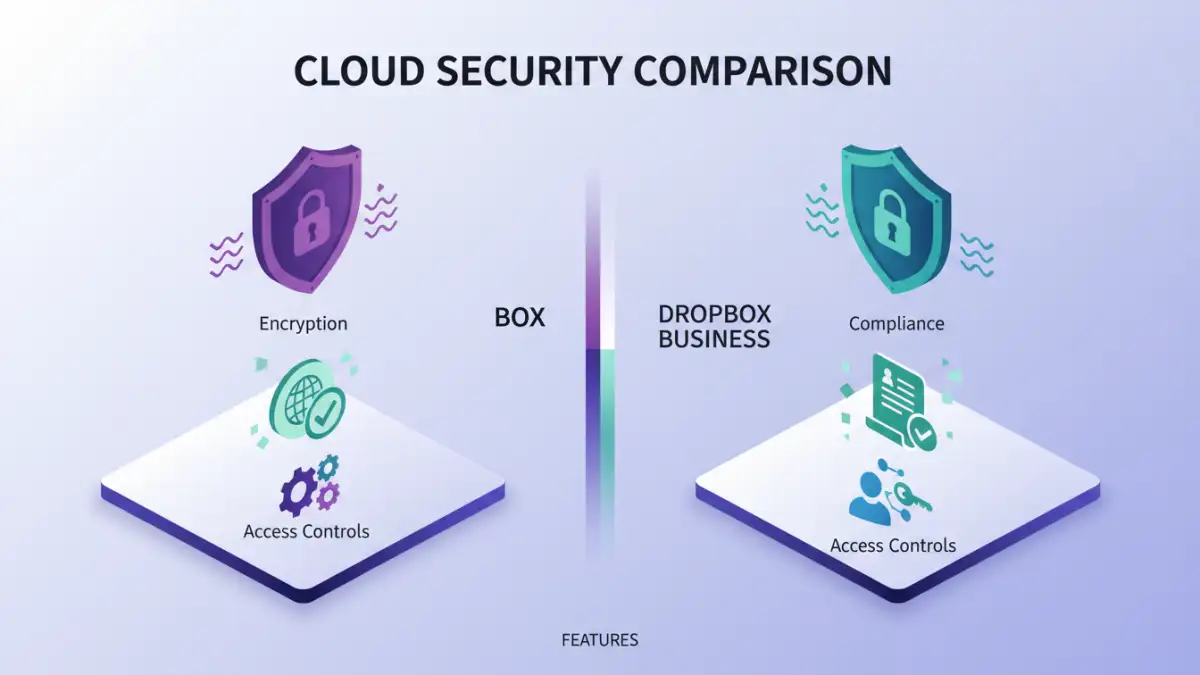
Security is paramount for business operations, and both Box and Dropbox Business invest heavily in protecting your data. Both offer end-to-end encryption for data in transit and at rest, compliance with major regulations like GDPR and HIPAA, and robust access controls. Where they might diverge is in the specifics of their advanced security offerings and administrative controls.
Advanced Security Offerings
Box often shines in enterprise-grade security, offering features like advanced threat detection, granular administrative controls, data loss prevention (DLP) policies, and comprehensive audit trails. Its focus on content governance means it's well-suited for highly regulated industries. Dropbox Business also provides strong security, including advanced endpoint protection, remote wipe capabilities, and security insights. For many businesses, Dropbox's security measures are more than sufficient, but for organizations with extremely stringent compliance needs, Box might offer a more tailored solution.
Collaboration and Workflow
Effective collaboration is a major driver for adopting cloud storage solutions. Both platforms facilitate teamwork, but the approach can feel different. Dropbox Business is often praised for its simplicity; sharing a file or folder is incredibly straightforward, and its sync technology is among the fastest and most reliable. This makes it easy for teams to get up and running quickly.
Workflow Automation
Box, on the other hand, emphasizes workflow automation. Its platform allows for the creation of custom workflows, task management, and approvals directly within the system. This can streamline business processes by integrating document management with operational tasks, reducing the need for separate project management tools. For businesses looking to automate approvals or route documents for review, Box's workflow capabilities are a significant advantage.
Integrations and Customization
The ability to integrate with other business tools is crucial for a unified tech stack. Both Box and Dropbox Business offer extensive app marketplaces and API access, allowing them to connect with thousands of third-party applications. This includes popular productivity suites like Microsoft 365 and Google Workspace, as well as CRM systems, project management tools, and more.
Customization Options
While both are highly integrable, Box often provides deeper customization options for its platform, particularly concerning branding and workflow configurations. This allows organizations to tailor the experience to their specific brand and operational needs more extensively. Dropbox Business also offers customization, but it's generally more focused on user experience and integration points rather than deep platform modification.
Pricing and Plans
Pricing is always a consideration, and both Box and Dropbox Business offer tiered plans based on storage, user count, and feature sets. Typically, Dropbox Business might offer a slightly more accessible entry point for smaller teams with its standard business plans. Box's plans can sometimes appear more premium, reflecting its focus on enterprise-level features and content management capabilities. It's essential to compare the specific features included in each tier to determine the best value for your budget and requirements.
Feature Tiers
It's important to look beyond just storage space. Consider which plan includes the advanced security features, administrative controls, workflow capabilities, and integration options your business truly needs. A lower-priced plan might seem attractive, but if it lacks critical features, it could end up costing more in lost productivity or security risks.
Which is Right for Your Business?
Deciding between Box and Dropbox Business often comes down to your organization's primary needs. If your focus is on user-friendliness, rapid adoption, and seamless file syncing with robust security, Dropbox Business is an excellent choice. It's ideal for teams that prioritize ease of use and quick collaboration.
If your business requires advanced content management, sophisticated workflow automation, stringent governance, and deep administrative control, particularly in regulated industries, Box might be the superior option. Its enterprise-focused features provide a more comprehensive solution for complex content lifecycle management. Ultimately, a thorough evaluation of your specific business processes and security posture will guide you to the right platform.
Comparison Table: Box vs. Dropbox Business
| Feature | Box Business | Dropbox Business |
|---|---|---|
| Primary Focus | Content Management & Workflow Automation | File Syncing & Collaboration |
| Ease of Use | Moderate to High | Very High |
| Advanced Security | Excellent (DLP, Threat Detection) | Very Good (Endpoint, Remote Wipe) |
| Workflow Automation | Strong (Custom Workflows, Approvals) | Basic (Integrations) |
| Integrations | Extensive | Extensive |
| Admin Controls | Granular & Comprehensive | Robust |
| Pricing | Can be higher, reflects enterprise features | Competitive, often more accessible entry |
| Best For | Regulated industries, complex workflows, content governance | User-friendliness, rapid deployment, seamless syncing |