
Working with password-protected documents can be frustrating, especially when you're the legitimate owner but have forgotten the key, or received a file where the password is no longer needed. I recently helped a colleague who couldn't access an important encrypted file, and it highlighted just how common this issue is. While PDF passwords are essential for security, there are legitimate times when you need to remove them safely and efficiently.
Regaining access to your documents doesn't have to be a complex process. This guide will walk you through various reliable methods to remove PDF passwords, ensuring your data remains secure while you unlock pdf file access when needed. We'll cover everything from quick browser tricks to more robust software solutions.
Table of Contents
Understanding Why PDFs Get Locked
Before diving into solutions, it's helpful to understand why PDFs are password-protected in the first place. This security feature is crucial for protecting sensitive information, preventing unauthorized viewing, copying, or printing of documents. Knowing the types of protection helps in choosing the right method to remove pdf password.
Purpose of PDF Passwords
PDF passwords serve a dual purpose: they can restrict access to view the document itself (owner password) or restrict certain operations like printing, editing, or copying content (user password). This layered security is vital for legal documents, financial reports, or any confidential information that needs to be shared securely.
Types of PDF Passwords
There are generally two types of passwords applied to PDF files. The 'user password' (or 'open password') restricts who can open and view the document. Without this, you cannot even see the content. The 'owner password' (or 'permissions password') allows anyone to open the document but restricts actions like printing, editing, or copying text. Removing a user password is often more challenging than removing an owner password.
Safe and Practical Methods to Remove PDF Password
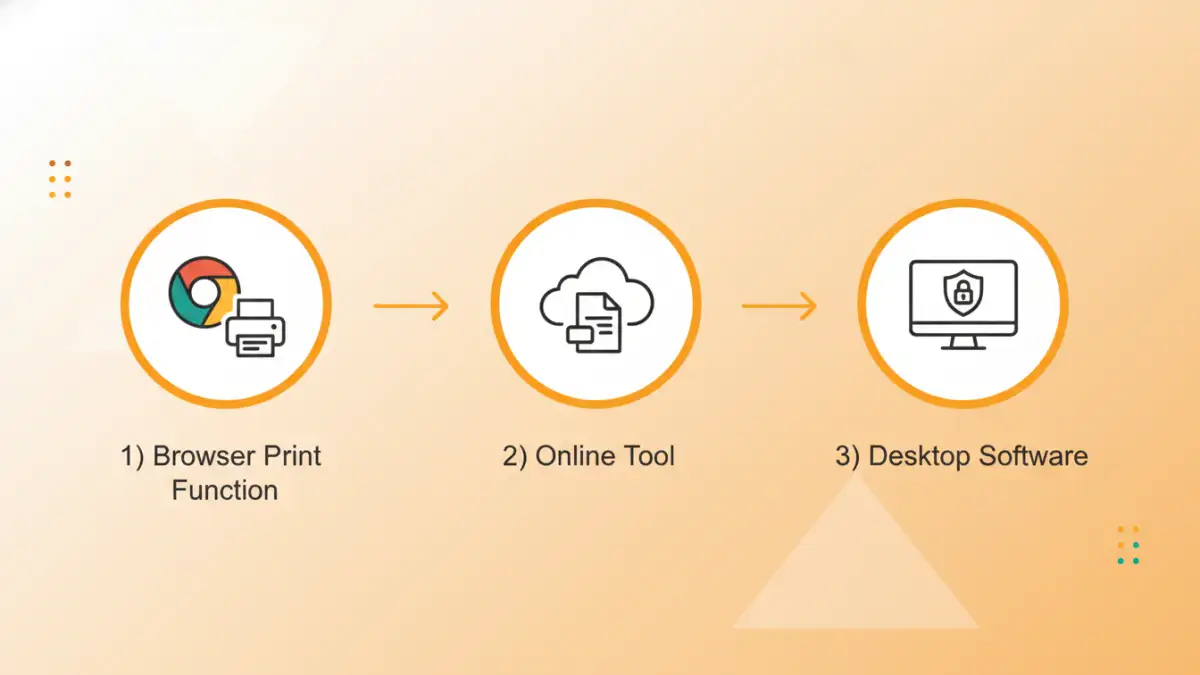
When you need to perform pdf password removal, several methods are available, ranging from simple browser tricks to dedicated software. Each method has its own advantages and is suitable for different scenarios, depending on the type of password and your comfort level with online tools.
Using Google Chrome's Print Function
This is a surprisingly simple and effective trick, especially for PDFs protected by an owner (permissions) password. It essentially 'prints' the PDF to a new, unprotected PDF file. I've used this many times for quick, secure pdf unlock when editing was restricted.
- Open the PDF: Drag and drop your password-protected PDF into a Chrome browser window. If it has an open password, you'll need to enter it first.
- Access Print Dialog: Once opened, press
Ctrl + P(Windows) orCmd + P(Mac) to bring up the print dialog. - Save as PDF: In the destination section, select 'Save as PDF'.
- Save New File: Click 'Save', choose a location, and your new PDF will be saved without any owner password restrictions.
Leveraging Online PDF Tools
Numerous online platforms offer services to remove PDF passwords. These tools are convenient, often free for basic use, and require no software installation. However, exercise caution regarding data privacy, especially for highly sensitive documents.
- Smallpdf: A popular choice, Smallpdf offers a straightforward 'Unlock PDF' tool. You upload your file, confirm you have the right to unlock it, and if it's an owner password, it usually processes quickly. For open passwords, you'll need to provide it.
- iLovePDF: Similar to Smallpdf, iLovePDF provides a user-friendly interface for pdf password removal. Upload, enter the password if prompted, and download your unlocked file.
- Adobe Acrobat Online: Adobe, the creator of PDF, also offers online tools. Their 'Unlock PDF' feature is reliable, though it might require an Adobe ID for certain operations.
When using online tools for encrypted pdf access, always ensure you're on a reputable site and consider the sensitivity of your document. For highly confidential files, desktop solutions are generally preferred.
Desktop Software Solutions
For more robust or frequent needs, dedicated desktop software provides comprehensive control and often better security. These tools can handle both user and owner passwords, and typically offer additional PDF editing features.
- Adobe Acrobat Pro: The gold standard for PDF management. If you have the password, Acrobat Pro allows you to easily remove security settings. Go to 'Tools' > 'Protect & Standardize' > 'Encrypt' > 'Remove Security'. You'll need to enter the password to confirm.
- PDFelement: A powerful and more affordable alternative to Acrobat Pro. It provides excellent features for managing PDF security. You can open the password-protected file, then navigate to 'Protect' > 'Set Password' and uncheck the security options after entering the correct password.
- Other PDF Editors: Many other PDF editors like Foxit PhantomPDF or Nitro Pro offer similar functionalities to remove pdf password settings, often by opening the document with the correct password and then saving it without security.
Important Considerations for Secure PDF Unlock
While the goal is to remove PDF password protection, it's crucial to approach this with security and ethics in mind. Unlocking documents, especially those not belonging to you, can have serious implications.
Privacy and Data Security
When using online tools, you are uploading your document to a third-party server. For highly sensitive or confidential information, this poses a potential privacy risk. Always review the privacy policy of any online service you use. Desktop software, on the other hand, processes files locally, offering a higher level of data security.
Legal and Ethical Aspects
You should only remove passwords from PDFs for which you have explicit permission or are the rightful owner. Attempting to bypass security on documents you don't own or have no right to access is illegal and unethical. Always ensure you are operating within legal boundaries and respecting intellectual property rights.
Best Practices for Managing Encrypted PDF Access
Once you've managed to remove pdf password protection, consider how you'll manage your documents going forward. Establishing good habits for encrypted pdf access can save you headaches in the future.
- Document Ownership: Always be clear about the ownership of the PDF. If it's a shared document, communicate with collaborators before making changes to security settings.
- Secure Storage: After removing a password, store the unlocked PDF in a secure location, especially if it contains sensitive data. Cloud storage with strong encryption or local encrypted drives are good options.
- Password Management: For documents you create and protect, use a reliable password manager to store your passwords. This prevents forgotten keys and ensures strong, unique passwords for each file.
- Re-evaluate Security: After unlocking, assess if the document still needs protection. If it's going to be shared widely and contains no sensitive data, leaving it unlocked might be fine. Otherwise, consider re-applying a new password or different security measures.
Comparison Table
| Method | Pros | Cons | Best For |
|---|---|---|---|
| Browser Trick (Chrome) | Free, No software installation, Fast for owner passwords | Cannot remove open passwords, Browser dependent | Quick owner password removal, personal use |
| Online PDF Tools | Convenient, Often free for basic use, User-friendly | Privacy concerns for sensitive data, Internet required, Limited features | Non-sensitive documents, occasional use |
| Desktop Software (e.g., Acrobat Pro, PDFelement) | High security (local processing), Handles all password types, Advanced features | Can be expensive, Requires installation, Learning curve | Sensitive documents, frequent use, professional needs |