
When dealing with sensitive information, ensuring its protection is paramount. Many users are familiar with proprietary document formats and their security options, but what about open standards like OpenDocument? Understanding the security features inherent in these formats is crucial for anyone looking to maintain data privacy and integrity without being locked into specific software ecosystems. I've often found that users migrating from other platforms worry about the security capabilities of OpenDocument, and rightfully so. It's essential to know what safeguards are in place and how to leverage them effectively.
The OpenDocument Format (ODF) is an open standard for electronic document exchange, commonly used by applications like LibreOffice and OpenOffice. While not as widely discussed as some proprietary formats, ODF offers robust security features designed to protect your data. These features are often built directly into the applications that support the format, making them accessible to a broad range of users. It's about knowing where to look and how to implement them correctly.
Table of Contents
What is OpenDocument Security?
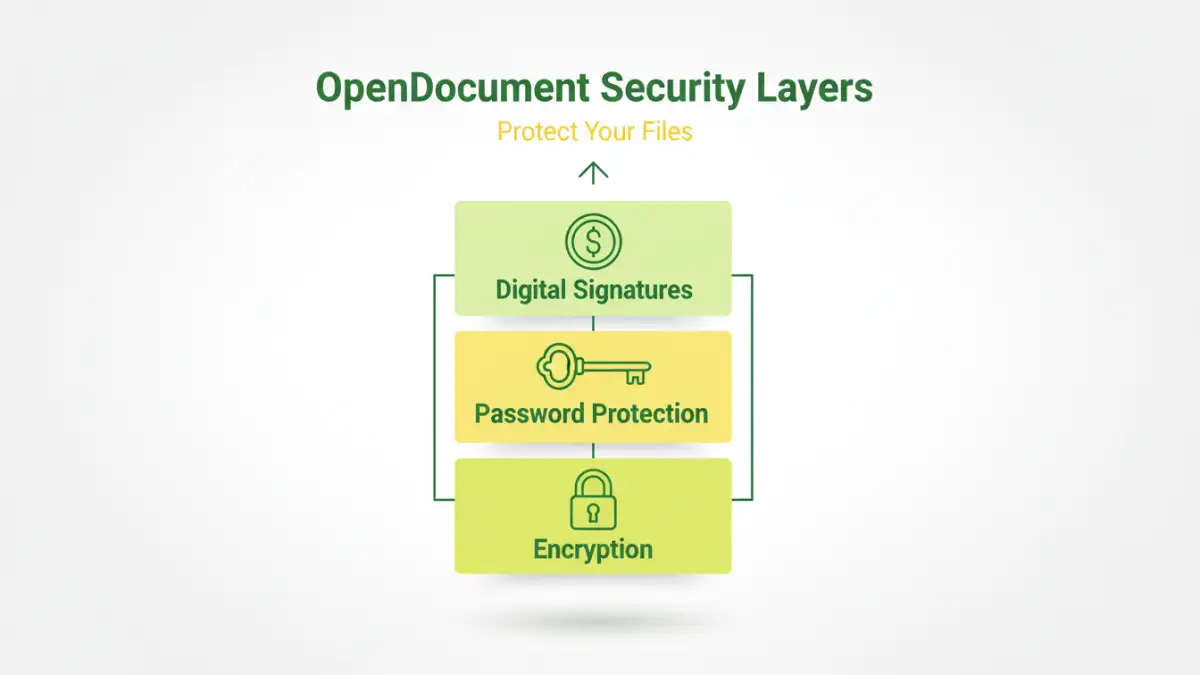
At its core, opendocument file security refers to the measures and features within the OpenDocument standard and its supporting applications that protect the confidentiality, integrity, and authenticity of documents. This includes methods to prevent unauthorized access, ensure that documents haven't been tampered with, and verify the origin of the content. My experience shows that many users overlook these capabilities, assuming open formats are inherently less secure, which is a misconception.
The ODF specification itself doesn't dictate specific encryption algorithms but rather provides a framework for how security features should be implemented by applications. This allows developers to integrate modern, strong security protocols, ensuring that the security measures evolve with technological advancements. This flexibility is a key strength.
Key Security Concepts
The primary pillars of document security are confidentiality (preventing unauthorized disclosure), integrity (ensuring data hasn't been altered), and authenticity (verifying the source and preventing forgery). ODF implementations aim to address all these through various mechanisms.
Understanding these fundamental concepts helps in appreciating how different features contribute to overall document protection. It's not just about locking a file; it's about a comprehensive approach to data safety.
Encryption Methods in ODF
One of the most critical aspects of file security is encryption. OpenDocument applications typically support strong encryption algorithms to protect the document's content. When a document is encrypted, its data is scrambled using a secret key, rendering it unreadable to anyone without the correct decryption key or password.
Modern ODF implementations often utilize AES (Advanced Encryption Standard) with 128-bit or 256-bit keys, which are considered very robust. The specific implementation might vary slightly between applications, but the underlying principle remains the same: transforming readable data into an unreadable format. I've seen many instances where a strong AES-256 encryption was the deciding factor in preventing a data breach.
Implementing Encryption
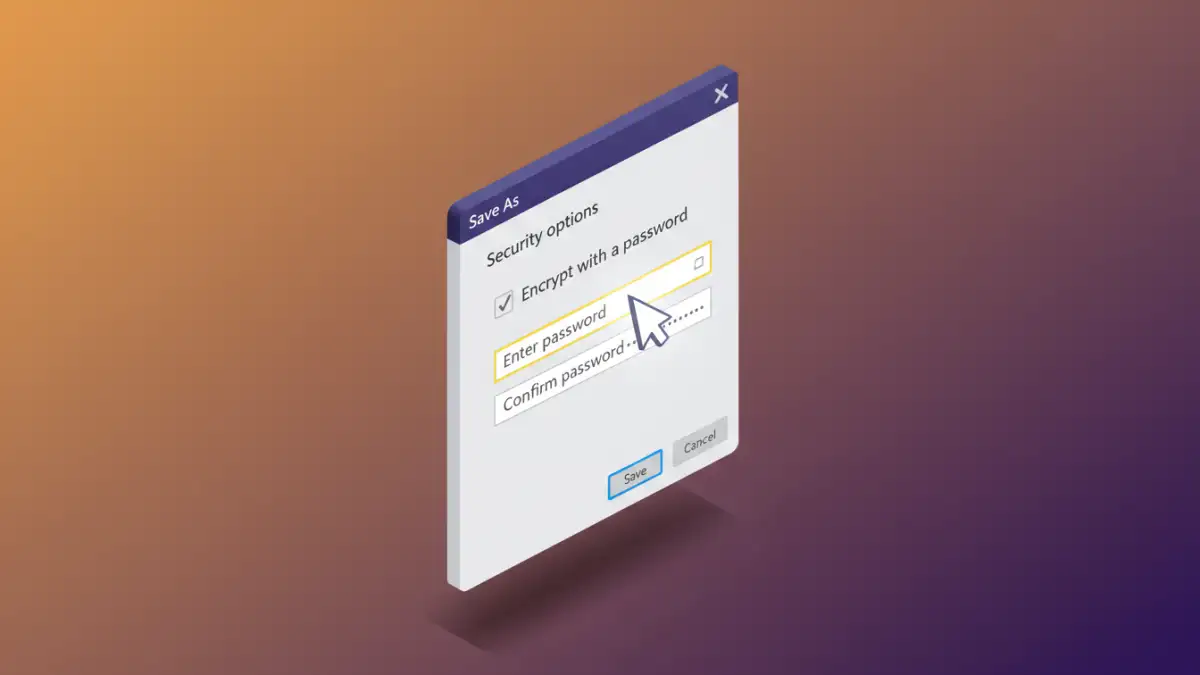
Implementing encryption in ODF applications is usually straightforward. When saving a document, you'll often find an option to set a password. This password acts as the key to encrypt the file. When you or someone else tries to open the document, the application will prompt for this password. Without it, the file remains inaccessible.
It's vital to choose strong, unique passwords for your encrypted documents. A weak password can undermine even the strongest encryption. Consider using a password manager to generate and store complex passwords securely.
Password Protection for Documents
Password protection is the most common method for securing ODF files. It's a user-friendly way to control access. When you save an ODF file with a password, the application encrypts the entire document content. This means that anyone who tries to open the file will be required to enter the correct password first.
The effectiveness of password protection hinges entirely on the strength of the password chosen. Simple or common passwords can be easily guessed or cracked using brute-force methods, negating the security benefits. This is where odf security measures need careful user implementation.
Setting and Managing Passwords
Most ODF-compliant software, such as LibreOffice Writer or Calc, allows you to set passwords during the save process. Look for options like 'Save with Password' or 'Encrypt with Password'. It's good practice to re-enter the password to confirm and ensure it's set correctly. Forgetting a password typically means permanent loss of access to the document, so careful management is key.
Regularly reviewing and updating passwords for sensitive documents is also a good security habit. This is especially true if the document is accessed by multiple people or has been shared.
Digital Signatures and Authenticity
Beyond encryption, ODF supports digital signatures, which are crucial for verifying the authenticity and integrity of a document. A digital signature uses cryptography to bind a signer's identity to the document and ensures that the document has not been altered since it was signed.
This is particularly important in business or legal contexts where you need to prove that a document originated from a specific sender and has not been tampered with. It provides a level of trust that simple password protection cannot offer alone. My work often involves ensuring document provenance, and digital signatures are indispensable for that.
How Digital Signatures Work
To apply a digital signature, you typically need a digital certificate, which is issued by a trusted Certificate Authority (CA). The application uses your private key (associated with your certificate) to create a unique signature based on the document's content. When someone else opens the document, their application uses your public key (also part of the certificate) to verify the signature. If the signature is valid, it confirms that the document is authentic and unchanged.
This process adds a layer of assurance, complementing encryption by addressing integrity and authenticity. It's a vital component of secure document exchange.
Best Practices for ODF Security
To maximize the security of your OpenDocument files, a combination of features and good practices is essential. Relying solely on one method, like a weak password, is insufficient. Implementing multiple layers of security provides a more robust defense against potential threats.
Regularly updating your software is also a critical step. Developers frequently release patches and updates that address security vulnerabilities. Using an outdated version of LibreOffice or another ODF application could leave your files exposed to known exploits. This is a basic but often overlooked aspect of secure document formats.
Layering Security Measures
Combine strong, unique passwords with encryption. For highly sensitive documents, consider storing them on encrypted drives or using secure cloud storage solutions. When sharing documents, use secure methods like encrypted email attachments or secure file-sharing platforms.
Always be cautious of unsolicited documents, even if they appear to be in a trusted format. Phishing attacks can be disguised as legitimate documents, so verify the source before opening. Understanding the nuances of opendocument file security empowers you to make informed decisions about protecting your data.
Comparison Table: ODF Security Features
| Feature | Purpose | Implementation | Strength | Use Case |
|---|---|---|---|---|
| Password Protection | Confidentiality | Set password on save | Depends on password strength | Restricting general access |
| Encryption (e.g., AES) | Confidentiality | Applied automatically with password | Very High (with strong keys) | Protecting sensitive data content |
| Digital Signatures | Integrity & Authenticity | Requires digital certificate | Very High | Verifying sender and preventing tampering |
| File System Encryption | Confidentiality (at rest) | OS-level or third-party tools | High | Protecting all files on a drive |