Working with password-protected documents is a common necessity for safeguarding sensitive information, whether it's for personal records, business proposals, or confidential reports. LibreOffice, a powerful and free office suite, offers robust features for encrypting your documents. However, simply applying a password isn't always enough. Ensuring your data remains truly secure requires understanding best practices for setting and managing those passwords.
As someone who's spent years architecting and implementing software solutions, I've seen firsthand how easily security can be compromised by simple oversights. Applying a strong, well-managed password to your LibreOffice files is a critical step in preventing unauthorized access and maintaining data integrity. This article will guide you through the essential methods and best practices to achieve effective document security with LibreOffice.
Table of Contents
Understanding LibreOffice Encryption
LibreOffice uses strong encryption algorithms to protect the contents of your documents. When you set a password, the software encrypts the file's data, making it unreadable without the correct key. This process is designed to be secure, but its effectiveness hinges entirely on the strength of the password you choose and how you manage it.
Key Encryption Concepts
The encryption used by LibreOffice is generally considered robust for typical use cases. It relies on industry-standard algorithms to scramble your data. The primary goal is to ensure that only individuals with the correct password can decrypt and access the document's content. This forms the basis of secure libreoffice password protection.
Methods for Setting Passwords

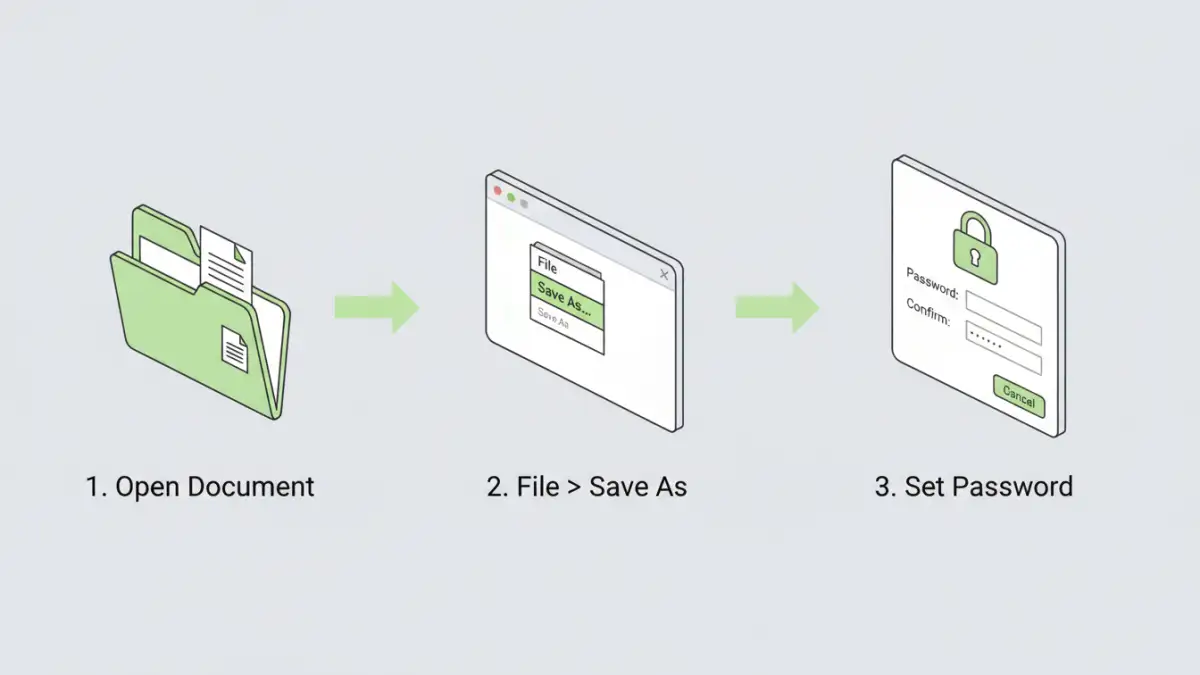
LibreOffice makes it straightforward to add password protection to your documents. The process is similar across Writer, Calc, Impress, and Draw. You typically access this feature through the 'Save As' or 'File' menu options.
Password Protection via 'Save As'
When you are ready to save your document, navigate to 'File' > 'Save As'. In the save dialog box, you will usually find an option labeled 'Save with Password' or similar. Clicking this will prompt you to enter and confirm your desired password. Once saved, the document will require this password for any subsequent opening.
Password Protection via 'File' Menu
Alternatively, you can often find password protection settings directly within the 'File' menu. Look for options like 'Properties' or 'Security' where you can set or change the password associated with the open document. This method is useful for quickly securing a file you are currently working on.
Choosing Strong Passwords
The most critical element of document security is the password itself. A weak password is like a flimsy lock on a vault – it offers minimal protection. I've encountered many instances where clients used easily guessable passwords, rendering their encryption efforts moot.
Characteristics of a Strong Password
A strong password should be long, complex, and unique. Aim for at least 12-15 characters. It should incorporate a mix of uppercase and lowercase letters, numbers, and symbols. Avoid using personal information, common words, or sequential patterns. Think of passphrases, which are easier to remember but harder to crack. For instance, 'MyDogFidoIsCute!' is stronger than 'dog123'.
Avoiding Common Pitfalls
Many users opt for simple passwords like 'password', '123456', or their name. These are immediately vulnerable to brute-force attacks and dictionary hacks. It's also a bad idea to reuse passwords across different accounts or documents, as a breach in one place could compromise others. This is where robust odf password security practices come into play.
Advanced Security Practices
Beyond just setting a password, there are other layers of security you can implement to further protect your LibreOffice documents.
Using Password Managers
A reliable password manager can generate and securely store complex, unique passwords for all your sensitive documents. This eliminates the need to remember numerous strong passwords yourself, reducing the temptation to use weaker, memorable ones.
Understanding ODF Security
The OpenDocument Format (ODF) itself supports encryption. When you save a LibreOffice document with a password, you are leveraging ODF's built-in security features. Ensure you are using a recent version of LibreOffice, as older versions might have less robust encryption methods or vulnerabilities.
Managing Your Passwords
Effective password management is as crucial as choosing a strong password. Losing your password means losing access to your document, potentially permanently.
Secure Storage and Backup
Store your passwords securely, ideally using a reputable password manager. If you must write them down, keep the list in a very safe physical location, separate from your computer. Avoid storing passwords in plain text files on your computer or in cloud storage services without additional encryption.
When to Change Passwords
Regularly review and update your passwords, especially for highly sensitive documents. If you suspect a password may have been compromised, change it immediately. Consistent document access control relies on vigilant password management.
Comparison Table
| Feature | Strength | Weakness | Best Use Case |
|---|---|---|---|
| LibreOffice Built-in Password Protection | Free, integrated, easy to use | Relies on user-chosen password strength, potential for recovery issues if password lost | Securing individual documents for personal or small business use |
| Third-Party Encryption Software | Advanced features, multiple encryption types, batch processing | Can be costly, may require installation, potential compatibility issues | Protecting large volumes of sensitive data, meeting strict compliance requirements |
| Password Managers | Generate and store strong, unique passwords; auto-fill capabilities | Requires setup and trust in the manager, potential single point of failure if manager is compromised | Managing passwords for numerous documents and online accounts |