Working with password-protected documents can be frustrating, especially when you're the one who set the password and then promptly forgot it. This is a common scenario, and it can leave you locked out of important files. Whether it's a sensitive report, a creative manuscript, or a personal note, losing access due to a forgotten ODT password can be a significant hurdle.
As someone who has spent years navigating the intricacies of software and data management, I've encountered this issue more times than I can count, both for myself and for colleagues. Fortunately, there are several approaches you can take to try and recover or bypass the password protection on your OpenDocument Text (ODT) files.
Table of Contents
Understanding ODT Password Protection
OpenDocument Text (ODT) files, commonly used by LibreOffice and OpenOffice, offer built-in password protection to secure sensitive information. This security is typically implemented through encryption. When you set a password, the application encrypts the document's content, making it unreadable without the correct key – the password itself.
It's important to distinguish between different types of password protection. Some applications might offer simple password protection that only prevents unauthorized opening, while others might offer granular control, like protecting specific parts of a document. For ODT files, the primary protection is usually against opening the entire document.
How ODT Encryption Works
When a password is set on an ODT file, the document's data is scrambled using an encryption algorithm. The strength of this encryption depends on the software version and the complexity of the password used. Modern versions generally employ robust encryption standards. Without the correct password, the encryption cannot be reversed, rendering the document inaccessible.
The Browser Trick (Owner Passwords Only)
This method is a clever workaround that can sometimes work if you set the password yourself and are trying to access a file that wasn't protected with a very strong encryption method. It relies on the fact that some older or simpler password implementations might not fully encrypt the entire file structure. This is not a foolproof method and is often ineffective against stronger encryption.
The basic idea involves opening the ODT file in a web browser by renaming the file extension to `.zip` and then extracting its contents. You would then look for an XML file (often named `content.xml`) within the archive. If the password protection is weak, you might be able to edit this XML file, remove the password-related tags, and then re-zip the contents, renaming it back to `.odt`. This is more of a historical technique and less likely to succeed with modern LibreOffice versions.
Steps for the Browser Trick
First, create a backup of your ODT file. Then, rename the `.odt` extension to `.zip`. Extract the contents of this zip file using any standard archiving tool. Locate the `content.xml` file and open it with a text editor. Search for tags related to encryption or passwords and attempt to remove them carefully. Re-compress the extracted files into a new zip archive, and rename it back to `.odt`. Attempt to open the file.
Using Online ODT Password Recovery Tools
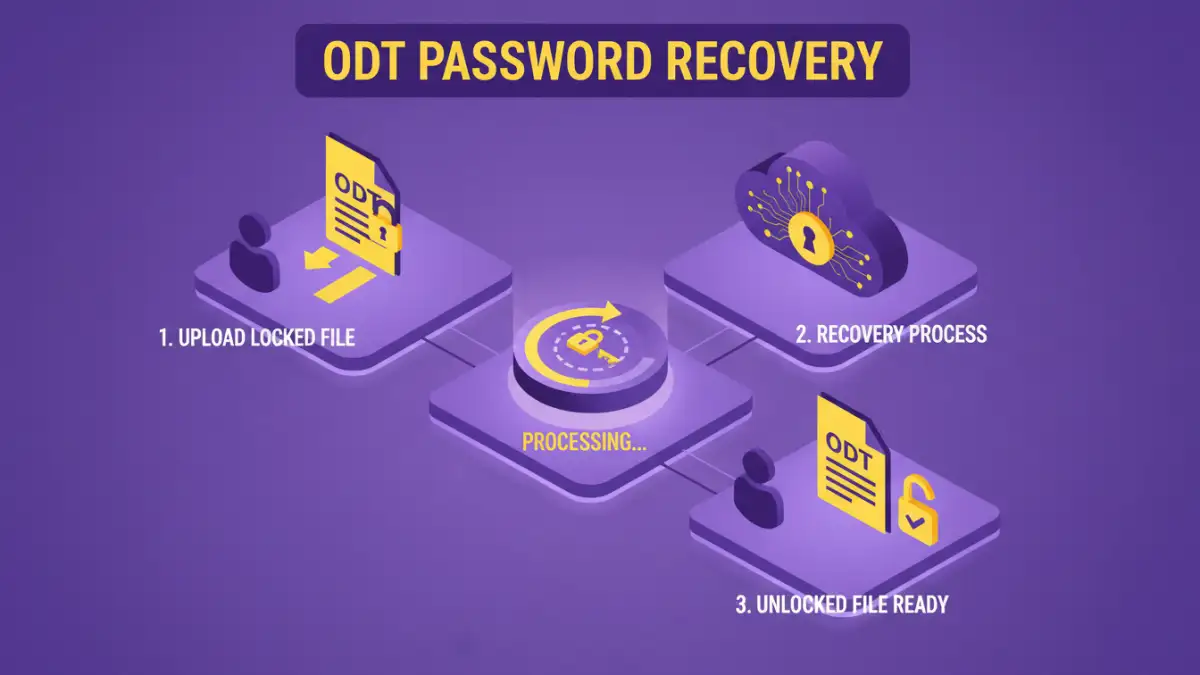
The internet offers a variety of online tools designed to help recover lost document passwords. These services often work by attempting brute-force attacks or dictionary attacks against the password. You upload your ODT file, and the service tries numerous password combinations to find the correct one.
When considering online tools, especially if you've forgotten ODT password, it's crucial to prioritize services that have a good reputation for security and privacy. Uploading sensitive documents to unknown third-party websites carries inherent risks. Always check reviews and ensure the service uses secure connections (HTTPS).
Choosing a Reliable Online Service
Look for services that clearly state their privacy policy and how they handle your uploaded files. Some tools might offer a free scan with limited attempts, requiring payment for full recovery. Be wary of services that promise instant recovery for complex passwords, as this is often unrealistic. The effectiveness depends heavily on the complexity of your original password.
Leveraging Desktop Software
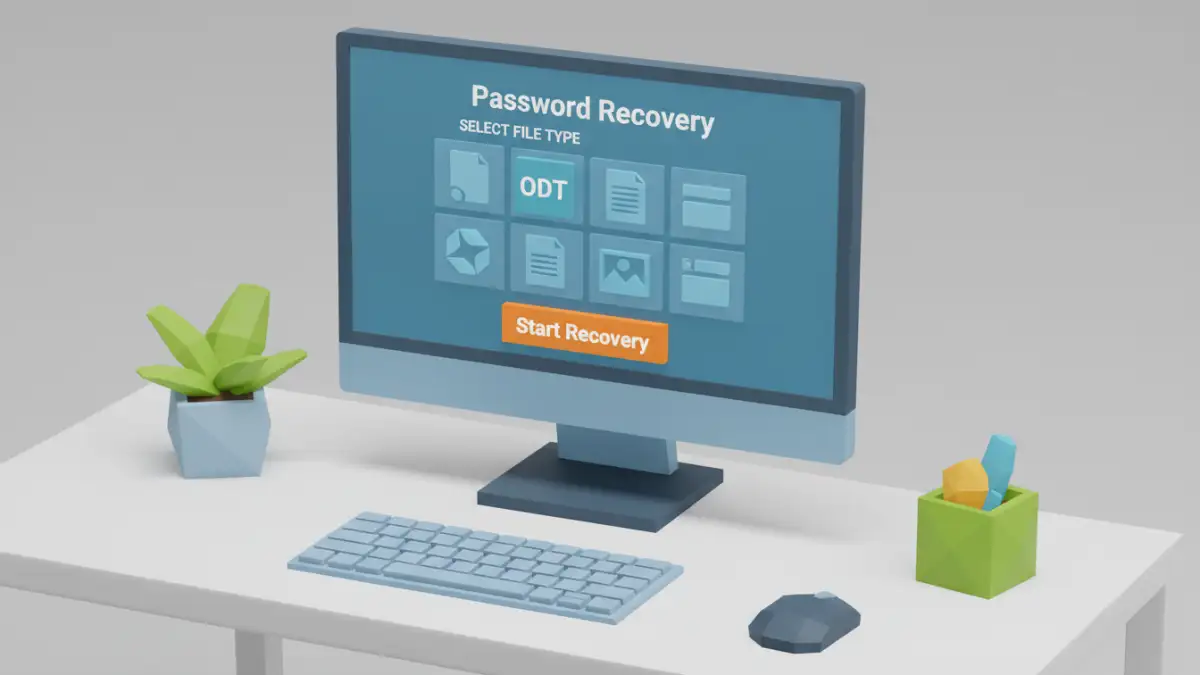
For more robust solutions, dedicated desktop software can be a more powerful option. These programs are installed on your computer and often provide more advanced recovery techniques, including multi-core CPU acceleration for brute-force attacks. This can significantly speed up the process compared to online tools, especially for complex passwords.
Many such applications are available, supporting a wide range of document formats, including ODT. They often offer features like customizable attack types (brute-force, dictionary, mask attacks) and the ability to pause and resume recovery processes. When you need to recover lost document password, desktop software can be a reliable choice if other methods fail.
Considerations for Desktop Tools
Desktop software might require a purchase, although some offer free trials. Ensure the software is from a reputable vendor to avoid malware. The success rate still depends on the password's strength and the time you're willing to invest. For instance, a password like 'P@$$wOrd123!' will take significantly longer to crack than 'password'.
Best Practices for Document Security
Preventing the situation where you forget your ODT password is often easier than recovering it. Implementing good security habits from the start can save you a lot of trouble down the line. This includes using strong, unique passwords and keeping a secure record of them.
Consider using a reputable password manager. These tools generate strong, random passwords for you and store them securely, accessible only with a master password. This eliminates the need to memorize numerous complex passwords. Regularly backing up your important documents, both password-protected and unprotected, is also a crucial practice.
| Method | Pros | Cons | Best For |
|---|---|---|---|
| Browser Trick | Free, no extra software needed | Only works for weak, owner-set passwords; unreliable | Quick attempts for simple cases |
| Online Tools | Accessible from anywhere, easy to use | Privacy concerns, potential data risks, limited effectiveness on strong passwords | Convenient recovery for less sensitive files |
| Desktop Software | More powerful, faster recovery options, handles various password types | Often paid, requires installation, can be complex | Difficult recovery scenarios, frequent users |
| Password Managers | Secure storage, auto-generation, convenience | Requires setup, master password security is critical | Long-term document security and password management |