
Working with password-protected documents can be frustrating, especially when you've forgotten the password or need to access a file shared by a colleague. OpenDocument files, commonly known by their .odt extension for text documents, are no exception. While password protection is a valuable security feature, losing access to your own data can be a significant hurdle. Fortunately, there are several practical approaches you can take to regain access.
I've encountered situations where a simple password reminder would have saved hours of troubleshooting. Over the years, I've explored various techniques to handle these scenarios, from simple workarounds to more technical solutions. This article aims to guide you through these methods, making the process of accessing your protected OpenDocument files as smooth as possible.
Table of Contents
Understanding OpenDocument Security
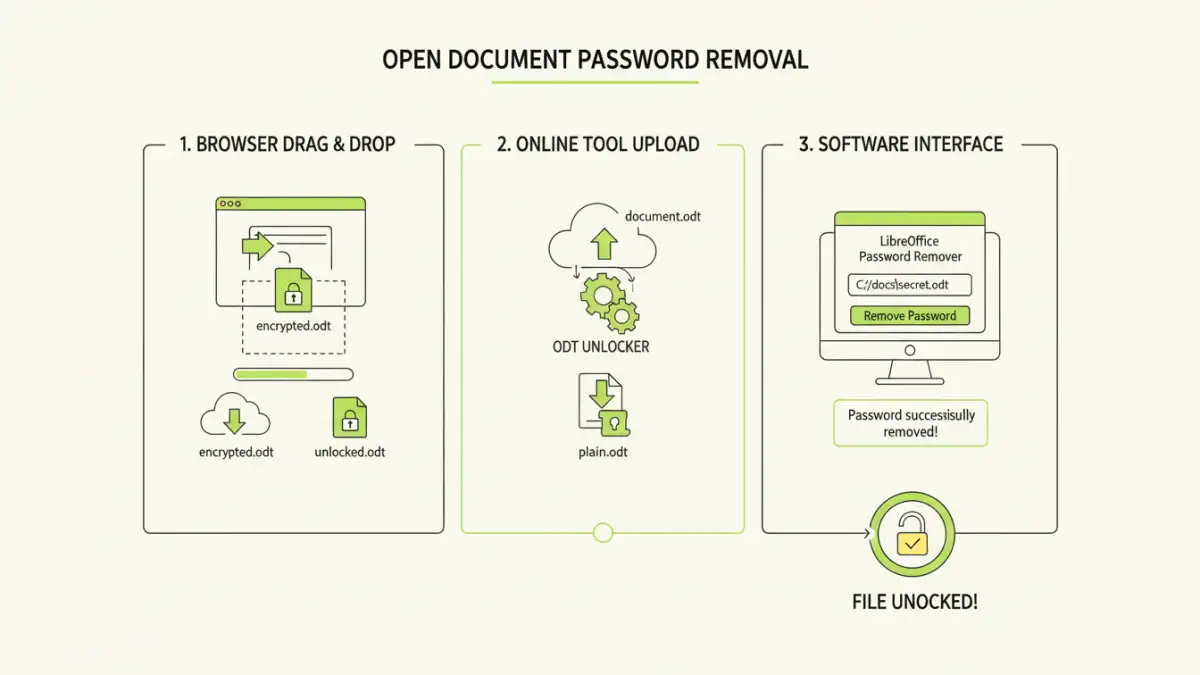
OpenDocument files, like those created by LibreOffice or OpenOffice, can be secured with a password to protect their content from unauthorized viewing or modification. This encryption is typically applied at the file level, meaning the entire document is scrambled until the correct password is provided. It's a robust way to keep sensitive information private.
How Passwords Protect Files
When a password is set on an OpenDocument file, the application uses an encryption algorithm to scramble the data within the file. Without the correct password, this scrambled data appears as gibberish. The strength of this protection depends on the encryption method used by the software and the complexity of the password itself. This is why remembering your password or using a secure password manager is crucial for long-term access.
Method 1: The Browser Trick
One surprisingly effective method, particularly for files where you know the password but the application struggles to open it, or for certain types of encryption, involves using a web browser. This technique essentially treats the password-protected file as a ZIP archive. Many modern browsers can open and extract contents from ZIP files.
To try this, rename the .odt file extension to .zip. Then, open the file using your web browser (like Chrome, Firefox, or Edge) by dragging and dropping it into a browser window. If successful, you'll see the internal structure of the document. You can then extract the content, often in XML format, which you can then process or convert. This method works best for bypass scenarios where the encryption isn't overly complex or when you're trying to recover content rather than a fully unencrypted file.
Method 2: Using Online Tools
The internet offers a variety of online services designed to help users remove passwords from various document types, including OpenDocument files. These tools often work by uploading your password-protected file, entering the known password, and then processing the file to provide a password-free version for download.
Searching for terms like "remove OpenDocument password online" will yield several options. While convenient and often free for basic use, it's crucial to exercise caution. Ensure you use reputable websites that clearly state their privacy policies. Uploading sensitive documents to unknown online services carries inherent risks, as you are entrusting your data to a third party. For less sensitive files, these tools can be a quick and easy way to access your data without installing any software.
Method 3: Desktop Software Solutions
For more robust solutions or when dealing with particularly stubborn password protection, dedicated desktop software can be invaluable. These applications are specifically built to handle file decryption and password recovery for a wide range of formats, including ODT files.
Some software might offer brute-force or dictionary attack methods, which attempt to guess the password by trying numerous combinations. These can be time-consuming and are more effective for simpler passwords. Other tools focus on efficient decryption if you already know the password but need to remove it. Always download software from trusted sources to avoid malware. While often paid, these solutions usually offer greater reliability and security for accessing protected documents.
Best Practices for Document Security
Preventing the need to remove an OpenDocument password in the first place is always the best strategy. Implementing strong security practices from the outset can save a lot of hassle. This includes using strong, unique passwords for your sensitive documents and storing them securely.
Consider using a reliable password manager to keep track of all your important passwords. Regularly backing up your important files is also essential. If you're sharing a document that requires protection, ensure the recipient understands how to handle it securely. By adopting these habits, you can minimize the risk of losing access to your valuable data.
Comparison Table: Methods for Accessing Protected Documents
| Method | Pros | Cons | Best For |
|---|---|---|---|
| Browser Trick (.odt to .zip) | Free, no extra software required, quick for simple cases | Limited effectiveness for strong encryption, may require renaming | Recovering content from less secure files, quick access |
| Online Decryption Tools | Easy to use, accessible from anywhere, often free for basic use | Privacy concerns with sensitive data, variable reliability, potential feature limits | Non-sensitive documents, quick password removal if password is known |
| Desktop Software | Powerful, handles various encryption types, offline use, more reliable | Often requires purchase, may have a learning curve, requires installation | Complex password removal, frequent use, sensitive documents requiring secure handling |