
With the increasing sophistication of cyber threats, ensuring the integrity and confidentiality of sensitive documents has become a paramount concern for organizations worldwide. Traditional perimeter-based security models, once considered robust, are proving insufficient against modern, adaptive attackers. This shift demands a more proactive and stringent approach, one that inherently distrusts every access request, regardless of its origin. This is where the principles of Zero-Trust Architecture become not just beneficial, but essential for document management success.
Table of Contents
The Imperative of Zero Trust in Document Management
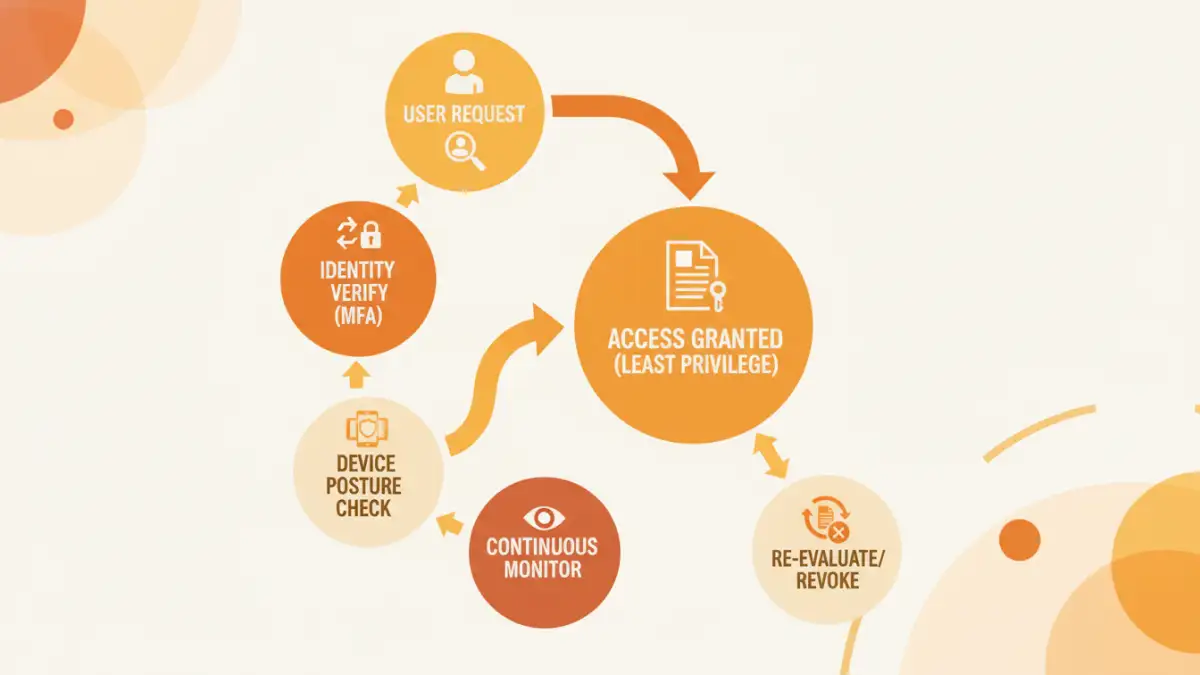
Working in software engineering for over a decade, I've seen firsthand how quickly security paradigms can evolve. The old 'trust but verify' approach is simply too risky for critical data. Today, every user, device, and application attempting to access a document must be verified, authorized, and continuously monitored, even if they are already inside the network perimeter. This foundational shift is what makes zero trust document management so powerful.
Beyond Traditional Perimeters
Relying solely on network firewalls or VPNs to protect internal document repositories is a gamble. Once an attacker breaches the perimeter, they often gain unfettered access to internal resources. Zero Trust acknowledges that threats can originate from anywhere, both external and internal, making every access point a potential vulnerability. It's about securing the document itself, not just the network it resides on.
Core Principles of Zero Trust for Absolute File Security

Implementing a Zero-Trust Architecture for document management isn't a single product; it's a strategic philosophy built on several key tenets. These principles ensure that access to sensitive documents is granted only when absolutely necessary and under the strictest conditions. It's a fundamental shift towards achieving absolute file security.
Identity and Device Verification
At the heart of Zero Trust is the rigorous verification of every identity and device. Before anyone can access a document, their identity must be authenticated using strong, multi-factor authentication (MFA). Simultaneously, the device they are using must be assessed for its security posture – is it patched, compliant with policies, and free of malware? Only after these checks are passed is access even considered.
Micro-segmentation and Least Privilege
Micro-segmentation involves breaking down security perimeters into small, isolated zones, limiting lateral movement for potential attackers. Coupled with the principle of least privilege, users are granted only the minimal access required to perform their specific tasks, and no more. If a user only needs to view a specific set of documents, they shouldn't have access to the entire repository. This significantly reduces the attack surface for sensitive information.
Implementing Zero Trust in Document Workflows
Successfully integrating Zero Trust principles into document management workflows requires a methodical approach, focusing on data classification, access policies, and continuous monitoring. From my experience, the biggest hurdle is often the cultural shift required within an organization, moving from implicit trust to explicit verification for every interaction.
Continuous Verification in Action
Access is never a one-time grant; it's a continuous process of verification. A user might be authenticated and authorized to view a document initially, but their session, device posture, and behavior are continuously monitored. If anything suspicious is detected – say, they attempt to download an unusual volume of files or their device suddenly becomes non-compliant – access can be immediately revoked or challenged. This continuous verification is crucial for real-time threat detection.
Data Classification and Protection Strategy
A robust data protection strategy begins with thorough data classification. Not all documents are equally sensitive. Identifying and labeling documents based on their criticality (e.g., public, internal, confidential, highly restricted) allows for the application of appropriate Zero Trust policies. Highly sensitive documents will naturally have more stringent access controls, encryption requirements, and auditing processes, ensuring that the most valuable information receives the highest level of protection.
Realizing Success: Benefits and Overcoming Challenges
The adoption of zero trust document management brings significant advantages, but it's not without its implementation challenges. Organizations can expect enhanced security, improved compliance, and a more resilient defense against evolving threats. However, it requires careful planning and a phased rollout to avoid disrupting productivity.
One primary benefit is the dramatic reduction in the blast radius of a breach. If an attacker compromises one user or device, their access is severely limited, preventing widespread data exfiltration. This also greatly aids in regulatory compliance, as the granular control and auditing capabilities inherent in Zero Trust provide clear evidence of data protection measures. The initial investment in technology and training can be substantial, and managing a more complex access control system requires dedicated resources. However, the long-term gains in security and reduced risk typically outweigh these initial hurdles.
Best Practices for a Robust Zero Trust Document Strategy
Building an effective Zero Trust strategy for your documents demands more than just technology; it requires a holistic approach that integrates policy, people, and processes. My advice is always to start small, secure the most critical assets first, and then expand your implementation systematically.
Begin by clearly defining your protected surface – what documents, data, applications, and services are most critical to your organization? Implement strong identity management with MFA everywhere. Continuously monitor user and device behavior for anomalies. Regularly audit access policies and permissions to ensure they align with the principle of least privilege. Finally, foster a security-aware culture among employees, as human error remains a significant vulnerability even in the most secure systems.
Zero Trust vs. Traditional Document Security: A Comparison
| Feature | Traditional Security | Zero-Trust Architecture | Best For |
|---|---|---|---|
| Trust Model | Implicit trust within perimeter | Explicit verification for all access | Modern threat landscapes |
| Perimeter Focus | Network-centric | Data-centric (every document is its own perimeter) | Granular data protection strategy |
| Access Control | Coarse-grained, static | Fine-grained, dynamic, continuous verification | Achieving absolute file security |
| Threat Assumption | External threats primarily | Threats can originate anywhere (internal/external) | Proactive breach prevention |
| User Experience | Simpler initial access | Requires more rigorous authentication/verification | Enhanced security posture |