
When you upload an encrypted file to a cloud service, you might assume that deleting it from your device or even the cloud interface is enough. However, the reality of secure cloud deletion can be more complex, especially when dealing with protected data. Understanding how to properly erase encrypted files cloud ensures your sensitive information doesn't linger on servers longer than intended, mitigating potential risks.
My experience has shown me that simple deletion often isn't sufficient. Cloud providers have backup systems, and deleted files can sometimes be recovered or remain in temporary storage. This is why a proactive approach to securely removing encrypted data is crucial for maintaining privacy and security.
Table of Contents
Understanding Encryption and Cloud Deletion
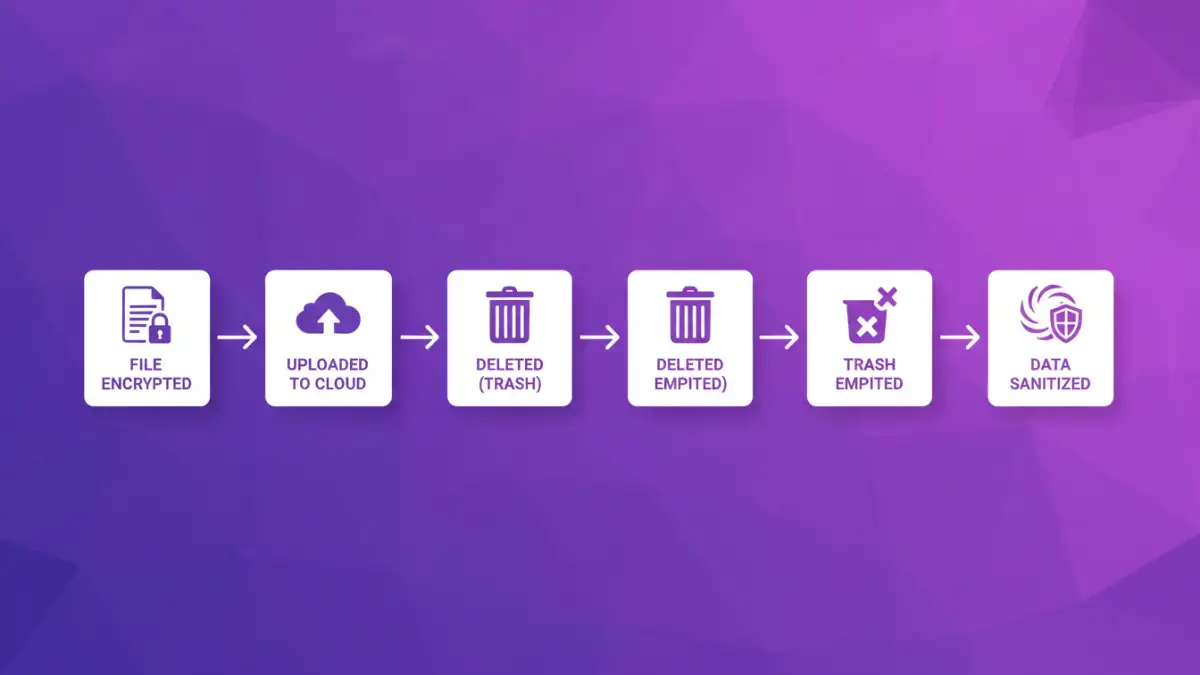
Encryption adds a layer of complexity to file deletion. When a file is encrypted, it's transformed into an unreadable format without the correct decryption key or password. This means that even if a file is technically present on a server, it's useless without the means to decrypt it.
However, the encrypted file itself still occupies storage space and exists as a data object. The process of erasing encrypted files cloud involves not just flagging the file for deletion but ensuring that the data blocks are overwritten or permanently removed from the provider's infrastructure, including any cached or backup copies.
Key Concepts in Secure Deletion
True secure deletion involves overwriting the data multiple times or using cryptographic erasure techniques. For cloud services, this often relies on the provider's internal protocols. However, users can take steps to ensure their encrypted files are truly gone.
Limitations of Standard Deletion

When you delete a file from your cloud drive via the web interface or a desktop sync client, you're typically performing a logical deletion. This process usually involves moving the file to a 'trash' or 'recycle bin' folder. The data isn't immediately erased; it's marked for deletion and can often be restored within a specific timeframe.
Even after emptying the trash, the underlying data might persist on the cloud provider's servers for a period. This is for data recovery purposes but poses a risk if the data is sensitive. For encrypted files, while the data is unreadable, its presence is still a potential vulnerability if the encryption itself is compromised or if metadata reveals information.
Secure Deletion Methods
The most effective way to ensure an encrypted file is gone is to remove the encryption *before* deleting it, if possible, or to leverage specific features offered by the cloud provider. However, if you only have the encrypted file and want to erase it securely, you must rely on the provider's secure deletion mechanisms.
Method 1: Decrypt and Delete (If Possible)
If you still have access to the decryption key or password, the ideal scenario is to decrypt the file on your local machine first. Once decrypted, you can then delete the original encrypted file from your cloud storage. After emptying the cloud trash, the original encrypted data is gone, and the decrypted file can be deleted locally without leaving a trace on the cloud.
Method 2: Relying on Cloud Provider Protocols
Most reputable cloud storage providers (like Google Drive, Dropbox, OneDrive, etc.) have policies and procedures for secure data deletion. When you permanently delete a file (after emptying the trash), they employ methods to remove the data from their active systems and eventually from backups. The effectiveness of this depends on the provider's commitment to security and data privacy standards.
Using Provider-Specific Features
Some services might offer advanced security features or enterprise-level controls that allow for more granular control over data deletion, including options for immediate and permanent removal. Investigating your provider's security documentation is key.
Browser-Based Techniques
Sometimes, simply deleting the file through the cloud provider's web interface and emptying the trash is the most direct route. For enhanced security, consider these steps:
- Ensure file is encrypted: Double-check that the file you intend to delete is indeed encrypted.
- Upload to Cloud (if not already): If you're working locally, ensure the encrypted file is synced to your cloud.
- Delete via Web Interface: Log in to your cloud storage provider's website and navigate to the file.
- Permanent Deletion: Select the file, choose 'Delete' or 'Move to Trash', then navigate to your trash/recycle bin folder and select 'Empty Trash' or 'Delete Permanently'.
- Verify Deletion: Check again that the file is no longer listed anywhere in your cloud storage.
This method relies heavily on the provider's data sanitization practices. For highly sensitive data, it's always best to research your provider's specific data retention and deletion policies.
Advanced Considerations
When dealing with highly sensitive encrypted files, you might want to consider additional measures. This could involve using a cloud provider that offers end-to-end encryption where only you hold the keys, meaning the provider cannot access or store your data in a readable format, even if they retain the encrypted blob.
Another approach is to encrypt the file using strong local encryption software (like VeraCrypt or BitLocker) before uploading. Then, when you want to erase it, you not only delete it from the cloud but also consider securely wiping the local copy of the encrypted file from your device's storage using specialized software. This ensures the data is gone from all locations.
Best Practices for Cloud Security
To maintain robust cloud file security, adopt these practices:
- Understand Your Provider's Policies: Know how your cloud provider handles deleted data.
- Use Strong Encryption: Always encrypt sensitive files before uploading, using robust algorithms.
- Manage Encryption Keys Carefully: Securely store your decryption keys or passwords. Losing them means losing your data.
- Regularly Audit Storage: Periodically review your cloud storage for unnecessary or old files.
- Consider End-to-End Encryption: For maximum privacy, opt for services that offer E2EE.
- Secure Local Copies: Ensure any local copies of encrypted files are also securely managed and deleted when no longer needed.
By combining strong encryption with diligent deletion practices, you can effectively manage your digital footprint and protect sensitive information stored in the cloud.
Comparison Table: Secure Deletion Approaches
| Method | Pros | Cons | When to Use |
|---|---|---|---|
| Standard Cloud Deletion (Empty Trash) | Easy, built-in to most services | Data may persist temporarily; relies on provider policy | General files, non-critical data |
| Decrypt then Delete | Ensures original encrypted data is gone; provides clean data state | Requires access to decryption key/password; may need local storage | Sensitive encrypted files where decryption is possible |
| Provider's Secure Deletion Features (Enterprise) | Often offers immediate, verifiable deletion; compliance-focused | May require paid plans or specific account types; less common for personal use | Business-critical sensitive data, regulated industries |
| Local Secure Wipe + Cloud Deletion | Ensures data is gone from all locations (cloud & local) | Requires specialized local software; more time-consuming | Highly sensitive data, end-of-life device disposal preparation |