The need to protect sensitive information is paramount in our increasingly digital world. Whether it's financial reports, confidential client data, or personal documents, ensuring that these files are safeguarded from unauthorized access is a critical concern. This often leads individuals and organizations to seek robust methods for securing their digital assets, with encryption being a primary solution.
When it comes to portable documents, the Portable Document Format (PDF) is ubiquitous. Its widespread use means that securing PDFs is a common requirement. Understanding how and why people are using encryption for these files, along with the associated statistics, can provide valuable insights into current data protection practices and emerging trends.
Table of Contents
Current Trends in Document Security
The landscape of digital security is constantly evolving, driven by an ever-increasing volume of data and a growing sophistication of cyber threats. Organizations are investing more in data protection strategies than ever before. This includes not only technical solutions but also employee training and policy development. The shift towards remote work has also amplified the need for robust remote access security and data handling protocols.
As more sensitive information is stored and transmitted digitally, the focus on end-to-end security becomes critical. This means protecting data at rest (when stored) and in transit (when being sent). Encryption plays a fundamental role in both aspects, acting as a vital layer of defense against breaches and unauthorized disclosures.
Why Encrypt Sensitive PDFs?
The primary motivation behind using sensitive pdf encryption is to prevent unauthorized access to confidential information. If a file is encrypted, even if it falls into the wrong hands, the data remains unreadable without the correct decryption key or password. This is crucial for compliance with data protection regulations like GDPR, HIPAA, and CCPA, which mandate the safeguarding of personal and sensitive data.
Beyond regulatory compliance, encryption builds trust. For businesses, it assures clients and partners that their data is handled with the utmost care. For individuals, it provides peace of mind that their personal documents, such as financial statements or medical records, are protected from prying eyes. It’s a proactive measure against potential data leaks and identity theft.
PDF Encryption Usage Statistics
While specific, granular statistics on the exact percentage of sensitive PDFs that are encrypted can fluctuate and are often proprietary, general trends indicate a significant and growing adoption of encryption. Surveys often highlight that a substantial majority of organizations consider data encryption a critical component of their cybersecurity strategy. For instance, reports frequently show that over 80% of businesses utilize some form of encryption for sensitive data, with file-level encryption being a common method.
The increase in data breaches and ransomware attacks directly correlates with the rise in encryption usage. As threats become more prevalent, the perceived value and necessity of strong pdf data protection measures, including encryption, increase. This trend extends to individual users who are becoming more aware of digital privacy and security, leading to increased adoption of password-protected files for personal use.
Prevalence of Encryption
Many cybersecurity reports indicate a steady rise in the implementation of encryption technologies across various file types. The focus on securing data at rest, particularly for sensitive documents like financial records, legal contracts, and intellectual property, means that PDF encryption is a frequently employed tactic. The ease of sharing PDFs also makes them a common target, thus necessitating their protection.
Impact of Breaches on Adoption
Following high-profile data breaches, there's often a surge in interest and investment in data security measures, including encryption. Organizations that have experienced or are vulnerable to attacks are more likely to adopt comprehensive encryption solutions. This reactive adoption, coupled with proactive security planning, contributes to the overall upward trend in secure file usage.
Common Encryption Methods
Several methods exist for applying encryption to PDF files. The most common is password-based encryption, where a user sets a password that must be entered to open or edit the document. This is often built directly into PDF reader software or can be applied using dedicated PDF editing tools.
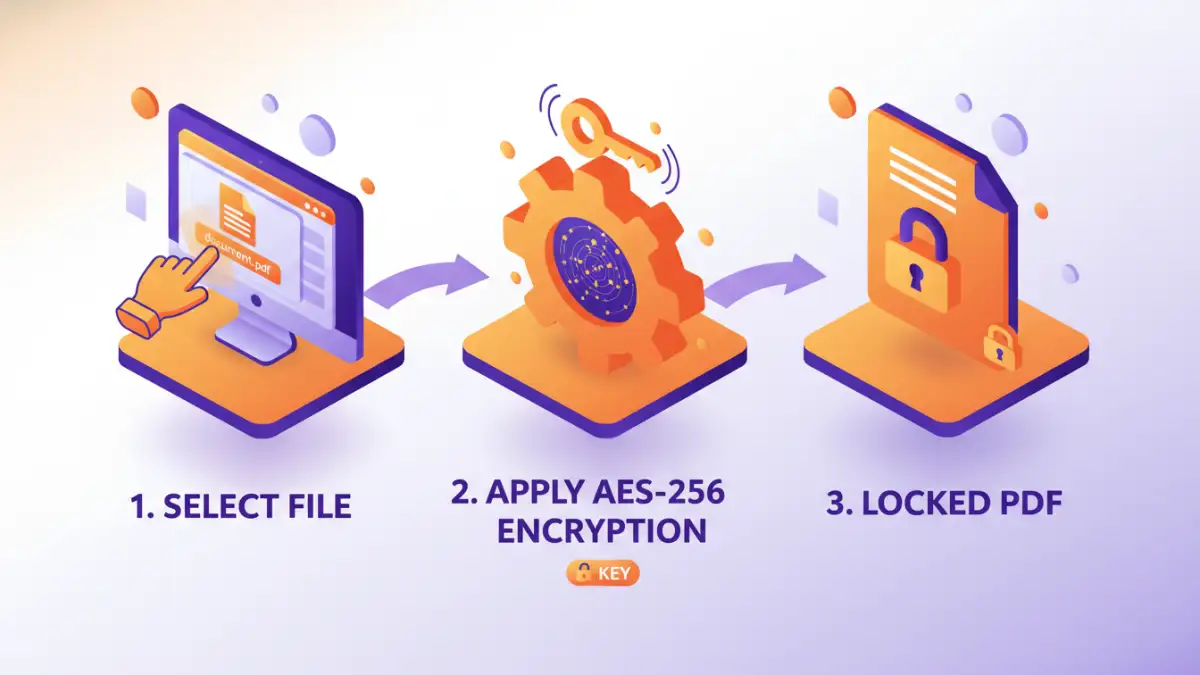
Beyond simple password protection, more advanced encryption standards like AES (Advanced Encryption Standard) are often employed. Many software solutions offer different levels of encryption, such as AES-128 or AES-256, with the latter being considered highly secure and widely adopted for sensitive data protection. The choice of method often depends on the level of security required and the user's technical expertise.
Password Protection vs. Advanced Encryption
Password protection is the most accessible form of PDF encryption. It’s straightforward to implement, usually through a file's properties or print dialog. However, the strength of this protection relies entirely on the complexity of the password chosen. Advanced encryption standards, like AES-256, provide a much higher level of security, making it computationally infeasible to break the encryption without the key, even with a weak password.
Challenges and Considerations
Despite the benefits, implementing and managing encryption can present challenges. One significant issue is key management – securely storing and distributing encryption keys or passwords. If a password is lost, the encrypted document can become permanently inaccessible, leading to data loss. This is a critical consideration for both individuals and organizations.
Another challenge is usability. Overly complex encryption processes or frequent password prompts can hinder productivity and lead to user frustration. Striking a balance between robust security and user convenience is essential for effective secure file usage. Furthermore, ensuring compatibility across different devices and software versions can sometimes be an issue.
Comparison Table: PDF Security Methods
| Method | Pros | Cons | Typical Use Case |
|---|---|---|---|
| Built-in PDF Password Protection | Easy to use, widely supported, no extra software needed | Security depends heavily on password strength; can be bypassed with brute-force attacks if password is weak | Securing non-critical documents, basic privacy |
| Desktop PDF Encryption Software (e.g., Adobe Acrobat Pro) | Offers strong encryption (AES-128/256), granular permissions (view, print, copy), batch processing | Often requires purchase, can have a learning curve, software installation needed | Protecting financial reports, legal documents, intellectual property |
| Online PDF Encryption Tools | Convenient, accessible from any device, often free for basic use | Privacy concerns (uploading sensitive data to third-party servers), limited features, potential for slower processing | Quickly encrypting non-highly sensitive documents for sharing |
| File System Encryption (e.g., BitLocker, FileVault) | Encrypts entire drives or folders, transparent to user once unlocked | Encrypts everything in the designated area, not file-specific control, requires OS-level support | Full disk protection, securing laptops and external drives |