
I've often encountered situations where a client needed to share a critical report, but the file was either too large to email, had compromised image quality after a quick compression, or lacked the necessary security protocols. This common challenge highlights the delicate act of balancing the holy trinity of PDF management: size, visual quality, and robust security. It's a fundamental aspect of efficient digital document handling that every professional should master.
Table of Contents
Understanding the Core Challenge
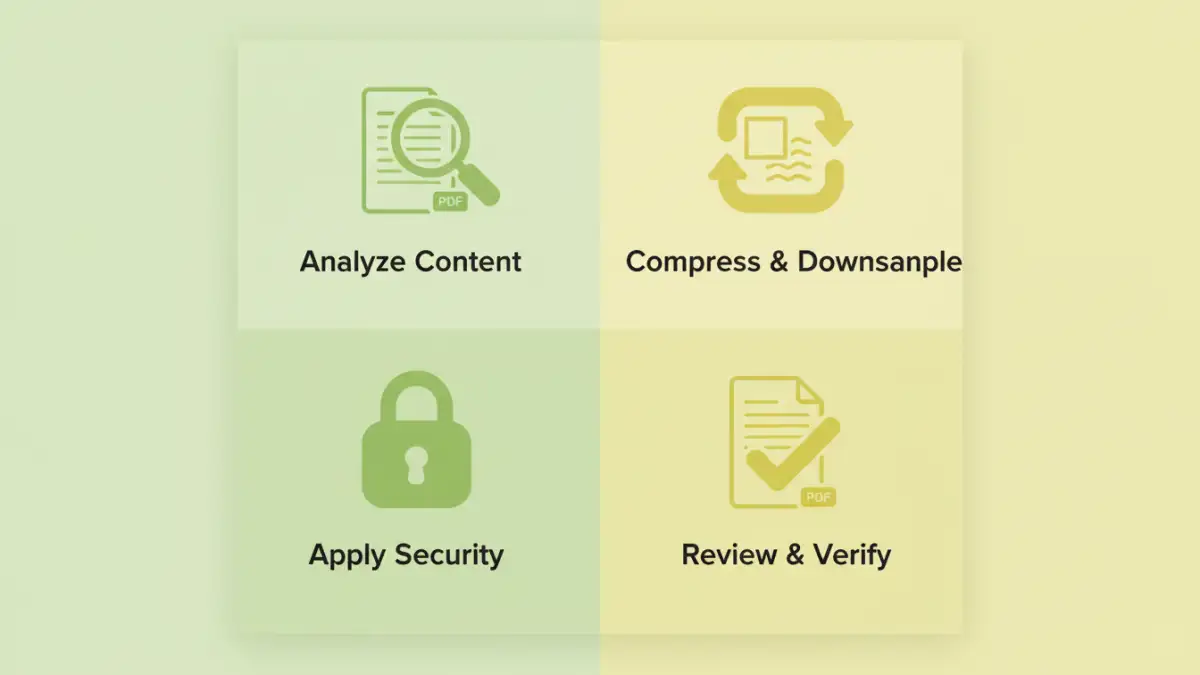
At its heart, PDF optimization is about trade-offs. You want a small file for easy sharing, but not at the expense of blurry images or unreadable text. Simultaneously, sensitive information demands strong protection, which sometimes adds to file complexity or size. My experience over the years has shown me that there's no single 'best' setting; it's always about finding the right `pdf optimization balance` for the specific document and its intended use.
The Inherent Conflict: Size, Quality, Security
Consider a marketing brochure. You need vibrant, high-resolution images (quality) to make an impact, but also a manageable file size for web downloads. Now, imagine that same brochure contains proprietary information. Suddenly, security becomes paramount, potentially adding encryption overhead. Each of these three pillars pulls in a different direction, making thoughtful optimization crucial for `secure file quality`.
Techniques for Size Reduction (Compression)
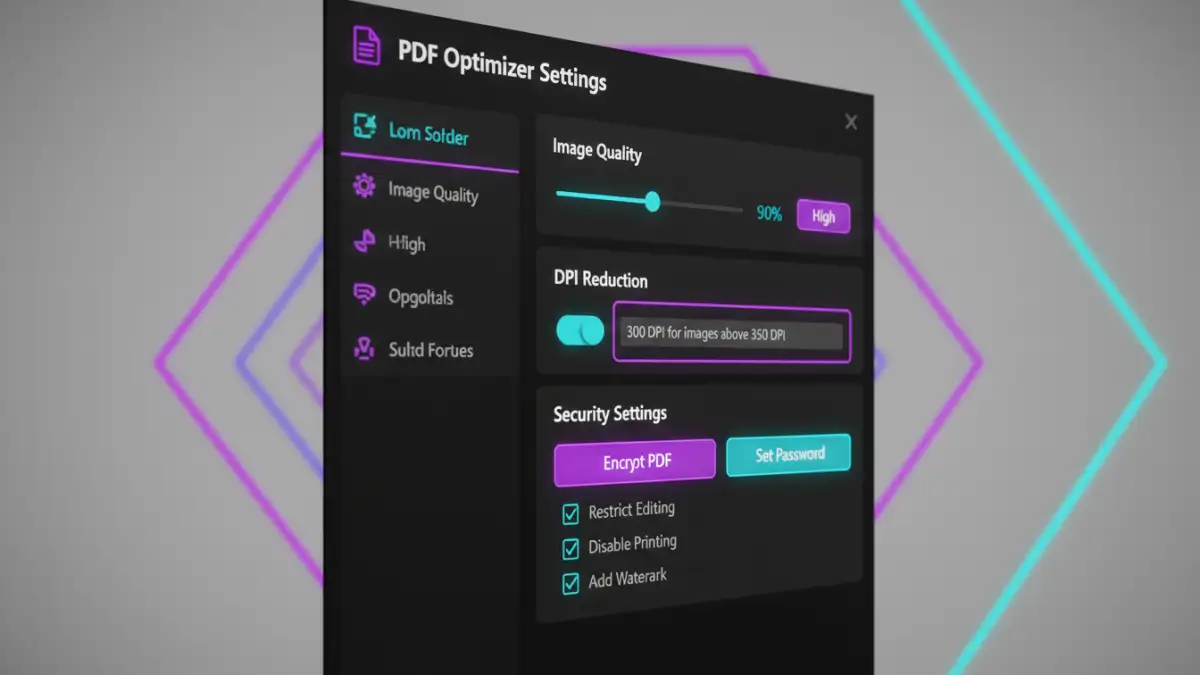
Reducing PDF file size is often the first step in optimization. Large files can clog inboxes, slow down uploads, and consume unnecessary storage. Fortunately, several effective `document compression tips` can significantly shrink your PDFs without drastic quality loss.
Image Downsampling and Compression
Images are typically the largest contributors to PDF size. Downsampling reduces the resolution (DPI) of images within the PDF, while compression (like JPEG for photos or ZIP/Flate for line art) reduces their file size. The trick is to choose a DPI appropriate for the output medium – 72-150 DPI for web, 200-300 DPI for print, for example.
Font Subsetting and Removal of Unnecessary Objects
PDFs often embed entire fonts, even if only a few characters are used. Font subsetting includes only the characters actually present in the document, significantly reducing size. Additionally, many PDFs contain hidden layers, annotations, form data, or metadata that are no longer needed; removing these can offer further savings.
Maintaining Visual Quality
While compression is vital, it shouldn't come at the cost of readability or visual appeal. My goal is always to achieve the smallest possible file while preserving the document's integrity. This means understanding the nuances of different compression types and their impact.
Lossy vs. Lossless Compression
Lossy compression (e.g., JPEG for images) permanently discards some data, resulting in smaller files but potential quality degradation. Lossless compression (e.g., ZIP, Flate) reduces file size without losing any data, making it ideal for text and vector graphics. The choice depends on the content and acceptable quality thresholds.
DPI, Color Space, and Output Considerations
The optimal DPI for images varies based on whether the PDF will be viewed on screen or printed. For print, a higher DPI is needed. Similarly, optimizing color spaces (e.g., converting large CMYK images to sRGB for web viewing) can reduce file size without a noticeable visual difference on screen. Always consider the final destination of your PDF when making these choices.
Enhancing PDF Security
Security is non-negotiable for sensitive documents. Whether it's a financial report or personal data, protecting your PDFs from unauthorized access is paramount. This is where the `security vs size` trade-off often becomes most apparent.
Password Protection and Encryption Standards
PDFs offer two main types of passwords: a 'user' password to open the document and an 'owner' password to restrict permissions (printing, editing, copying). These passwords enable encryption, with modern standards like AES-256 offering robust protection. Implementing strong encryption might add a tiny bit to file size, but the security benefits far outweigh this.
Digital Signatures and Redaction
Digital signatures provide authenticity and integrity, ensuring the document hasn't been tampered with and verifying the sender's identity. Redaction, on the other hand, permanently removes sensitive information (like names or account numbers) from the document, replacing it with black boxes. These features enhance trust and compliance, crucial for many business workflows.
Striking the Right Balance: Practical Strategies
Achieving the perfect `pdf optimization balance` requires a strategic approach, often involving a combination of the techniques discussed. It's about understanding the context and purpose of each document.
Workflow Considerations and Situational Awareness
Before optimizing, ask yourself: Who is the audience? How will the PDF be used (web, print, archive)? What is the sensitivity level of the information? For internal drafts, a lower quality, smaller file might be fine. For a final legal document, security and quality take precedence over minimal size. Building these questions into your workflow helps make informed decisions.
Leveraging the Right Tools for the Job
There are numerous tools available, from built-in 'Save as Reduced Size PDF' options in applications like Adobe Acrobat to online compression services and command-line utilities. For critical or repetitive tasks, investing in a dedicated desktop application can provide granular control over every aspect of optimization, ensuring consistent `secure file quality` across all your documents.
Comparison Table
| Method/Tool Type | Pros | Cons | Best For |
|---|---|---|---|
| Built-in Software (e.g., Adobe Acrobat) | Granular control, high quality, robust security | Subscription cost, steeper learning curve | Professional use, complex documents, high security needs |
| Online PDF Optimizers (e.g., Smallpdf, iLovePDF) | Free/low cost, easy to use, fast for basic tasks | Privacy concerns, limited control, potential data caps | Quick compression, non-sensitive documents, small files |
| Open-Source Tools (e.g., Ghostscript) | Free, powerful scripting, highly customizable | Command-line interface, requires technical knowledge | Automated workflows, specific optimization profiles |
| Print-to-PDF Drivers (with optimization settings) | Widely available, simple for basic re-saving | Limited optimization options, can lose interactive elements | Simple re-saves, basic `document compression tips` |