
The landscape of digital security is in constant flux, and with it, the methods we use to protect our most sensitive information. As cyber threats become more sophisticated, so too must our defenses. This is particularly true for how we encrypt files, ensuring that only authorized individuals can access critical data.
Over my years working with software development and security protocols, I've seen firsthand how quickly what was once considered 'state-of-the-art' can become outdated. Staying ahead means understanding the underlying principles and the practical shifts in how we implement security. It's not just about choosing an algorithm; it's about the entire ecosystem of protection.
Table of Contents
Understanding the Evolution of Encryption
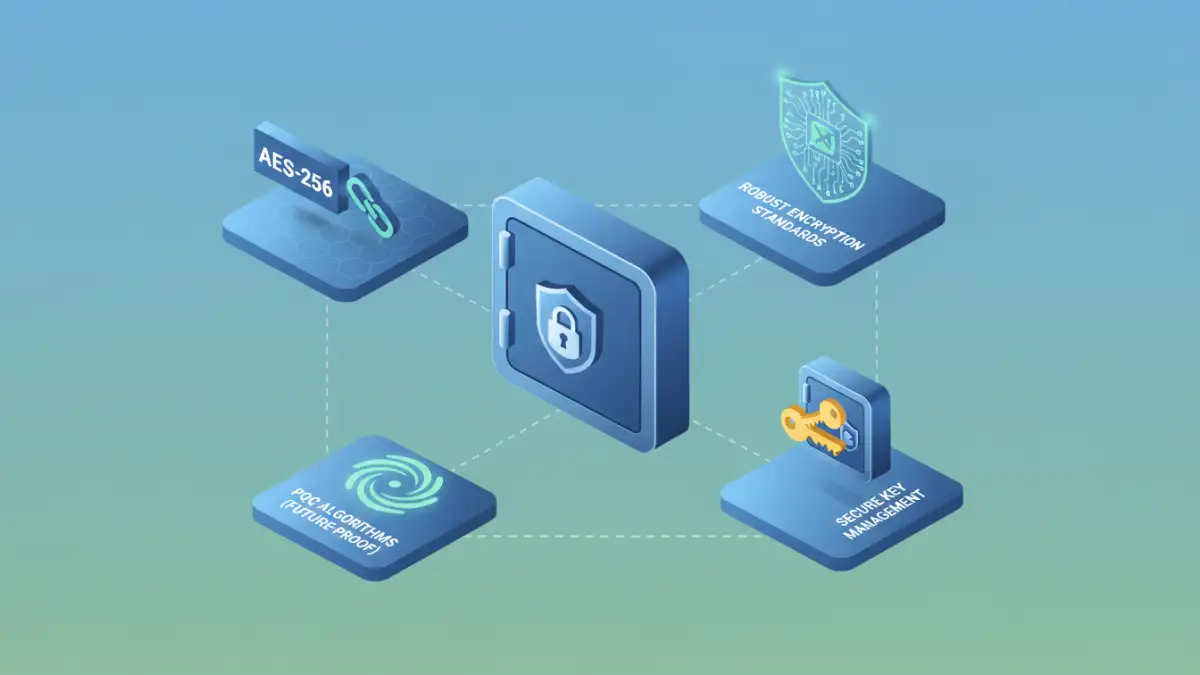
Encryption has come a long way from simple substitution ciphers. The goal has always been to render data unreadable to unauthorized parties, but the methods have become exponentially more complex and robust. Early encryption relied on mathematical principles that are now easily broken by modern computing power.
The transition from symmetric to asymmetric encryption, and the development of robust algorithms like AES, marked significant leaps. These advancements allowed for more secure data transmission and storage, forming the backbone of modern digital security. Understanding this historical context helps appreciate the current state and future direction of data protection.
Historical Context
From the Enigma machine in World War II to the DES (Data Encryption Standard) in the 1970s, encryption methods have continuously evolved. DES, while revolutionary at the time, was eventually deemed insecure due to its relatively short key length. This paved the way for stronger standards.
The introduction of AES (Advanced Encryption Standard) in 2001 was a monumental shift. It replaced DES and has since become the de facto global standard for symmetric encryption, offering robust security with various key lengths (128, 192, and 256 bits).
Key Changes in File Encryption Standards

The evolution of file encryption standards isn't just about faster algorithms; it's about adapting to new threats and computational capabilities. One of the most significant shifts has been the move towards stronger, more versatile encryption methods that can withstand brute-force attacks and other sophisticated exploits.
We've also seen a greater emphasis on the entire lifecycle of encrypted data, from generation to destruction. This includes how encryption keys are handled, the protocols used for secure file sharing, and the integration of encryption into broader data protection strategies.
Growing Complexity and Resilience
Modern standards are designed to be resistant to both computational brute-force attacks and cryptanalytic techniques. This means using larger key sizes and more complex mathematical operations that take an infeasible amount of time to break, even for powerful adversaries.
The focus has also shifted towards ensuring that encryption remains effective even as computing power increases. This proactive approach is crucial for long-term data security, ensuring that files encrypted today will remain protected years from now.
Shifts in Encryption Algorithms
While AES remains a strong choice for symmetric encryption, the discussion around cryptographic algorithms is ongoing. The development of new algorithms and the re-evaluation of existing ones are constant processes. For instance, the National Institute of Standards and Technology (NIST) has been standardizing post-quantum cryptography, anticipating a future where quantum computers could break current encryption methods.
The move towards authenticated encryption modes, like AES-GCM (Galois/Counter Mode), is another critical change. These modes not only provide confidentiality but also integrity and authenticity, ensuring that data has not been tampered with and originates from a trusted source. This is vital for applications where data integrity is as important as secrecy.
Importance of Key Management
Perhaps the most significant aspect of any file encryption standard is how the encryption keys are managed. A strong encryption algorithm is useless if the keys are compromised. This has led to a much greater focus on secure key generation, storage, distribution, and rotation.
Techniques like Hardware Security Modules (HSMs) and robust key management systems (KMS) are becoming standard practice for organizations dealing with highly sensitive data. For individuals, using reputable password managers that securely store encryption keys or passphrases is paramount for securing their files.
Secure Practices for Keys
Best practices now dictate using unique, strong keys for different encryption tasks and regularly rotating them. Avoid hardcoding keys or storing them in insecure locations. The security of your encrypted data is directly proportional to the security of your encryption keys.
Implementing proper access controls and auditing key usage are also critical components of effective key management. This ensures that only legitimate users can access keys for decryption and that any misuse can be traced.
Preparing for Post-Quantum Cryptography
The looming threat of quantum computing capable of breaking current public-key cryptography (like RSA and ECC) is driving significant research and standardization efforts. NIST is leading the charge in developing and standardizing new cryptographic algorithms that are resistant to quantum attacks. These algorithms, often referred to as post-quantum cryptography (PQC), are designed to be secure against both classical and quantum computers.
While widespread quantum computing is still some years away, organizations and developers are advised to start planning for this transition. This includes understanding the implications of PQC and identifying systems that will require migration to quantum-resistant algorithms. The security encryption changes related to PQC will be among the most impactful in the coming decade.
Implementing Best Practices
Beyond algorithmic choices and key management, several best practices ensure effective data protection. This includes choosing the right encryption for the job – symmetric for bulk data and asymmetric for key exchange or digital signatures. End-to-end encryption is also crucial for secure file sharing platforms, ensuring data is encrypted at the source and only decrypted by the intended recipient.
Regularly updating encryption software and protocols is vital. Vendors often release patches to address newly discovered vulnerabilities or to implement stronger encryption methods. Staying informed about the latest security encryption changes and adopting them promptly is key to maintaining robust data protection.
Comparison Table
| Encryption Method | Primary Use Case | Key Management Challenge | Security Level | Typical Application |
|---|---|---|---|---|
| AES (Symmetric) | Bulk data encryption (files, databases) | Secure distribution and storage of shared secret keys | Very High (with strong keys) | File lockers, disk encryption, secure backups |
| RSA/ECC (Asymmetric) | Key exchange, digital signatures | Protecting private keys from compromise | High (but vulnerable to quantum computing) | SSL/TLS, secure email (PGP) |
| Authenticated Encryption (e.g., AES-GCM) | Confidentiality + Integrity + Authenticity | Same as underlying symmetric/asymmetric methods | Very High | Secure communication protocols, modern file encryption |
| Post-Quantum Cryptography (PQC) | Future-proofing against quantum attacks | New algorithms, standardization in progress | Expected High (against quantum threats) | Future secure communications, digital signatures |