
The headlines are relentless: another major data breach, another company scrambling to protect sensitive information. As someone who's spent over a decade architecting secure systems, I've witnessed firsthand the increasing sophistication of cyber threats. This escalating risk has made robust document security not just a best practice, but an absolute necessity for businesses of all sizes.
Table of Contents
The Evolving Landscape of Digital Threats
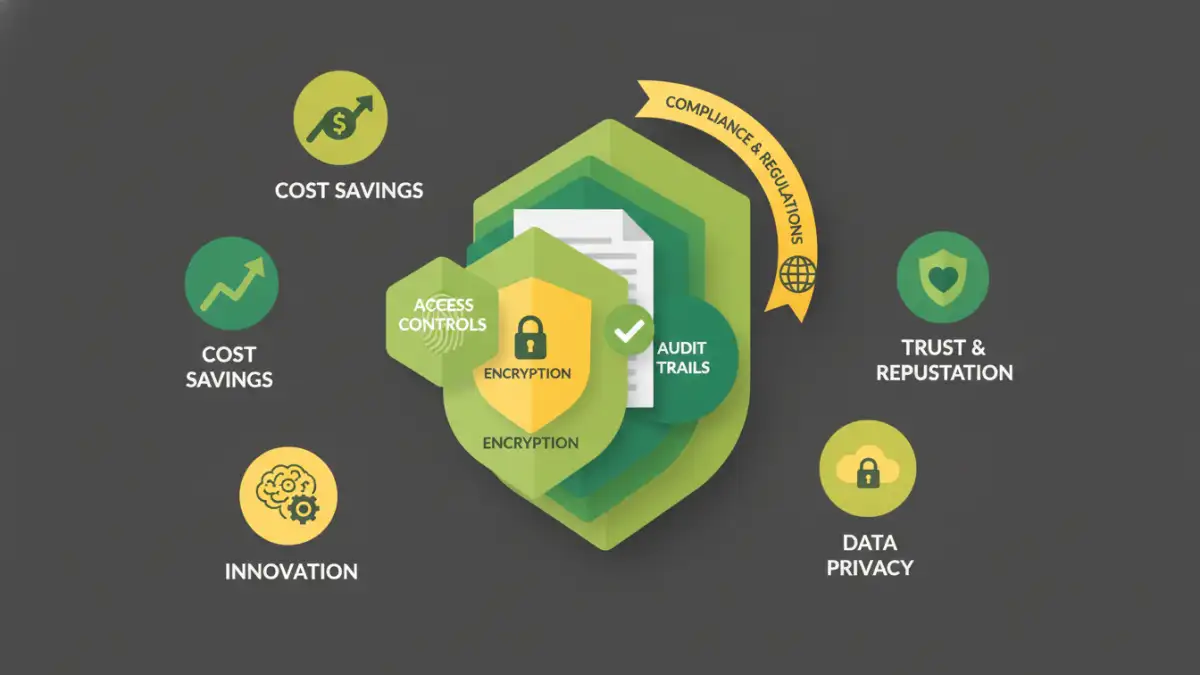
Digital transformation has brought immense benefits, but it has also expanded the attack surface for cybercriminals. Every document, from a simple invoice to a complex architectural blueprint, can become a target if not properly secured. The sheer volume of data being created and shared daily means that traditional perimeter defenses are no longer sufficient.
Organizations are now recognizing that their data, especially critical documents, needs protection at every stage of its lifecycle, regardless of where it resides. This shift in mindset is a crucial driver behind the increased focus on dedicated document security solutions.
Current Data Breach Trends
Looking at recent reports, the average cost of a data breach continues to climb, often reaching millions of dollars. Beyond financial repercussions, breaches can severely damage an organization's reputation and erode customer trust. Phishing attacks, ransomware, and insider threats remain primary vectors for gaining unauthorized access to sensitive documents.
These trends highlight the urgent need for proactive measures rather than reactive responses. Investing in robust file protection statistics and security software usage is no longer optional; it's a strategic imperative for business continuity and resilience.
Decoding Document Security Adoption Rates

So, what does the current landscape of document security adoption look like? Recent industry analyses reveal a steady upward trajectory in organizations deploying specialized software for document protection. While specific numbers vary by region and sector, the overall trend indicates a growing awareness and commitment to safeguarding digital assets.
Many businesses are moving beyond basic encryption and implementing comprehensive solutions that offer features like access control, rights management, watermarking, and audit trails. This comprehensive approach signifies a maturing understanding of data security.
Industry-Specific Insights
Certain industries, particularly those heavily regulated like finance, healthcare, and legal services, show significantly higher document security adoption rates. Their strict compliance requirements, such as GDPR, HIPAA, and CCPA, compel them to invest heavily in data protection technologies. For them, a security lapse can lead to hefty fines and severe legal penalties.
Conversely, sectors like small-to-medium enterprises (SMEs) or non-profits sometimes lag due to perceived cost barriers or lack of specialized IT staff. However, even these groups are beginning to see the value as the threat landscape expands to target organizations of all sizes.
Regional Differences
Geographically, regions with stringent data privacy regulations often exhibit higher adoption rates. Europe, driven by GDPR, has been a frontrunner in implementing comprehensive data security frameworks. North America and parts of Asia are also rapidly catching up, influenced by their own evolving regulatory landscapes and increasing cyberattack frequency.
These regional variations underscore the impact of legislative mandates on organizational security postures. Where regulations are clear and penalties are significant, investment in document security solutions naturally follows.
Factors Influencing Adoption
Several key factors drive or hinder the widespread adoption of document security software. Understanding these influences is crucial for both solution providers and organizations planning their security roadmap. It's not just about buying software; it's about integrating a security culture.
From budgetary concerns to the complexity of implementation, each element plays a role in an organization's decision-making process regarding their file protection strategies.
Budgetary Constraints and ROI
For many businesses, especially smaller ones, budget remains a significant hurdle. Document security software can represent a substantial investment, not just in licensing but also in implementation, training, and ongoing maintenance. Demonstrating a clear return on investment (ROI) by quantifying the cost of a potential breach versus the cost of prevention is vital.
However, the shift towards subscription-based models and cloud-native solutions is making advanced security more accessible. These models reduce upfront costs and offer scalability, appealing to a broader range of organizations.
Regulatory Compliance
As mentioned, regulatory compliance is a massive catalyst for document security adoption. Non-compliance can result in severe financial penalties and reputational damage. Organizations in regulated industries often prioritize solutions that help them meet specific mandates for data handling, storage, and access control.
The evolving regulatory landscape means that businesses must continuously update their security measures to stay compliant. This constant pressure ensures sustained investment in data security trends and related technologies.
Implementing Effective Document Security
Beyond simply acquiring software, effective document security requires a holistic approach. It involves establishing clear policies, training employees, and regularly auditing security protocols. My experience shows that even the most advanced software is ineffective without proper human processes and awareness.
The goal is to create a multi-layered defense that protects documents from creation to archival, across all devices and platforms. This comprehensive strategy is what truly drives robust security software usage.
Key Technologies and Strategies
Modern document security solutions often incorporate a suite of technologies. Digital Rights Management (DRM) ensures that only authorized individuals can access, print, or share documents. Data Loss Prevention (DLP) tools monitor and prevent sensitive information from leaving the organizational network. Encryption, both at rest and in transit, remains a foundational element.
Furthermore, integrating these solutions with identity and access management (IAM) systems strengthens overall control. Cloud-based security platforms are also gaining traction, offering flexibility and scalability for distributed workforces.
Document Security Solution Comparison
| Solution Type | Key Features | Pros | Cons | Best For |
|---|---|---|---|---|
| Digital Rights Management (DRM) | Access control, usage policies, expiry | Granular control, post-distribution protection | Can be complex to implement, user friction | Highly sensitive, proprietary documents |
| Data Loss Prevention (DLP) | Content inspection, monitoring, blocking | Prevents accidental/malicious data leakage | False positives, requires continuous tuning | Compliance-heavy organizations |
| Endpoint Encryption | Full disk or file-level encryption | Protects data on devices, simple for users | Lost keys can render data inaccessible | Mobile and remote workforces |
| Secure File Sharing Platforms | Encrypted transfer, access logs, collaboration | Easy collaboration, secure external sharing | Reliance on platform security, vendor lock-in | Teams requiring frequent external collaboration |